



Quick Summary
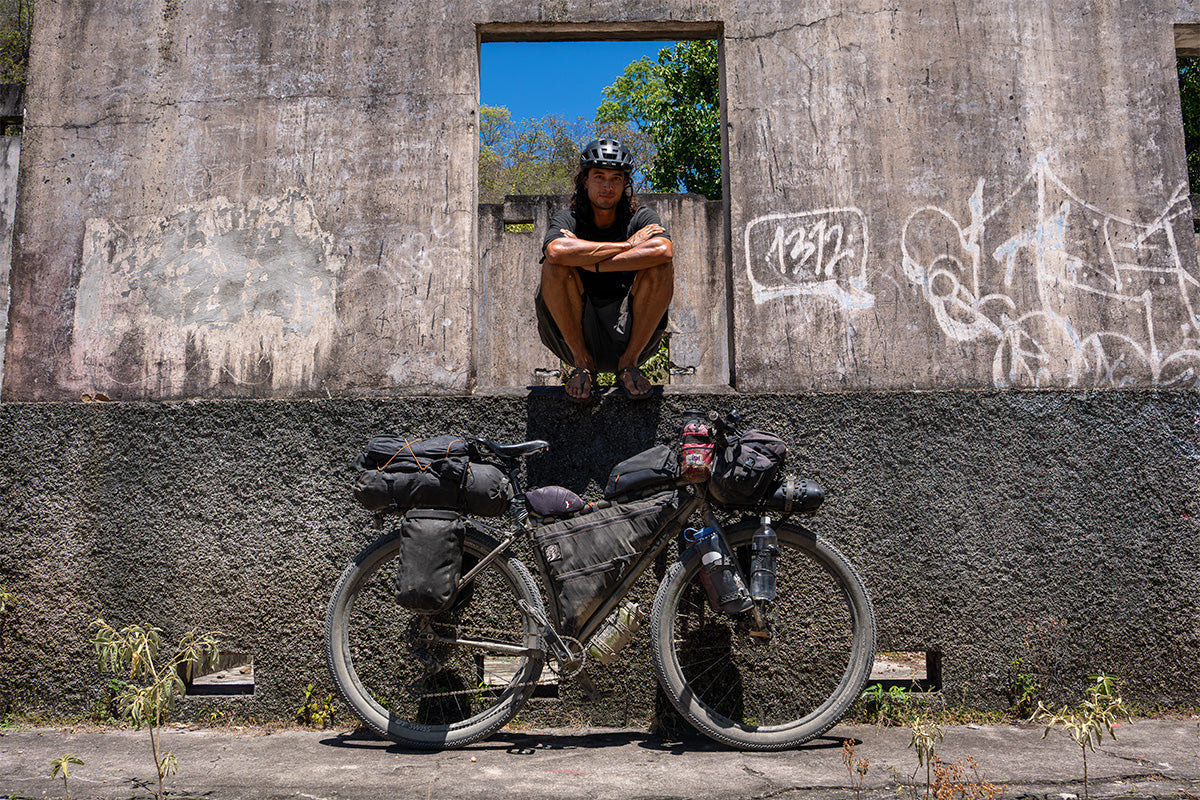
Tristan gets us up to speed on his bikepacking journey through The Americas, crossing from Panama into Colombia and riding through its varied landscapes — from watching Colombia's World Cup match at the docks in Turbo, to grinding up the Andes' three cordilleras, sneaking through a forbidden tunnel near Medellín, and marveling at the paramo ecosystems and Tatacoa Desert. Throughout this portion of the trip, he reflects on Colombia's biodiversity, its complex history of conflict alongside its warmth and hospitality, and closes with a spontaneous change of plans to meet a friend in Cali amid uncertainty over unrest tied to the presidential inauguration.
Words and Photos by Tristan La Haye, @baby.ogre.motor @rollingtides.rt
This is the tenth post documenting the surfpacking / bikepacking / backpacking adventure that began with Rylie and Tristan starting in different parts of the world, rejoining in the US, and making their way to Central America. Now, Tristan continues the journey solo again until the end of the road in South America. Read about the ambitious journey in Part 1 HERE, Part 2 HERE, Part 3 HERE, Part 4 HERE, Part 5 HERE, Part 6 HERE, Part 7 HERE, Part 8 HERE, and Part 9 HERE. Tune in each month to see how it's going.
 The evening light casts my shadow on the road ahead. I feel wobbly on my laden bike, having spent the past handful of days in small boats on undulating seas. Not wanting to fly, I take small lanchas to cross the Darien Gap — the iconic swath of mountainous jungle separating Panama from Colombia and the rest of South America. From the boats, you can see the dense green stretched out beyond the furthest hills. It looks like it would swallow you, and nobody would ever know. It's a land that holds many secrets, and I can’t help but wonder what's hiding amongst the swampy foliage. I was lucky to score a work exchange for the crossing, trading photos and videos for free passage through the San Blas Islands. Not biking was a welcome change of pace, and the rest reinvigorated me for what was now the second half of the journey.


As I rode, Colombia was in overtime of their World Cup game vs Switzerland. Shouts and yells filled the air of the docks, where I had gratefully retrieved my disassembled bike in its mangled box. I had entrusted my bike-in-a-box with a ship captain the day before and was feeling significant separation anxiety before finding it at the port in the town of Turbo.

 I got updates on every match from every home, shop, and restaurant I passed. “LUCHO! LUCHO!” It was still 0-0 in overtime. “EN LAS ÚLTIMAS SEGUNDAS…” Even though I couldn't be part of the FIFA atmosphere this year, I'm grateful to have experienced it in a place where football is so ingrained in the culture. Despite the oncoming darkness, I stopped to watch the deciding shootout. A huge yellow crowd stood together, all entranced by the same screen. Unfortunately, Colombia lost. There were some tears, some curses, and many laughs still. As I rolled away, I made smiling eye contact with a dad on a motorbike. He sat in the backseat of the bike, filming his 5-year-old daughter up front, in full control amid the evening traffic.

For some reason, I was never that excited to ride in Colombia. In retrospect, that was just plain silly. Colombia is a world of wonder, and a bikepacking paradise. Dirt roads run like veins through the mountains, connecting red-bricked towns and incredibly varied ecosystems. Colombia is one of the most biodiverse countries and is home to the most bird species in the world. Condors reign over the high mountains, gliding over glaciers and open skies while parrots devour cactus fruit in the red desert. This ecosystem diversity also creates big differences in identity between departments. One morning in the city of Neiva, my hosts Paula and Juanito spent two hours educating me on the differences between accents and the world of Bullerengue, Salsa, Vallenato, and all the many types of Colombian music.


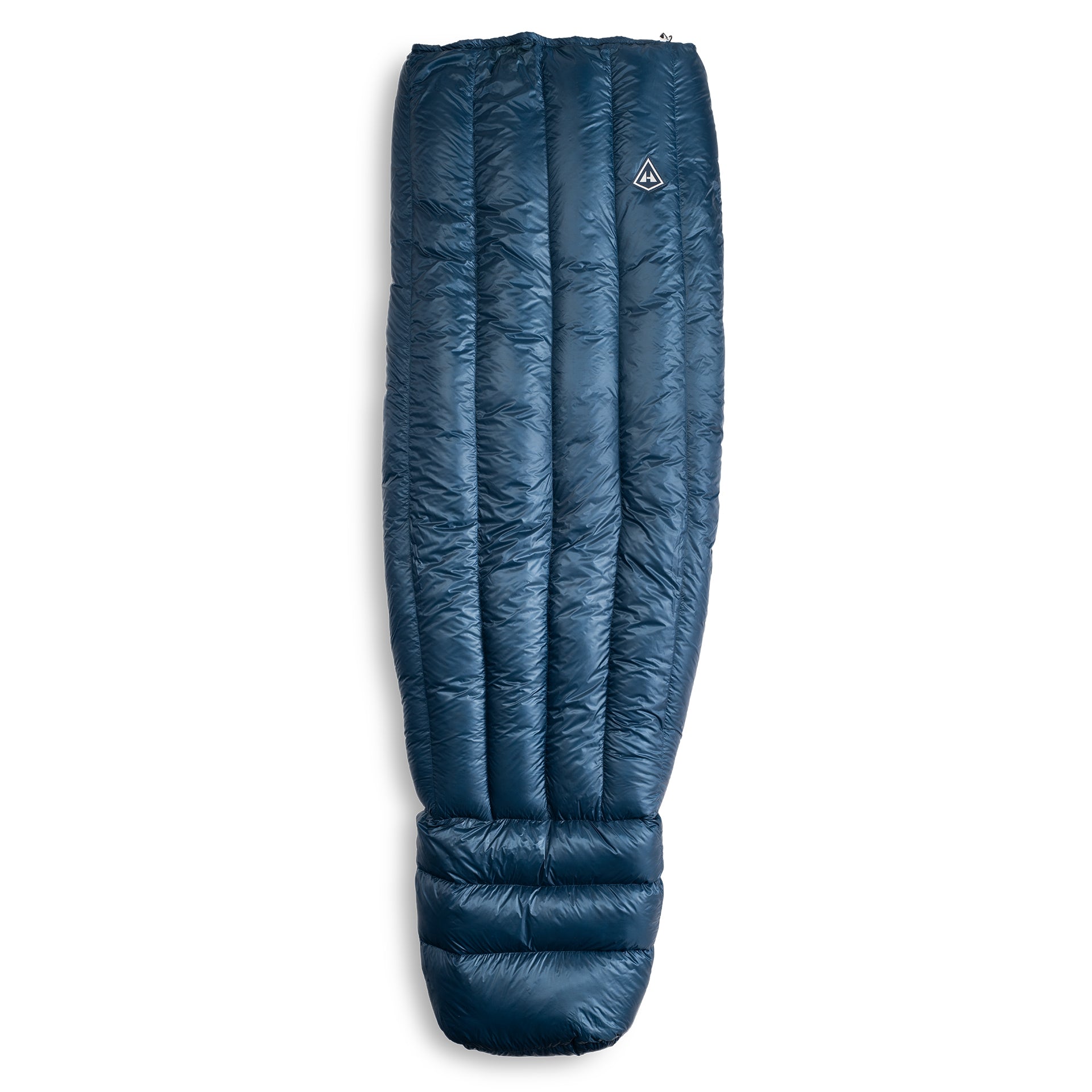
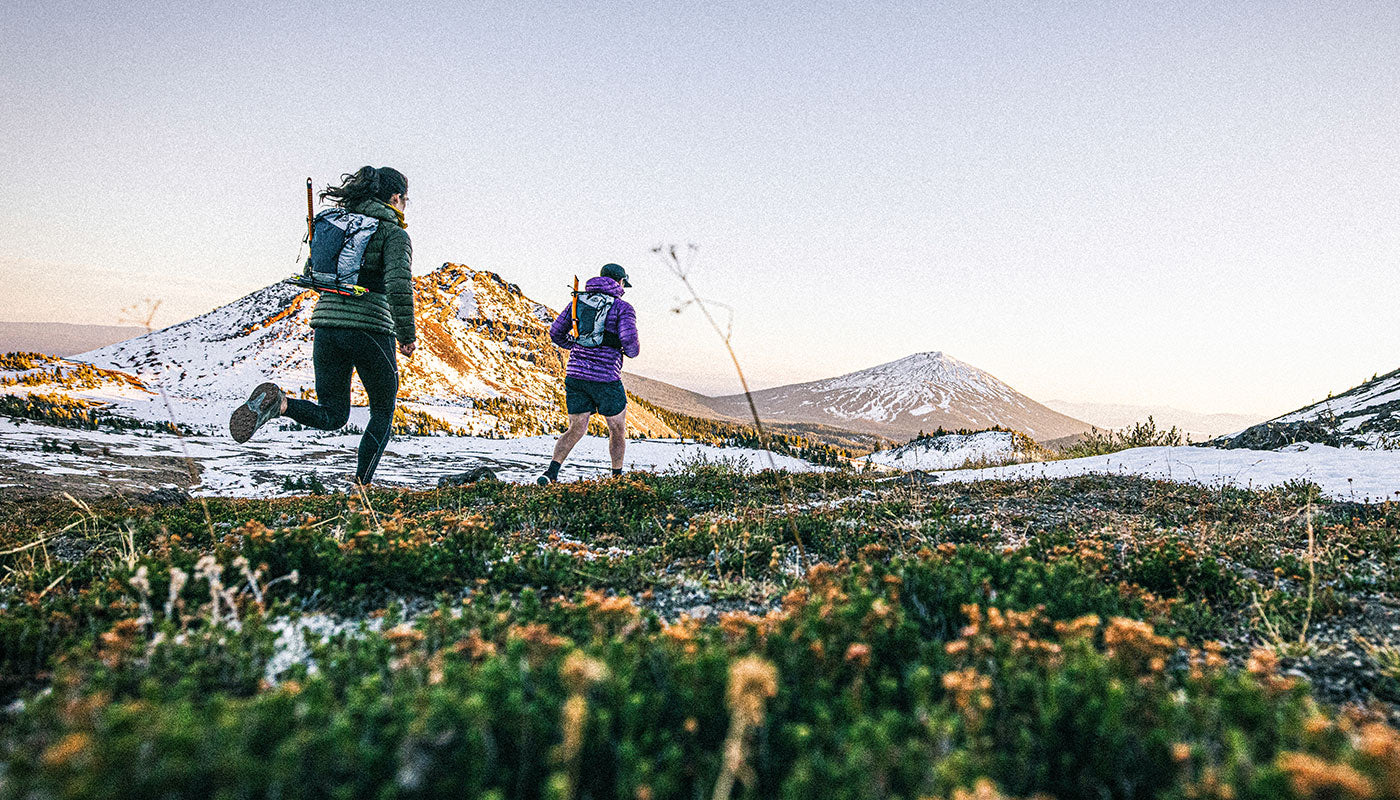
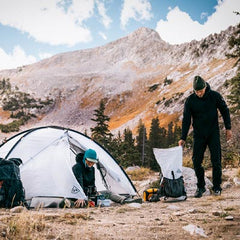
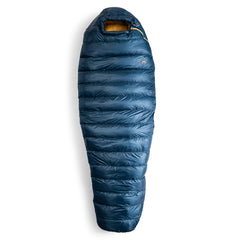
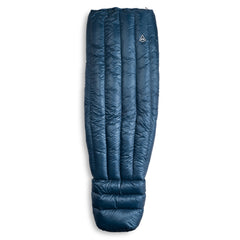
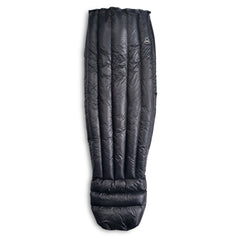
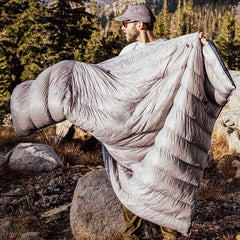
This land is the beginning of the world's longest continental mountain range: the Andes. I’ll be weaving through this Cordillera all the way to the end of the road. The Andes in Colombia are split into three distinct ranges: the Cordillera Oriental, Central, and Occidental. They stretch alongside each other, converging like a river as they continue into Ecuador. I often spend all day crawling towards the clouds, covering only 40 kilometers and burning more carbs than I can eat. Two kilometers higher than the night before, I sleep wearing plenty of layers, cozy in my 20-Degree Quilt.

Sometimes, mountains are what give the road meaning. Through the challenges, I feel alive and invigorated. On the descents I shout my gratitude into the wind. Gratitude for my health, for the earth, for humans, and gratitude for my mountain bike that absolutely rips down rutted roads. It’s wild how far a bicycle can take you, if you just keep on pedaling. I’m small among the endless rolling peaks, and there’s a tangibility to being all alone in the vastness of the sky. With no eyes around, I feel seen.

Invisibility comes in big cities. The stimulation, the chaos, and the sheer number of people seem to dilute social interactions. I sometimes glide through busy streets, a thousand eyes looking through me. When riding up the mountain towards Medellin, there’s a tunnel that is forbidden to bike through, despite having a sidewalk. Local cyclists told me it should be easy to hitchhike the three kilometers to the other side. After a day-long rainy climb, I made an effort to look less ragged and started waving down trucks, with no success. Two hours later, I was fed up. It was a Sunday, and nobody was manning the tunnel entrance. It seemed safe enough.

After all, I wasn’t about to wait for the sun to set and be forced to pitch camp in the ditch. I clicked my bike lights on, put on some electronic music, and granny-geared my way into the darkness. A few minutes in, a booming voice filled the tunnel over the intercom. I didn’t even know tunnels had intercoms; this one must have been extra special. All words were lost to the echo except for one loud, passive-aggressive, “BICICLETA!” I could guess what that was all about. But I couldn’t exactly turn around; I was committed. So I leaned into the music and pushed a little faster. The same message echoed off the walls again, even angrier this time. In my arrogant attempt at rebellion, I kept pedaling with a mix of giddiness and nervousness bubbling inside. It wasn’t long before a truck with a flatbed pulled up beside me, absolutely fuming. I seized the opportunity, lugged my bike on the back and hopped in. The driver wasn't impressed, and I made sure he had a chance to shout at me a bit before I said my piece. Overall, it was the most efficient hitchhiking method I’ve ever tried.


High above the chaos of cities, cloaked in clouds, lie mystical lands called paramos. They’re a critical ecosystem that provides water for millions of people, collected from the sky like a sponge. Between 3000 and 5000m there’s a chance you’ll glimpse a Tapir or a Spectacled Bear wandering around the mist. I haven’t been so lucky yet but just being in the quiet of a paramo is spectacular enough. It feels like a Studio Ghibli animation — wholesome and raw. Frailejones are star players up there, using their fuzzy leaves to collect droplets of fresh water from the clouds and funneling them back into the ground. Colombia is home to nearly half of the world’s paramos, where most plant species are found nowhere else on earth. With the increasing threat to these sanctuaries, I sincerely hope Colombia can protect them.
 Rolling down to the valley bottom, and lower still, lies an arid land much like others I’ve rolled through before. The Tatacoa Desert is technically a tropical dry forest, but lives up to its ‘desert’ title with a relentless beating sun and cracked, dry ground. At dusk, prattles of parrots gather to feast on sweet cactus fruit, dodging the many spikes. I fight to stay properly hydrated, mixing all my water with a sprinkle of salt and sugar, knowing I’ll probably still finish the day feeling a little wonky. It’s a reminder of hot lands left behind, and to cherish the rainy Paramos and cold toes when they come.


Colombia is so much more than its unique landscapes. It's a country shaped by a complex history with decades of conflict, political violence, and infamous drug trade. Yet alongside that history is an incredible resilience and deep pride for country and culture. After a year on the road experiencing all manner of acts of kindness and generosity, I didn’t think it could get any better. Yet every day, I am welcomed warmly. Every day, someone gifts me food, coffee, or water. Every day, people go out of their way to chat, to learn and connect. I am often welcomed to stay in people's homes, and I usually linger longer than planned, soaking up conversations fueled by Tinto (black coffee) and Aguapanela (raw cane sugar water).

A Chilean friend of mine, Gaspar, texted me one day saying, “I’m taking vacation days, what if…”. Just a few days later, he bought a plane ticket to the City of Cali for what was supposed to be a quick visit. I flowed with the change, and mapped out a different route than planned, heading over the Cordillera Central through Puracé National Natural Park. As if the universe was laughing at us, we learned the presidential inauguration would take place in the same city, the same weekend we’d be there. We’re told there could be riots, and to avoid going altogether. And so I pedal with this uncertainty, knowing only that whatever happens will be an adventure worth living.