


Words and Photos by Rylie and Tristan, @rollingtides.rt

This is the fifth post documenting the surfpacking / bikepacking / backpacking adventure of Rylie and Tristan starting in different parts of the world, rejoining in the US, and ending together until the end of the road in South America. Read about their ambitious journey in Part 1 HERE, Part 2 HERE, Part 3 HERE, and Part 4 HERE. Tune in each month to see how it's going.

RY
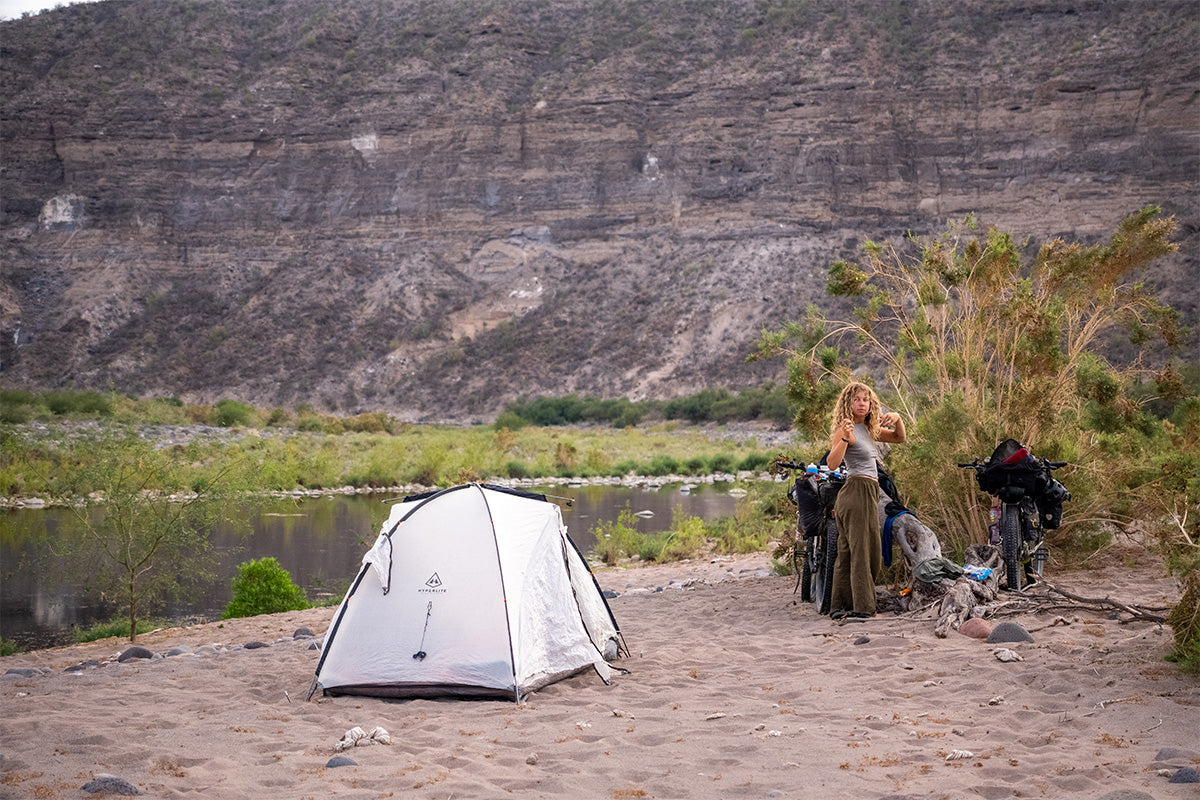
Before crawling into the tent to meet sleep with ease, I often stand quietly in all my layers, my head tilted back, staring softly at the sky. I’m not really focused on the stars nor the moon, more so gazing inward, processing the world that bikepacking has opened up to me.
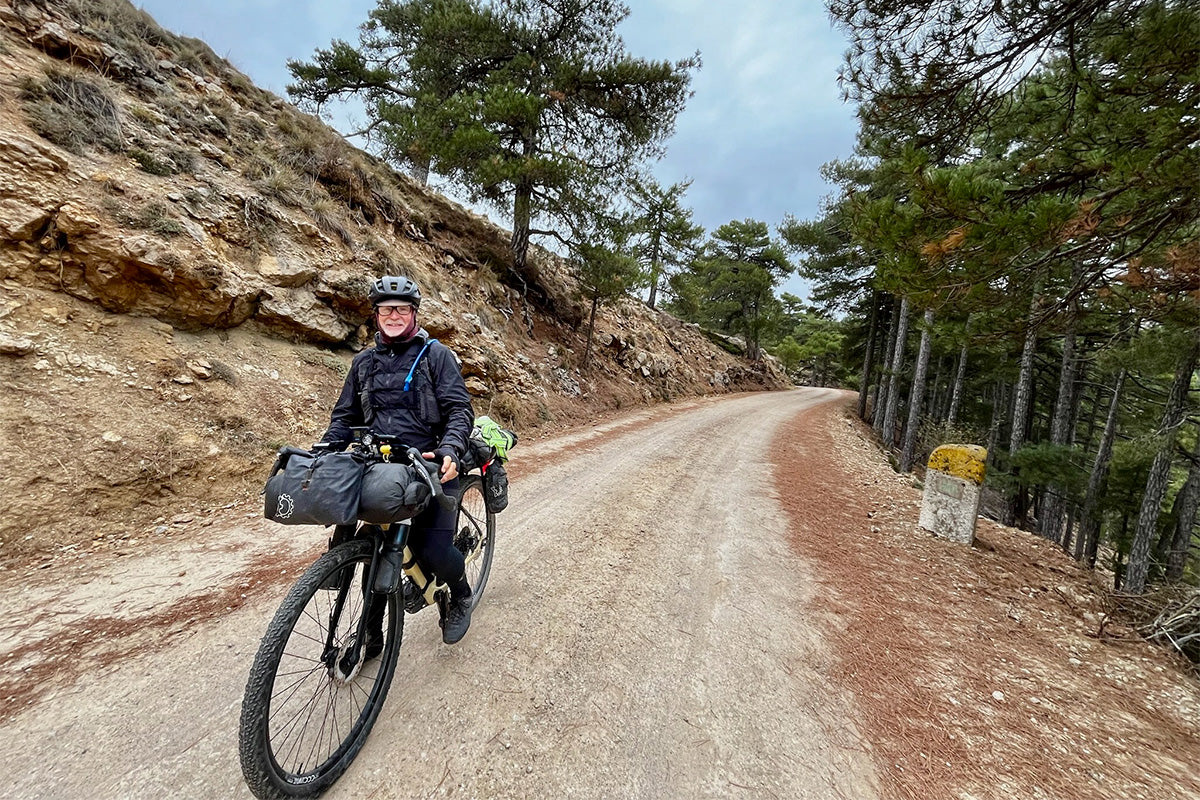
There is magic found in a pace slow enough to make eye contact with people as you pass by, but fast enough to cover the distance between two towns in which the residents there will be surprised that your bicycle has no motor. Some days the landscape changes so dramatically, yet it’s always the interactions with people that become most memorable. The ability to live so many lives in one day. I love being a fly on the wall, or more so a curious child. The other day while eating breakfast on a park bench with our helmets still on, a truck drove by. In the truck, a toddler on mom’s lap. You could see the sponge-like disposition of the toddler as his eyes never left our strange appearances. He was slowly calculating, making note of and taking in the newness of our shaggy foreign faces. I remarked that I still feel like a toddler on my saddle, mouth gaping from exhaustion but also from awe–I’m sponging up all that I can over here.
 One rest day attempt, (and I mean attempt because we often do more working than resting) we found ourselves fishing. We had rolled into a small coastal village the night before, small but with an obvious beating heart. In the morning, we were stirred awake by a quickly rising sun, we pedaled through the village to seek out a shady spot to chill and passed a family loading up their boat.
“¿Vamos a Pescar? (We’re going fishing?)” Tristan said grinning.
He was manifesting a fishing outing for weeks.
“!Vamos!” said the tall man in sunglasses with a cheery smile, ushering us onto his boat as his kids scrambled about getting the rods and gear.
 Before I had fully woken up, still in sleepy layers, with puffy eyes, the hum of the fishing motor was backdropping broken conversation as we got to know the fisherman. Rods were cast, smiles illuminated and fish came flying overhead, heavy on the lines, plentiful in the waters below. We watched the father and younger son exchange routine habits and share the small space in the bow of the weathered blue boat. We tried to convey our excitement, gratitude and desire to help in whatever way. The eldest son dawned a camo wetsuit, hooked up to the homemade air compressor and splashed into the plentiful depths with a net in hand. So immersed in conversation and our own casting efforts, we were surprised when the eldest heaved back on board, his net overflowing with–tentacles?! Our hearts sank.
TRISTAN
My sensitivity to harming octopuses comes from a deep fascination for them. They have so many impressive abilities- changing their skin colour and texture, using tools, solving puzzles, squeezing huge bodies through tiny holes. Their emotional intelligence, however, is what impresses me most.
 So, when the young diver started flinging his collected octopuses into a net (22 of them), I felt drawn to hold them all, to offer them a kinder transition away from life. A big one started slinking its way across the boat. I gently peeled its suctioning limbs from the hull, taking it into my hands. It seemed to let go of its desire to escape, surrendering to the comfort of my embrace. Octopuses need water to breathe and can only survive out of water for around 30 minutes. Waking up groggily that morning, I never would have imagined that I’d hold an octopus as it died. It pulsed different colours, going from pale yellow to dark orange within the same breath.
As life drained from this marvelous creature, I accepted the duality of the situation. Yes, empathy for these creatures is important, and I would still like them to live without being hunted. But more importantly, octopuses help provide for this family, and this village. I cannot judge anyone here through my limited, biased, westerner lens. So, we learn. We tell our fisherman friend that we are sad, but we understand the necessity. He explains that octopuses are predators to the same fish and clams they eat. So, if they take those from the ecosystem, they must also take octopuses to compensate.
It is life, work, sustenance, and balance.
 RY
RY
That evening a kid from town ripped over on his dirtbike, stopping just short of our camp. Like a stray dog, he was unsure of us but curious enough to have a look. We were now four bikepackers. Among us Daniel, an Italian in his 50s who had a well-practiced speech about how every young boy should travel, and Jeff, a classic Canadian dad from the Kootenays whose familiar vocal inflections felt like a warm hug. We all waved the kid on the dirtbike over. After exchanging what sounded like a Duolingo Spanish lesson, (What's your name, how old are you, what’s your favorite blah blah) Dylan dismounted his dirt bike and the veil of young shyness slowly cracked away. He took the opportunity to show us an edible fruit on the cacti beside our camp.
Jeff gawked in amazement, “I could've been eating this the whole time!”
We all cheered as the boy carefully cut into a spikey red ball, revealing what resembled a sweet sugary dragonfruit known as Pitaya. Joyfully, we all went tip toeing through cacti, plucking fruits while trying to avoid getting spiked.
 The next morning the route took us due east, towards the sea of Cortez. Ahead we were to come upon the roughest roads of the journey so far–and, the kindest people. We were pleased to find what appeared to be an intentional trail of eaten Pitaya’s from Jeff who had hit the road just shortly before us. Further along, after crossing an unpleasant amount of dried riverbeds and sand pits grasping at our ankles, there lay a small ranch perched on a hill. A woman called for us to come in.
 Following a trail of blood, we found the husband carving into a goat hanging by its ankles, making quick precise work. We chatted about their Christmas plans, how they prepare the meat and the Puma in the valley who had killed five of their goats earlier that week, joking that the Puma too, was preparing for a Christmas gathering. The older couple was quick to offer us water and a place to camp but we were well supplied and determined to make it to town by nightfall. For the rest of the unforgiving nine hour ride, I thought about food sustenance that doesn't come from grocery store shelves, the eagerness that people in Baja have to share and the warm sense of hospitality they so non-chalantly offer, as if we were simply a family member dropping by.
 We had one Christmas wish. To rest. We rolled into town disheveled from a night of no sleep due to losing the campsite gamble to a pack of barking dogs. Our spirits lifted when we met a kind family from Tijuana, their voices raising in curiosity as we explained our bike journey. They happened to be staying at the same hotel as us, a place that became a haven of generosity, and finally rest. The family took us under their wing, bringing us extra fish from their guided excursion, Christmas dinner leftovers, warm cups of noodles, and an invite to breakfast with them in town. There was a calmness to the generosity of the folks here, one that showed no distaste of our dirty, stinky dispositions, no annoyance at our slow Spanish and no alternate motives.
The further south we pedal it seems each country was warning us of the next, Canadians tell you to be careful in the States, Americans warn you of dangerous Mexico and Mexicans warn you of Guatemala. Call me young, naive or a proud wearer of rose tinted glasses, but I figure the world is a lot kinder than we've made it out to be in the media. After all there's truth in the saying, if you go looking for trouble, you’re gonna find it. We can say the same about going looking for kindness.