



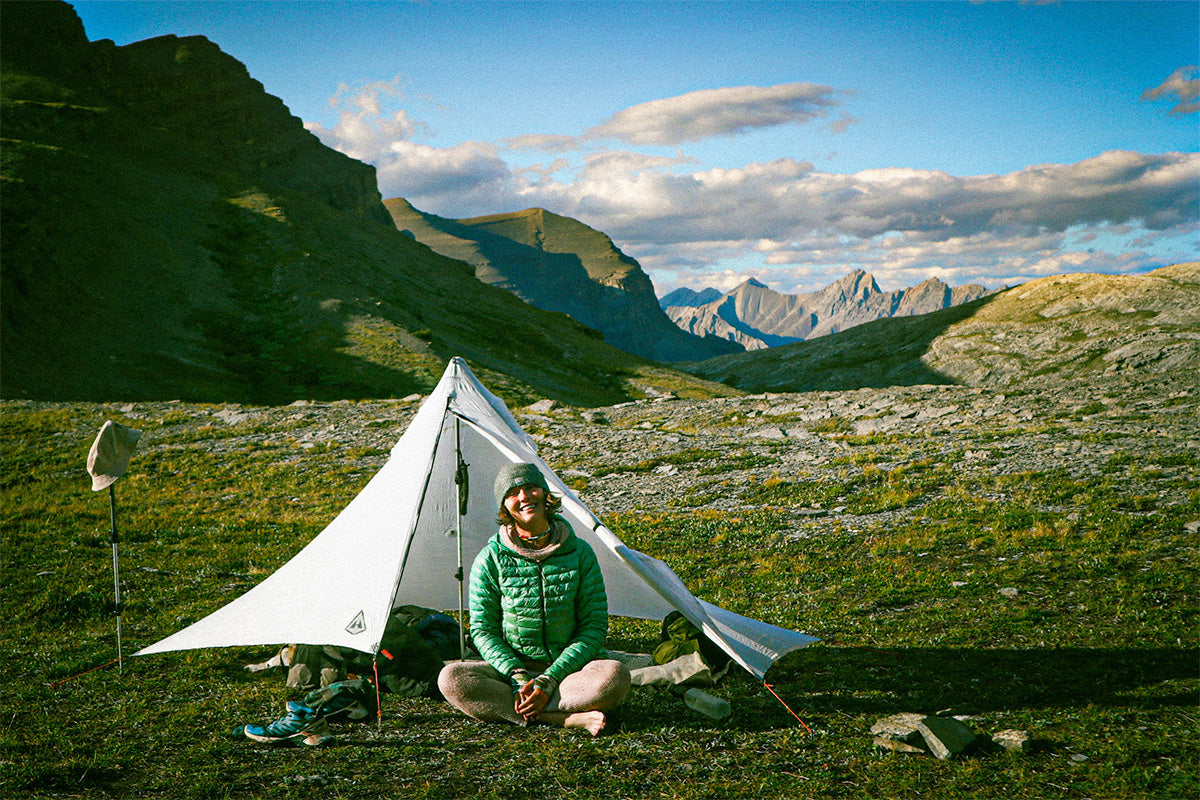
Words and Photos from Jada “Flo” Lippicott @whereisjadaa
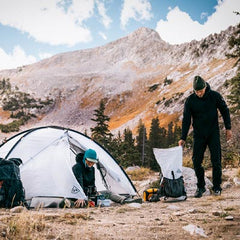
Getting to camp after miles on trail is everyone’s favorite part of the day. There’s nothing like capping the day off by settling into a peaceful, comfortable, well-chosen campsite. It doesn’t matter if you’re bushwacking deep into the backcountry or just a few miles from the trailhead, finding a good spot to pitch a tent and call it a day is very important when trekking across the world, wherever you may be. It can ultimately make or break your experience, and especially the next day! I personally feel like the last few miles seem to drag, especially when your little leggies know that camp is coming, but it all makes it worth it once you arrive at your final destination. A good campsite offers more than just a place to rest, as it provides safety, comfort, and a deeper connection to where the wild things are.
Here are a few things I’ve learned when finding the perfect campsite on trail: The first thing to ask yourself as the morning begins is, “Am I going to hike until I’m tired, or am I going to find a spot on the map that is going to be my end goal?” As I’m lying in my tent, I’m looking at campsites for the next evening, and that helps me plan for the day. Staying flexible is key–you obviously don’t know if someone else is going to be at your site before you get there, so it’s good to give yourself options. Also, weather and elevation can both hinder your daily mileage, which can affect where you camp and whether you make it to your goal site.
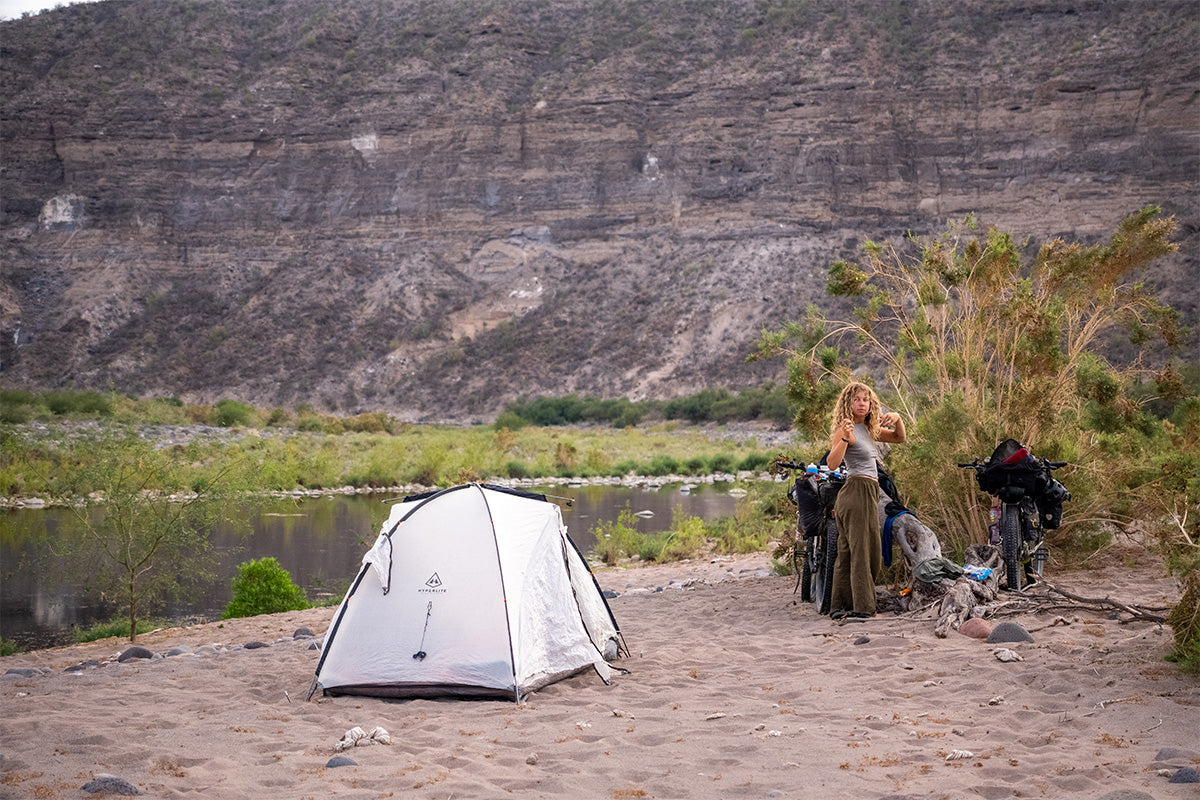
 When choosing a campsite, there are a few “rules” to follow. Do not camp right on the water, whether that be a stream, lake, ocean, river, etc. Not only is it illegal to camp closer than 200 feet to water sources, but it also has the potential to be dangerous. When I was on the Oregon Coast Trail, I had to be mindful of the incoming tide. I could have woken up underwater if I hadn’t given myself enough space for it. On the Great Divide Trail, there were many nights when it poured, and the next morning, you could see how much the stream swelled. If I had pitched my tent too close to the stream, I would have had a rude awakening in the middle of the night. Bugs like to congregate near the water as well, so if you don’t want to be swarmed, get the heck away.
Also, call it TMI, but I get up to use the bathroom in the middle of the night, and it’s just not cool to use the bathroom right by a water source. Be respectful. Another general rule is not to camp right at a trailhead. Trailheads have the potential to be busy and loud, and it’s also illegal to set up right near the parking lot. Depending on the terrain and how easy it is, stealth camping around trailheads is sometimes doable. This depends on where the trailhead is located. If the trailhead is off the main highway, probably not. If the trailhead is five miles down a dirt road, that makes it more likely that it’s going to be okay if you camp near it. You should generally just plan on camping a mile or so from one.
There are a few different things that make up good criteria for a campsite. The first, and I feel like the most obvious one, is the type of terrain that you’re sleeping on. Everybody loves a flat campsite! I’ve had my fair share of rocky, sloped, rooty, and all other uncomfortable types of terrain that you can think of. It’s one thing to lay your pad down and say, “Yup, flat enough”, but it’s another to spend eight hours actually lying in that exact spot. I’ve had to do maneuvers throughout the night where my body has to cup around a rock that’s under the middle of my pad (mostly because I’m too stubborn to actually move). I’ve woken up in the night, having slid down completely off my pad, or other times I’ve completely rolled off my pad, and a base of a tree is holding me from rolling down a hill. I take pride in being someone who can sleep anywhere, but sometimes the environment just keeps me from getting comfy. I also prefer my feet to be above my head, so if I am on a sloped section, I’ll position myself in the best way. Sometimes the slope just calls the shots.
 The next thing to take into consideration is tree cover. Trees that are alive and well make great shade, act as wind barriers, and also provide enough cover throughout the night that sometimes condensation is kicked to the wayside. Trees that have good limbs that aren’t far from the ground act as a good place to hang packs to keep them off the ground, and they also provide a good spot to hang wet clothes from a sweaty day on trail. Dead trees, however, known as widow-makers, are not a good place to post up for the night. You never know when these trees are going to fall, and you definitely wouldn’t want them to fall on you in the middle of the night.
This little tidbit only applies to winter backpacking, but it’s still worth noting, and that is to never camp near an avalanche path. These are easy to spot when you’re looking up at the mountains, and you see a clear path that has slid in the past. If it slides once, it’s going to slide again. Stay clear.
 The next thing to think about is the temperature throughout the night. If you’re camped down in a valley, it’s going to get pretty chilly in the evening, and then in the morning it’s going to take even longer for the sun to hit you, so the chill will last well into when you’re up and movin’ in the morning. There’s nothing like starting your day walking through brush on an overgrown trail that’s wet and cold. Not so fun. If you’re camped high up on a ridge, you have the potential for wind to be an issue, but wind would keep off bugs, and it would reduce condensation. Find a happy medium between a valley and a ridge! I personally enjoy ridge campsites because I think they are the most beautiful. Everyone loves a good ridge campsite picture! However, once on the CDT, my buddy Hank and I were on this ridge above 11,000 feet when an evening storm rolled in. Wind gusts had to have reached 50mph, but I was too stubborn to move. It was 3 a.m., and Hank packed up everything and dropped about 400 feet to find a more protective site. Depending on what you can put up with, you’ll figure out what works best for you and where you sleep the best out there.
The last bit of criteria when deciding on a campsite is how close to the trail you like to be. Depending on how tired I am when I get to camp, sometimes I’ll camp two feet off the trail. This obviously means that I have no privacy and can hear everyone who walks by, and in turn, everyone who walks by can see me too. When I’m not exhausted, I enjoy getting off trail enough where I feel like I’m completely alone out there. There’s something special about pitching your tent, and the only thing that you hear throughout the evening is a bubbling brook, the beautiful birds, and the sound of me shoving food in my face. Being completely immersed in the sounds of nature as you fall asleep has got to be one of the best parts about being out on trail.
 The Leave No Trace (LNT) principles apply heavily when picking a campsite. It’s always best to choose established campsites wherever you may be. This is huge when you’re trekking through alpine tundra or the desert. Both of these areas are very fragile, and impacts can be seen for years and take even longer to bounce back. If there are “No Camping” signs posted in the area, adhere to those conditions and find a new location. With more people getting out now than ever, it’s more important than ever to protect our fragile ecosystems. Following LNT principles, camp on durable ground that has gravel, rock, dry grass, or hard soil. Have you ever woken up on healthy, green grass and seen the outline of your footprint? That’s leaving a trace. It’s best to do everything you can to avoid disturbing the vegetation in any way. As always, pack out everything for each campsite that you stay at. Never leave trash or toilet paper. If you’re feeling kind, pack out the trash that dummy-heads leave in fire pits.
Lastly, mind wildlife, other hikers, and food. If you’re camping in black bear or grizzly country, you are required to adhere to “bear aware” principles by storing your food properly. Whether you do a bear hang or use the bear boxes that are provided, do not have any scented things in your tent. In National Parks where bears are present, we are required to cook in the designated kitchen areas. A fed bear is a dead bear–always remember that! Regarding other wildlife, if you see animals hanging out in areas, do not set your tent up right by them. WE are the visitors in THEIR home. Give all wildlife the space they need to stay wild. Be kind to other campers, too. If you’re camped in an area near other hikers, don’t be loud and disruptive. Remember that we’re all out in search of solitude, and everyone deserves to feel just as wild as you do. So, be respectful.
 If all else fails when trying to find the perfect campsite on trail, trust your gut. If something feels off or you just aren’t “vibing” with it, continue on. Finding the perfect campsite isn’t just about being comfy, but it’s also about respecting the trail and those that call it home, keeping wild spaces wild, and staying safe.
The next time you’re looking for the perfect campsite on trail, take the time to plan wisely, think about the criteria, follow Leave No Trace principles, trust your gut, and just remember that finding a rad spot to sleep is all part of the adventure.
Happy trails and happy camping!