





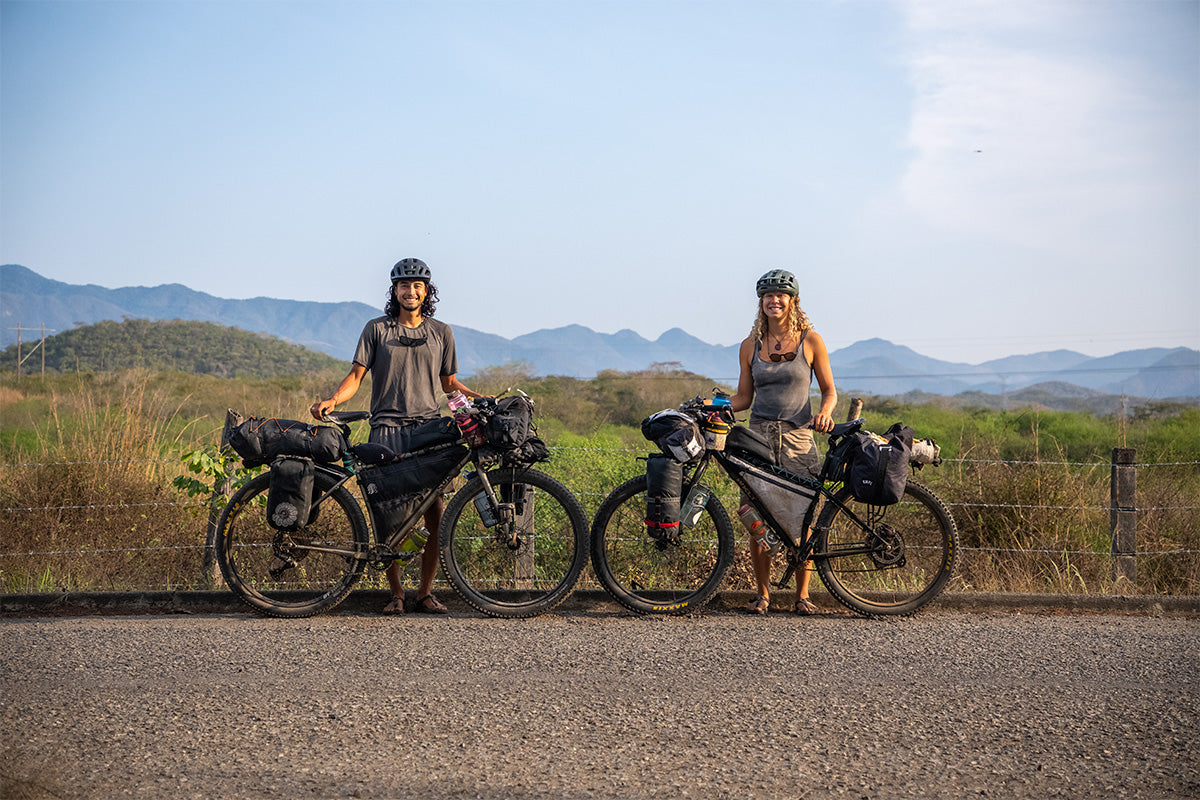
Words and Photos by Rylie and Tristan, @rollingtides.rt
This is the sixth post documenting the surfpacking / bikepacking / backpacking adventure of Rylie and Tristan starting in different parts of the world, rejoining in the US, and ending together until the end of the road in South America. Read about their ambitious journey in Part 1 HERE, Part 2 HERE, Part 3 HERE, Part 4 HERE, and Part 5 HERE. Tune in each month to see how it's going.
 Our experience pedalling the first stretch of mainland Mexico was like cutting into a questionably ripe fruit to find it sweet, juicy, and just a bit messy.
We rolled sleepily off the ferry to Mazatlan, in tow was our new friend Lorenzo, a personable Italian backpacker who had also fallen short of finding a sailboat over to the mainland. We were, however, pleased with our full night of sleep on the rocking ferry and arrived bright-eyed. The passage from Baja in a sailboat would certainly not have been so smooth.
 Lorenzo was hitchhiking around Central America. As a graduate with a master's in psychology and an interest in progressing therapy, he wanted to meet with shamans to discuss the use of psychedelics in treating mental health. Naturally, he was looking to walk or hitch a ride to his next destination, and we were happy to make space on our bikes to take him there. Lucky for us, his next destination was the cell store only 5 kilometers or so through the city. I carried his oversized backpack, and Lorenzo straddled Tristan's bike as we wobbled down the cobblestone streets. Both our rear tires were buckling from the wear of Baja roads; my rim was cracked and perpetually leaking sealant, getting more crooked by the mile; T’s tire was practically bald; and both our chains and cassettes were beyond tuning with a little oil. Though nothing too critical to turn away our new pal looking for a lift. We were planning to stay in Mazatlán for a few days to fix our bikes anyway.
Luck or karmic return found us in the form of an incredible base near the beach. The first person we messaged on the couch surfers app responded that he was out of town, but we could stay at his Airbnb (a well-warranted happy dance then took place in the street). This was a new Mexico; we were no longer in Baja.
 Jabir was our generous host; his mom came by to chat and bring hot soup. We ate in the little white room and debated safety concerns in mainland Mexico. Our hitchhiking friend was roped into staying with us. We enjoyed Lorenzo’s outgoing and charismatic character and bonded over strange travel stories. He moved around the streets already friends with everyone he was yet to meet, and made even the most monotone, stern-faced shopkeepers smile. Later that day, he initiated chatting up a group of surfers, and before we knew it, we were sharing boards and frolicking in the waves.

 We left Mazatlan with bikes still aching to be repaired. T had a new rear tire, but his bottom bracket was making little clicking noises, and the best I could do with my wheel was get it straightened slightly. It would be over 1000km until we were able to attain replacement parts. We prayed for smooth roads and did the only thing we could, pedalling ever forward.
What we did leave Mazatlan with was a new breath for connection. Lorenzo reminded us not only to be open to the kindness of strangers but also to be kind strangers ourselves, to go off-script in daily conversations, and to remind us that we all have something in common.
 Pedalling down soothingly smooth pavement, our minds explored our new reality where wild camping was a concern. Dirt roads were off limits due to Cartel activity; the sides of roads were either high jungle or private orchards, also deemed unsafe by various locals. We thought it smart to find a humble-sized town and ask around for the best spots to camp. When eventually directed to the police station, they told us it was dangerous, and we should continue to the next town. This was the first time that someone had not said “the next place is dangerous”; this time it was “here is dangerous”. It was unfortunately much too late to make it to the next town. We chatted a while and settled on camping in the small plaza in front of the police station. Tristan played a sweaty game of soccer with the local boys as the sun sank. Other than the persistence of curious children and the regular absurdity of small-town noise (roosters, dogs, and car speakers), we slept unbothered.
 Pedalling felt smooth compared to everything that Baja had thrown at us. Our new nemesis was a stubborn sun that beat down heavily on our backs as we inched our way closer to the equator. The heat characterised our rides, sweat building and dripping as we crawled up and down coastal cliffs on our clumsy fat tires. Big tarantulas basked in the heat of the pavement as we rolled by. Each day, when the sun hung high in the sky, we would pledge to wake up earlier the next day and bike before the heat. This plan would usually be spoiled by noisy nights and poor sleep, and we’d crawl out of the tent around the time the sun burned away all of the morning's freshness.
 The military presence on the roads told of tensions and unrest. Huge convoys of heavily armed Police, Marines, and National Guard streamed steadily in both directions. Despite this unspoken tension, the daily encounters we had were always incredibly friendly, generous, and mind-easing. Safe and unsafe continue to be dominating terms thrown at adventure. We don’t typically use these words when evaluating risk, as they are ungraciously dogmatic.
Risk management is a constant balance of collecting observations, information, and listening honestly to a deep gut feeling. When someone tells us that our next destination is safe or dangerous, we’ve been trying to dig a bit deeper. “Be careful” is a greatly overused phrase. How should we be careful? And what should we be careful of? We probe for actionable pieces of advice to take in and share instead. An interesting spin on risk management happened during our transition to mainland Mexico. Habituated to managing environmental risks such as avalanches, rivers, and weather conditions, we were now spinning with a risk particularly difficult to predict: humans.
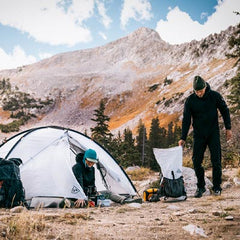
 In our search to replicate a bit of the remote camping we missed and get away from the bone-shaking barking of nocturnal street dogs, we launched a mission to camp at a waterfall a little way off the highway. It would require some hiking and clever packing, as the path was too steep for the bikes. Our Elevate 22 backpacks came in handy as we filled them to the brim for our new excursion. We hiked our way down far from the highway to make camp in the jungle near a gorgeous 10-foot waterfall. The sun sank, and we melted into our sleeping mats, ready for a quiet night's camp. The catch- it seems there's no such thing as a quiet night for us in Mexico.
 2am rolled around, and we were abruptly shaken awake by a pack of barking dogs, and they were gaining ground towards our tent. I cursed.
“How did they find us?”
“How close are they gonna get?”
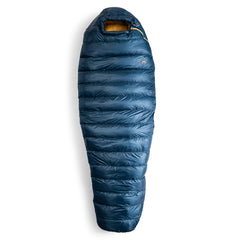
We stirred in our sleeping bags, hatching wild plans to fend off the pack, which luckily backed off after a substantial storm of barking.
In the morning, we felt blessed to be spinning our wheels down 8km of gorgeous descent on a wide shoulder before we even pushed a pedal. The wide (newly constructed) road weaved around mountains and thick jungle with palm fronds bursting out of a deep green canopy. We soared downhill, gaining speed like the passing birds in the morning light. We hollered as we passed through tunnels, cruce de fauna (wildlife crossings), and stopped to chat with Mexican cyclists and roadside farmers.
 The days were stacked, full. Each one, somehow more memorable than the last. We felt lucky; we crossed paths with family friends and were adopted into an RV lot of Quebecers, we were given water when lost in midday heat with empty bottles, we were welcomed into a family who were feasting on seafood, and one morning, we got up close and personal with a scorpion as it scampered up my shorts. One swift brush of my hand sent it flying onto the ground below. It turns out it was one of the more venomous scorpions found in Mexico. Generally, the lighter the colour, the more dangerous the stinger. This one was light as sand. We pronounced it a stroke of luck and hopped back on our saddles.
 Our names were hard to pronounce and usually yielded a confused look, so we tried new names and laughed at the various reactions. It was fun to be a stranger everywhere we went, but the constant newness of exciting interactions was wearing us down as we pushed our wobbly bikes southward.
In a crescendo of thought-provoking experiences, we stayed with Gustavo and his family. We had met Gustavo at one of our many Oxxo (gas station) stops for AC and body fuel. He was quick to invite us to stay at his home, a few days' ride to the south. We originally planned to just say hi, eat at his Birria restaurant, and continue on. But Gustavo wouldn’t let us leave. “Descansen, descansen” – our favourite Spanish word, meaning relax, chill, recover.
He enthusiastically directed us to his backyard, where he’d recently built a huge concrete deck and well constructed thatched roof. With gratitude, we accepted our fate of a relaxed afternoon.
Sitting in their small Birria taqueria, our eyes were transfixed on the lady making fresh tortillas from scratch and slapping them onto a big, round, hot plate. They bubbled to perfection under her casual, practiced care. The tacos were incredible. A gift from Gustavo to our hungry biker bellies.
That afternoon, I mentioned to him that we’d been on the hunt for a Papaya. There were many papaya farms around, but we couldn't find any of the fruit for sale. He popped open a beer, told Rylie to relax (descanse), pointed to some garbage bags for me to grab, and together we hopped into his car. Barefoot, seatbelts abandoned, we turned up the Mexican tunes.
Every minute or so, Gustavo would shake his fist in the air, exclaiming proudly, “Aquí es Mexico!” We pulled off the pavement with lush jungle all around. Tree trunks weaved upwards toward the promise of sunlight. Strong limbs hung over the road like arches. Vines wrapped around the entirety of it all, creeping, clinging, and curling themselves into place. I heard birds I’ve never seen before and lizards scrambling through dry leaves. By the roadside, trash littered the ground. Some burned, most was not. I suddenly understood what we were here to do, and my heart sank.
 Gustavo gestured to me to take the two garbage bags and throw them into the forest. I couldn’t believe it. I recycle, compost, and pick up trash off the ground. I am appalled every day biking past all the trash that is absolutely everywhere. I'm here because we’re raising funds for land conservation. All this flashed through my mind as I did his bidding and threw two big black garbage bags down the embankment and into the jungle. They tumbled down and landed in a heap amongst a pile of accumulated trash. It seems many people in town had been using this place as a dump, which makes sense, as the nearest established dump is far away, and there are no garbage collection systems in place for these small towns. We drove away, leaving the jungle to deal with what we’d discarded. “Aqui es Mexico!”
How easy we have it in the North, where our garbage is collected routinely. Out of sight, out of mind. It’s brought far away where we’ll never need to think of it again. We can buy stuff and throw it away again and again without it accumulating in our backyard or local forest. One day, we will all pay for the convenience of plastic and styrofoam.
It’s easy to see now why, in other places, littering is accepted. If the garbage will end up in the jungle anyway, who cares if you throw it out the window? Some houses have dedicated dumping windows, where Coke bottles and wrappers accumulate in the yard.
I’m reminded of hiking in Nepal with my dad a few years ago. After crossing a beautiful, blue glacier-fed river, we witnessed a mother walk to the middle of the bridge with her young child. She heaved a big garbage bag over the railing and let it drop into the rushing blue below. This was her version of “out of sight, out of mind”. Out of her village, and into the watershed. I probably produce ten times the amount of trash she will in her lifetime.
Gustavo and I cruised down the road for our next stop, a papaya ranch. Thousands of trees full of plump fruits slowly ripened in the sun. We went down the driveway looking for someone, but when we found nobody, Gustavo gave me a knowing look and started plucking papayas off the trees. Two, three, four, five. They all went in the trunk, where the garbage bags sat. He grabbed one more, this one completely green and unripe, and we hurried into the car and drove away. “Aqui es Mexico!” Gustavo shouted proudly over his blaring speakers. Did we just steal all these papayas? I had an inkling that's exactly what had happened. There’s something kinda fun about not fully knowing a language. Understanding enough to get by, but with lots of mystery and guesswork. This was a situation I didn’t feel the need to probe into.
 After many more hours of inefficient errands, we cooked fish on coals, slept fitfully amongst the ruckus of a fiesta, and left early the next morning with panniers full of papayas. No time to process, we moved forward again, wondering what surprises lay around the next bend.