

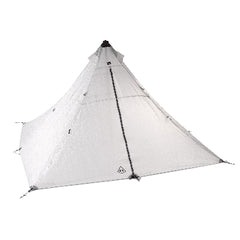
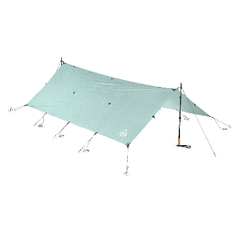
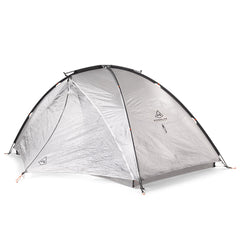


Whether you’re a backpacker, thru hiker, backcountry packrafter, bikepacker, climber, or world traveler, the one thing everyone could all give three cheers to is the mighty pack. No one is getting very far in their pursuits without one that’s accommodating, dependable, and comfortable. As you might expect, we’ve got a few opinions of our own about what differentiates a knapsack from a true mobile home, and evidence from others that we might be on to something.

MIKE ST. PIERRE
The one piece of equipment that probably translates most across multiple outdoor languages is the backpack. In many cases, your proposed endeavor won’t get off the ground without one.
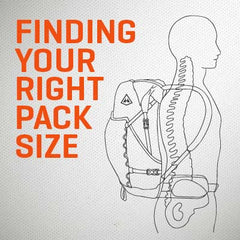
Hyperlite Mountain Gear backpacks speak in some cases to specific activities, but their simplicity and versatility make them suitable and easily tailored to bring success to whatever you are scheming. Given the central role they play, Hyperlite Mountain Gear packs are offered in specific torso sizes rather than extraneous load lifting systems for an organic, true-to-you fit.
A well-fitting pack with 20-25 lb shouldn’t be noticeable on your back. At 20 lb I forget I have one on, at 25 I start remembering it’s there, at 30 it’s starting to feel slightly heavy, at 35 - 40 I start fidgeting with the straps and adjusting them regularly. At that point, it’s still manageable. At 50 lb, it’s a slog. On many of the trips I’ve done in the Grand Canyon with my Southwest 55L backpack, we needed to carry 8-10L of water per day as there was just no water to be had for long stretches. That’s almost 20 lb of water. All the more reason to keep a base weight as low as possible. However, going as light as possible and knowing you can carry 8L of water or 10 days of food opens up lots of new places that would have been too difficult to get into with a traditional base weight of say 20 lb instead of 10 lb.

BETHANY "FIDGIT" HUGHES
"Nature abhors a vacuum.” We humans fill whatever space we have to capacity, so starting with a smaller pack encourages you toward carrying less. While I had been eyeballing the Southwest 55L backpack for a multi-year international expedition, when it came time to pull the trigger, I went with the 40L and never regretted it. My first piece of advice on selecting a pack is when in doubt, go smaller.
I selected the Southwest 40L backpack in black for multiple reasons. For one, I liked the ample pocket space on the outside but also that the material is opaque, thus reducing the temptation to others to swipe your things. The black fabric has the advantage of being slightly heavier duty, so if someone tries to pierce it with a blade (a common petty theft technique is to pierce the bottom of a tourists' bag and expect it to rip open and dump out the contents) or it gets hung up on barbed wire (that one was my bad), the result is just a small hole that does not rip further and is easily patched. The black color also makes your bag lower profile and more easily tucked and hidden in a corner somewhere.

LUC MEHL
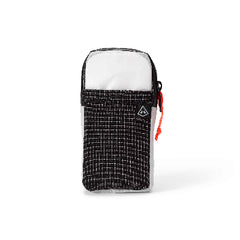
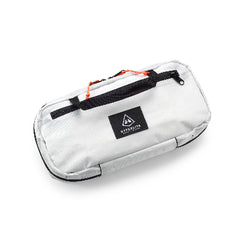
The Hyperlite Mountain Gear models are similar enough that I mostly consider the size of the pack rather than the model. I could make any model work on any trip (filled with a packraft, skis strapped on, etc.). That said, I’ve been defaulting to the Porter backpack with a Porter Stuff Pocket. I appreciate being able to strip the Porter down to a clean exterior when I know I’ll be travelling through thick brush, and the lateral compression straps work well to hold skis. The Accessory Pouch is a pretty critical addition for things I want to access without opening the pack.
I like the Porter 55L backpack for daytrips with minimal gear (backcountry skiing), Porter 70L backpack for day trips with more gear (packrafting) and multi-day summer trips, and the Porter 85L backpack for extended trips. I put 80 lb in the 85L for a two-week ski traverse, and that felt like a maximum load for the pack (and me!).
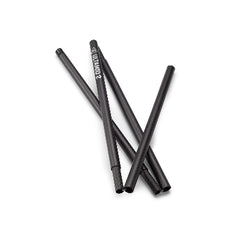
I love that the Hyperlite Mountain Gear packs shed water, and after seeing how well the material holds up to hard use, I’ve never looked for an alternative. The main piece of advice I give new owners is to not insert poles into a stuffed pack. The fabric is incredibly durable, except when under tension. If I avoid that style of packing, I expect at least three years of hard use.

LIZ “HANDSTAND” KIDDER
I adore my Hyperlite Mountain Gear packs. Yes, packs, plural. I’m the proud owner of four of them. Hey, sometimes you need something a little bigger or smaller or with certain features—and other times you just wanna get a new pack because you deserve a little treat. Anyway, I’ve been rocking the Unbound 40L backpack lately which is top notch. The size is perfect for my typical backpacking set up (40 liters if you didn’t catch it in the name). The extra-large side pockets that fit TWO Smartwater bottles are clutch and the secret underneath pocket for stashing my rain gear is such a sweet new feature. I also love that the roll-top design doesn’t have a Velcro closure (my hair always got stuck in the Velcro of my other ones). THAT BEING SAID, my heart will still always choose my Windrider 55L backpack. This is the pack I used on the Appalachian Trail and the Long Trail and it’s just so… rugged looking. I have the black one and I weirdly love that you can see all your junk through the mesh pockets (meant for airing/drying stuff out)— it makes you look kinda hiker-trash-y, but like in a bad ass, good way. The newer packs have the high fabric pocket, which I guess is “cleaner” looking. I also like the hip-belt strap on my Windrider better (it’s thicker, so I suppose it’s a little heavier) but it really helps suck in the ole muffin-top. I’m a loyal Leo and me and my Windrider have been through some shit together. I honestly feel like I’m choosing my favorite child right now—don’t tell my Unbound 40.

MATT MORELLI
I started the Appalachian Trail with 28 pounds in my pack before any consumables. I know all the mistakes one can make because I have made them myself, probably multiple times! With that being said I know success when I see it, and my pack is high in the highlight reel of gear.
The Windrider 55L backpack is a perfect full-sized pack in almost every single way. Its 55 liters gives you plenty of room to fit many, many days of food or the supplies needed for your niche activity, and more importantly, it can handle the weight. Oversized hip belt pockets with watertight zippers easily fit and help protect even larger phones with cases. Exterior mesh pockets add a large capacity in an easy to access fashion.
I had my pack sent to me specifically for the Greater Yellowstone Traverse knowing that the strength of the Dyneema® Composite Fabrics would be critical for this adventure. At roughly 500 miles long, and nearly a quarter being entirely off trail or on trail reclaimed by nature, I had concerns for the mesh exterior pockets getting snagged on undergrowth. The first four days of the trail allowed us only 30 miles through painfully thick brush and over a steep, unnamed pass and down to the valley on the other side. Not once did the mesh get caught on the scraggly branches that swallowed us.
After making it through the Wind River Range and completing the trail, there were a few small holes in the mesh, all of which I believe were my fault. I had completely overstuffed the main pocket with a tripod, my cold soak jar, and a few other items that I would want to be able to access quickly. Combine that with the fact an ice axe was strapped down the middle of the pocket really put an unnecessary and ill-advised strain on the mesh. Through the Winds several glissades were done including one thrilling 700+ foot drop, and that was enough abrasion to rip some holes in the mesh. But once I got home, I packed up my Windrider and shipped it off for repair and a few weeks later she was back with all the holes repaired and ready to go.
Overall, my experience using the 3400 Windrider has been amazing. In the vast majority of cases I would imagine the mesh pockets to not only be adequate, but preferred. I found the mesh makes organization and access much easier since I could see each item I was looking for and didn’t have to dig for what I wanted. The only times the mesh’s durability was compromised was a perfect storm of overstuffing the pocket with rigid objects and experiencing extended periods of high abrasion. I am looking forward to putting many more adventures on my favorite piece of gear.

TYLER "WATER BOY" COSGROVE
I choose the Windrider 40L backpack for most hikes whether it be a quick weekend, section, or thru hike. It’s lightweight, simple, and water resistant – all things I look for in a pack. This pack kept all my gear dry when a group of hikers and I had to swim across a river while hiking through the Greater Yellowstone ecosystem on a new route called the GYT (Greater Yellowstone Traverse) this last summer. I also prefer the mesh netting because it allows for wet gear to more easily dry while hiking. When it comes down to it, though, the Windrider is just plain comfy.

KRYSTIAN "SNAP" REPOLONA
During my journey on the Appalachian Trail in 2016, I used a total of four packs before landing on the Windrider 70L backpack. The first three broke on me, all failing in the same place (stitching connecting shoulder strap to body of pack). There were obvious quality control issues with the company that made my first three packs, and I began looking for a new pack while at Trail Days in Damascus, Virginia. The Hyperlite Mountain Gear packs caught my eye; their form and color seemed high-tech to me – like the space shuttle. Functionally, I was impressed with the material it was made of the most. Having a pack made of a material that is inherently hydrophobic is valuable for trails like the AT where wet conditions are frequent. I have peace of mind that everything I secure inside my pack will stay dry, without having to deal with rain covers which will eventually wet out anyways in sustained downpours. This pack made the entirety of way of the AT from Damascus VA to Mt. Katahdin without any problems whatsoever and still has much life in it for future adventures. I could not be more pleased in my decision to put faith in Hyperlite Mountain Gear packs and their performance for my needs thus far.
This pack has come with me on the Teton Crest Trail, sections of the Pacific Crest Trail, and it’s my workhorse pack for my job in Wilderness Therapy. Contrary to popular belief, the desert can be very wet in the Southwest during monsoon season (July-Mid September). This pack is bomber for keeping moisture out and my gear dry inside during those times.
Having the extra room in the 70L vs. the 55L is especially helpful for all of the additional group gear I am required to carry for my job (Communications, Sharps, Paperwork, Meds, First-Aid, Staff Food). Everything fits snugly inside (warm gear) and in the winter time, everything fits inside but the med/first aid bag which I strap to the outside (med/first aid bag should be easily accessible at all times anyways).

ELOISE “FUNSIZE” ROBBINS
A good backpack is maybe the most personal piece of gear you can buy. It literally hugs you all day, and can be the difference between floating over trails, or being miserable with bruised hips and shoulders. It’s one of the few places that you really can’t get away with using something cheap or ill-fitting without being miserable. My Windrider backpack goes everywhere with me. I love that I can cinch it down and use it as a daypack, or load it with two weeks’ worth of food and disappear into the mountains. Somehow it carries heavy weight better than any other pack I’ve owned, even without load lifters, but is still light enough to take on a quick overnight trip. It’s durable too- mine has three years of heavy use on it (including two thru-hikes, and some serious multi-week off trail adventures), but still doesn’t have a single hole.

JESSICA KELLEY
I love my Porter 85L backpack - It can fit all my paddling gear including my drysuit, packraft, PFD, paddle–AND overnight gear. Plus it's comfortable! I also love that I have the ability to customize it for each trip, adding or subtracting the Bottle Pocket, Vice Versa, Porter Stuff Pocket, or Shoulder Pocket as needed. When I'm only going for a short trip, or I'm not carrying any packraft gear, I grab my Southwest 40L backpack, which has just enough room to carry only what I need. I almost always add my Vice Versa and Shoulder Pocket to whatever pack I'm using because I like having snacks, water, and bear spray that are easily accessible.

PETER BUGG
The Southwest 55L backpack was my introduction to Hyperlite. After many two- and three-day weekend-warrior backpacking trips, two friends and I did five days in the Sierra Nevadas in 2018 and drastically overpacked. When we came home, I started doing some research and landed on this pack. Since then, I’ve added a NorthRim 70L backpack and a Porter 55L backpack to the quiver, and I regularly lend out my packs when bringing friends out with me. I like them all, but if I could only have one pack, I think the Southwest 55 would be it. It’s versatile enough for a lot of different outdoor pursuits - light enough for a day trip, and voluminous enough for seven+ days with a bear can. When friends ask me which pack I would recommend, the Southwest 55 is it.

CARL “PROFESSOR” STANFIELD
The AZT was my first outing with an HMG pack! I went with the Unbound 40L backpack because it was a bit on the smaller end of the scale while still having enough room for me to carry the Unbound 2 tent for my partner and me (she brought her four-pound camera, so I balanced us out by carrying the shelter). Honestly, the feature that sold me most on the Unbound 40 was the bottom pocket. I've gotten used to having accessibility there using smaller packs over the years, and I just gotta have it now.
I tried several hundred miles on the AZT going hip beltless, but I found the loads I was leaving towns with were just a bit too heavy for comfort. The modular system made it easy to slap my hip belt back on, which I'd left at home, and get right back to moving with ease. I was also a big fan of the double pocket system on the front panel, making it easy to divy up my "outside the pack" gear. I'd keep my water filter and bladder in the little pocket and everything else in the normal larger pocket.


