


Quick Summary
In this post in Carl “Professor” Stanfield’s “Confidence” series, he argues that food confidence is a skill worth building early, since most new backpackers overpack out of fear of running out and end up hauling unnecessary weight. He recommends a simple framework of three basic one-pot meals plus 4–7 snacks a day, all sourced from an ordinary grocery store, and notes that most hikers are less hungry on trail than they expect. He closes with a look at his own four-day food bag, including his signature “Ramen Bomb” dinner, and his ongoing goal of packing exactly enough food to finish his last snack an hour or two before reaching town.
Words and Photos from Carl “Professor” Stanfield @prof_carl
A surprisingly tricky component of backpacking is packing food for an extended time in the backcountry. Relying on one bag of food to sustain you for several days can feel intimidating, especially the first few times out. For many, backpacking may be the first time they've had to think about the exact food they’ll be eating for the next four, five, six, or even more days. Running out of food is a typical concern for many on a first backpacking trip. As a result, most people grossly overpack their food on the first trip, which leads to unnecessary extra weight, which contributes to a less comfortable experience on trail. This discomfort can lead to being turned off from backpacking and feeling less eager to stick with the sport. For these reasons, dialing in food confidence on trail is a great investment for any aspiring backpacker.
 WHERE TO BEGIN
While it does take a bit of planning to hit the trail with a properly loaded food bag, it doesn’t need to be overcomplicated. I find it’s best to break food down into intuitive categories and shop with those in mind. I always aim to cover three meals per day, plus a variety of snacks, usually four to seven per day, depending on how deep into a hike I am (a weekend trip looks very different from being two months into a thru hike). While there is a lot of room for variance in meal sizes and numbers of snacks, this is a good, general place to start.
I have met quite a wide range of hiker mentalities towards food in my time on trail, everything from adamant calorie-counting health nuts to the trashiest of junk eaters. What I have gathered is that a lot of different approaches work for different people. There is no “perfect hiker diet” that works for everyone on trail. My best advice is to try to stick to foods that are similar to what your body is used to, and experiment to your comfort level from there. Human bodies are amazing at learning and adapting. Trust that they will be doing this on trail, with better results the more time you’re able to give yourself. It’s incredible how bodies change over the course of a multi-month thru hike.
COMMON MISCONCEPTIONS
There’s a lot more to backpacking food than dehydrated meal bags, granola bars, and trail mix. While these are the foods most commonly associated with food in the backcountry, there’s actually quite a wide variety of food options that do great out on trail.
While dehydrated meal bags are an easy and tasty option, there is a much wider variety of options for hot meals, for both breakfast and dinner. As one might expect, oatmeal is a pretty popular breakfast option on trail, especially for folks who love having hot food to start the day. There aren’t a ton more options for quick and easy hot breakfasts, but I’ve had success with instant grits in the mornings, preferably with cheese and hot sauce for a savory start to the day. Other popular breakfast options are Pop-Tarts, trail mix, and various globs with a foundation of peanut butter. I personally gave up on hot breakfasts years ago, preferring the convenience of something quick and easy to munch on while I pack up in the mornings, but I know many hikers who religiously start their days with hot food and drink.
It’s important to know that “meals” on trail are usually much more basic than meals at home: most people aren’t sitting down with a plate of four different foods at each meal in the backcountry. A backpacking meal is most commonly a one pot/bowl/plate concoction.
Most people tend to overpack food, and they also end up much less hungry on the trail than they expect. It’s actually quite common for the strain of a long day with a loaded pack to exhaust people beyond having much of an appetite for the first few days on trail, especially in the warmer months. So, while the idea of a single bowl of food as dinner after expending yourself for 6, 8, or 10+ hours in a day may sound horribly insufficient, it's often more than enough for backpackers.
 SHOPPING FOR BACKPACKING FOOD
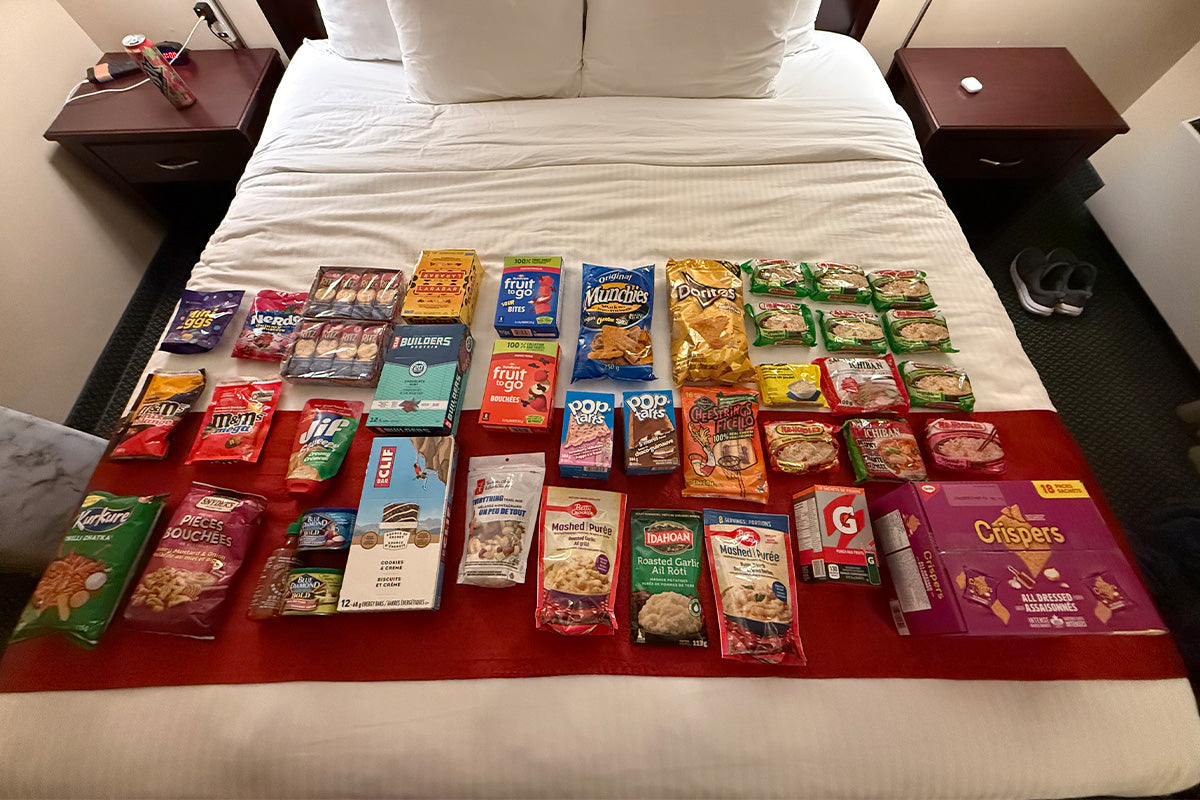
It doesn’t take shopping at a specialized outdoor store to get set up for a successful resupply: any old grocery store will do. While shopping, I find it helps to lay out food in my cart so I can see how much I have allotted for each of my four categories for each day. It can be hard to trust any kind of system for the first trip or two, but giving it the good old college try is the best way to find what works and what doesn’t.
Breakfast and/or lunch can be even further simplified by keeping to mostly the same foods for each day, especially if the components for that meal are easily bought in bulk, like tortillas and summer sausage for lunch, or instant oatmeal packets and toppings for breakfast. Dinner can be a fun meal to experiment with as something to look forward to at the end of the day when settled back at camp. When I was getting started backpacking, I would bring a variety of different foods to cook for each night spent camping, though always one pot meals. There are lots of foods at the average grocery store that translate wonderfully well into backpacking meals. Some of the most popular are ramen noodles, instant mashed potatoes, Knorr pasta and rice sides, and instant mac & cheese. Usually, if a food mix has “instant” in the title, it’s going to be a good candidate for a backpacking meal.
As far as snacks go, I find that while granola bars are convenient, I end up craving salty snacks more than just sweet ones all the time. A variety of chips and crackers always make their way into my resupplies. My favorite hiker hack for chips is to get one large bag for a resupply and crush the whole bag down to crumbs. I eat out of the bag with a spoon to keep my dirty hands from getting all over my food, and also pour crumbs on my dinners to add a variety of flavor and texture to my otherwise mushy dinners. The chip bag is the star of my snack artillery, but I also like to bring various mixes of cracker sandwiches, candies, gummies, and one or two granola bars per day.
 MY FOOD BAG
Now that you’ve been hit with a good bit of backpacking food philosophy, here’s a look at what a common resupply would be for me for 4 days and 3 nights in the backcountry:
BREAKFAST:
-16 ounce bag of trail mix
(I’ll eat about a third of the bag each morning as I’m getting ready)
-Clif Bar
LUNCH:
-Tuna packet (they come in about 20 different flavors these days)
-Chips
DINNER:
-Ramen Bomb
(This is my ultimate go-to trail dinner that I haven't gotten tired of after eight years of eating it regularly on backpacking trips. It is a calorie-dense concoction of one instant ramen packet, ½ a packet of 4 oz instant potatoes, two to three ounces of cheese, and a nice dose of hot sauce. For texture, I’ll top this off with some chips.)
DESSERT:
-Peanut Butter M&Ms
(I like to pack out a family size bag and eat a few spoonfuls after lunch and after dinner.)
SNACKS:
-Various bars
-Cracker sandwiches
-Gummies
DRINKS:
-At least one, ideally two drink mixes per day
(These are a great way to keep up with electrolytes while your body pours sweat, and people are just more likely to drink more water if there’s a little flavor in it.)
 After so many years of backpacking, I now always challenge myself to try to bring exactly enough food for that stretch of trail. My goal is always to be eating my last snack about an hour or two before I get to town. Even today I’m not always right on the nose, but I like challenging myself to maximize my efficiency on trail. It takes a lot of time and certainly failures to figure out *exactly* how much food is ideal for any particular person in the backcountry. When honed, it is a backpacking skill that can ultimately lead to greater enjoyment, fulfilment, and peace of mind in the backcountry.