










Quick Summary
On a five-day lollipop loop through the North Cascades (a modified Inspiration Traverse), Emily Bei Cheng and her partners summited Eldorado Peak in clear weather before fog, rain, and wind pinned them down near Klawatti Col. With the big views gone, she looked down and realized the black "threads" she'd long dismissed as plant debris were actually glacier ice worms, sun-avoiding creatures that spend their whole lives on the ice. The discovery leads her to reflect on how much she misses by fixating on the grand scale, and how losing the big picture can reveal a whole world at your feet.
Words and Photos by Emily Bei Cheng @alpinemily
 I raised a handful of snow to eye level and gasped. No way. Tiny black threads, a few centimeters long, wriggled in the snow that I had just scooped off of Eldorado Glacier. From standing height, I had thought they were bits of plant matter. I had seen similar black clusters on the snow two years ago on the Ptarmigan Traverse and assumed they were roots or dried moss, blown onto the glacier by a strong wind.


They were worms. I looked them up online after the trip and learned that Glacier ice worms, Mesenchytraeus solifugus, live on the glaciers and snowfields of the Pacific Northwest at temperatures around 0°C. In fact, they are the largest organisms in the world to spend their entire life cycle on ice, feeding on algae, bacteria, and pollen bits. When the sun comes out, they burrow deeper into the snow to avoid the warmth, giving them their species name, solifugus, which means sun-avoider. I’d done so many mountaineering trips in North Cascades without realizing I was sharing the land with a population of sun-hating worms.


 I came across the ice worms on a five day trip through the North Cascades, on a modified version of the Inspiration Traverse. Instead of the usual point to point traverse, we decided on a lollipop loop starting at Eldorado trailhead. We would cross Eldorado and Inspiration Glaciers, then continue over McAllister and Klawatti Glaciers, eventually returning the way we came. This arrangement meant we could skip the hassle of setting up a car shuttle and also avoid the steep bushwhack to Thunder Creek trailhead. A point to point traverse sounded more poetic, but the loop won on logistics. Practicality was worth sacrificing a little romance.


Our plan was to camp at Eldorado High Camp the first night, summit Eldorado Peak the next morning, then cross the Inspiration Glacier toward Klawatti Col. From there, we’d establish a base camp with the goal of climbing Klawatti, Primus, Austera, and Dorado Needle. On the final day we would decamp and loop back to Eldorado trailhead. The weather cooperated at first. At the summit of Eldorado, the North Cascades opened beneath us, revealing mountain ridge after ridge, layering upon each other until they faded into the distance.


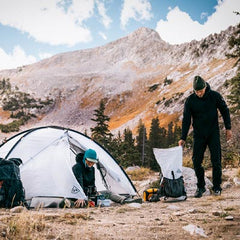
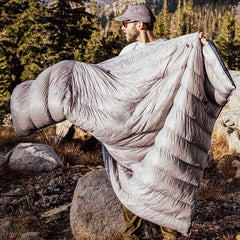
This weather window didn’t last. When we traversed over Upper Inspiration Glacier to reach Klawatti Col, dense fog rolled in and swallowed the mountains, leaving us with twenty feet of gray in every direction. I joked we were inside a ping pong ball. Rain hammered camp and strong winds shook our tents through the night. In the morning, I fought with the stove for what felt like twenty minutes just to boil water. When the sun finally broke through, we spread every damp piece of gear across the rocks to dry. For a few hours, our alpine camp was a garage sale of jackets, socks, gloves, and sleeping bags. When the weather cleared enough for us to climb again, we were rewarded with what we had come for: mellow climbing and enormous views. The climbing itself felt almost secondary to the feeling of being up there.


On these lucky days, the views eclipsed everything else. There was always a new peak to identify or another alpine lake tucked somewhere below that would only be spotted from up high. It was only when the views were blocked that my attention shifted. Staring down at my crampons and the snow beneath them, that’s when I started getting curious about the black bits of string on the glacier. I’d assumed I knew what they were. I hadn’t looked closely enough to realize they were alive.


The ice worms had been there all along, living their tiny lives beneath my feet. The mountains had to disappear before I noticed them. It made me reflect on how much of the world I miss because I’m looking at a different scale. When the weather is clear, my attention is pulled to what is big and grand. Take away the big view, and even a patch of snow is worth examining.


Once I started giving my attention to something so small, it became harder to walk past anything without wondering what else had been there the whole time, waiting for someone bored enough to finally stop and look. What else had I been missing because I was too busy looking farther ahead?