












Quick Summary
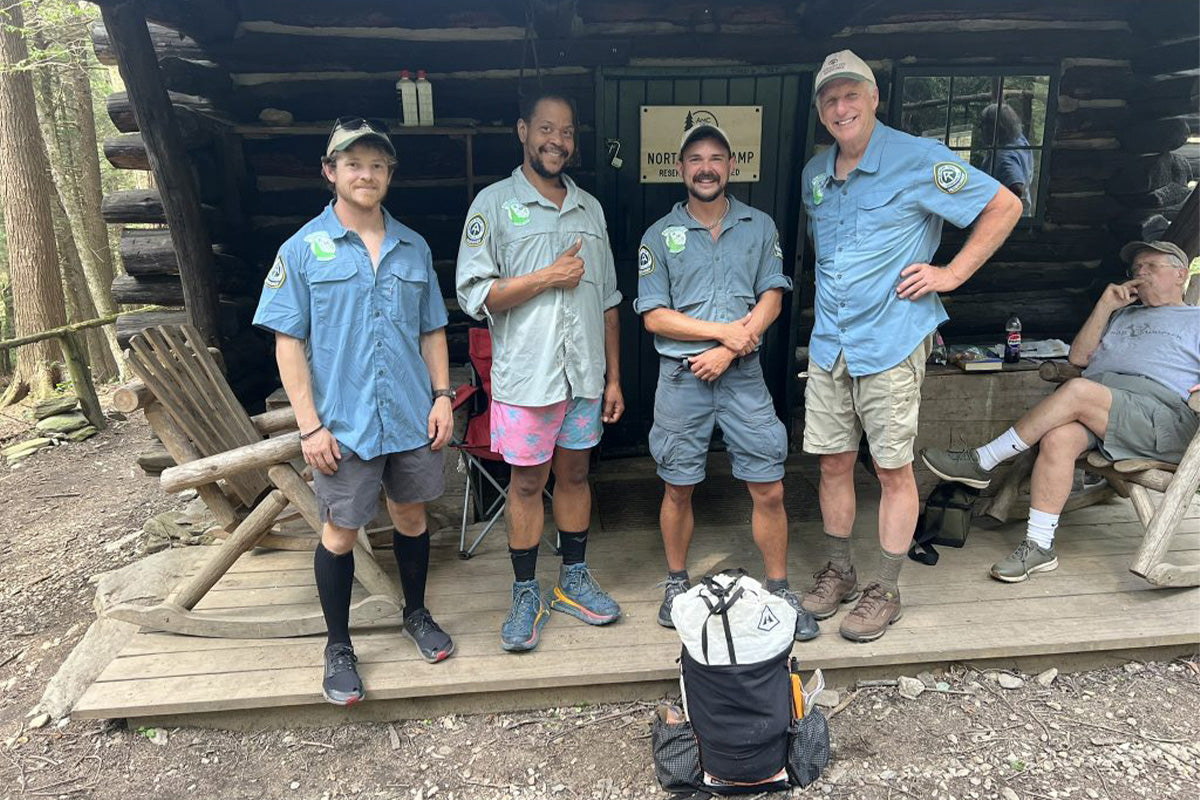
We reached out to the Appalachian Mountain Club and asked members of their Ridgerunner team to describe the work they do. Stationed in Connecticut, they're part of one of the longest continuously run programs of its kind on the AT. During 10-day summer stints covering 63 miles of trail, Ridgerunners maintain campsites and privies, collect trail-use data, respond to search and rescue calls, and talk with nearly every hiker they meet, with safety and preparedness as their top priority. They close the interview with advice for new hikers (set clear goals, expect some discomfort, bring the right gear, and don’t hesitate to turn around) and ask readers to support the land managers who keep trails free, through donations or volunteering.
Words and Photos from The Appalachian Mountain Club @appalachianmountainclub
We're big fans of the Appalachian Mountain Club and their Ridgerunners, and we're thrilled to support them with our gear for the work they do in the field. What's a day in a Ridgerunner's life entail? We went right to the source to find out.
TELL US A LITTLE BIT OF THE HISTORY OF THE APPALACHIAN MOUNTAIN CLUB’S RIDGERUNNER PROGRAM.
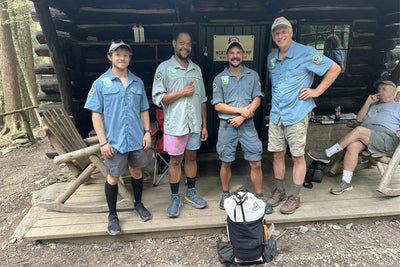
As trail use of the AT climbed through the 80s, it was clear that there needed to be more stewards on the ground educating the public and providing care where needed. AMC started managing the Ridge Runner program in CT in the 1990s and modeled it after those started by the ATC only a few years earlier. It is safe to say AMC is operating one of the oldest continuous managed RR programs along the AT. The size of the program has fluctuated over the years but currently consists of 2 RR and 1 RR coordinator.
 WHAT DOES A DAY IN THE LIFE USUALLY LOOK LIKE? WHAT ARE SOME OF THE RESPONSIBILITIES OF A RIDGERUNNER?
Ridge Runners work 10-day stints with 4 days off from June to September. They usually complete the entire section of AT in Connecticut and 10 miles into MA each stint, 63 miles in total. Each stint, they switch direction. RR carry everything they need and are resupplied with food by the RR coordinator halfway through their stints. Ridge Runners walk the trail, completing trail maintenance while stopping by each campsite and privy to clean and pick up trash and complete maintenance projects where needed. RR are also huge informational resources out there, engaging nearly every hiker they come across, providing information on trail conditions, local ecology, and nearby towns for those hiking the AT. RR also collect all kinds of data, from ecology counts to user types. RRs are also trained to respond to SAR along the trail and do so a few times each season. RR tend to be the eyes and ears for the trail and help trail managers develop policy and predict trends.
WHEN YOU ENCOUNTER BACKPACKERS AND DAY HIKERS, WHAT ARE THE TOP TEACHING PRIORITIES OF THE AMC RIDGERUNNERS?
Safety is the number one thing that comes to mind. Making sure the hiker knows where they are and is prepared for what’s to come. That they have the right food, water, and gear so as not to endanger themselves. Passing along information about water source conditions, trail conditions, and trail or bridge closures could all be important info to pass along. After that, an RR might also educate folks depending on the behavior they’re witnessing. Having conversations about food storage and safety- that, as wonderful as it might be, we don’t want to feed the wildlife or pick flowers. People might think RR are talking about Leave No Trace ethics all day, and while there is some of that, most hikers know not to litter, and in fact we want them to camp at the impacted designated campsites and use the privies and food boxes where available (places where a “trace” is undoubtedly left), all of which help consolidate the impact of hiker use.
 WHAT ARE SOME OF THE COMMON QUESTIONS YOU ROUTINELY FIELD, AND WHAT ARE YOUR ANSWERS TO THEM?
“How far is it to….”
We always give distances as opposed to hike times… You never know how quick or slow someone hikes.
Other than that, folks are curious about water source conditions, especially thru hikers in the late summer.
FOR ANYONE WHO HASN’T SPENT TIME DAY HIKING OR BACKPACKING ON THE TURF YOU KNOW SO WELL, WHAT’S YOUR PITCH FOR COMING OUT AND EXPERIENCING THE TRAILS? WHAT KINDS OF EXPERIENCES ARE THEY IN FOR?
We don’t have to climb mountains! We can make this adventure as challenging or as easy as we want. The section of trail in CT offers a remote experience while never being too far away from bail out points if things become less than fun.
 FOR THOSE SAME FOLKS, WHAT TIPS DO YOU HAVE TO HELP ENSURE SUCCESSFUL TRIPS? IN TERMS OF TERRAIN, WEATHER, AMENITIES OR LACK THEREOF – WHAT SHOULD HIKERS HAVE IN THEIR KITS?
It’s important to determine and articulate what the actual goal of the hike is. If we are trying to make a summit or a view, that’s one thing, but if we just want a walk in the woods and a connection to nature, that’s another. But hiking can be the epitome of “Type 2” fun. Hiking can be challenging, and there might be a certain amount of discomfort one will experience. If we recognize this, expect it to some degree, and talk about it, new hikers will be better set up for success than otherwise. We also always say, “There isn’t bad weather, just bad gear.” Make sure you have the right clothes to wear depending on what conditions you may encounter. And just remember, it’s always okay to turn around if things just don’t feel right. You don’t want to make the paper, and you can always come back…the trails aren’t going anywhere.
 ANY CLOSING THOUGHTS – UNLEASH THEM HERE IF YOU GOT ‘EM!
The last thing I’ll add is to remind folks that trails, bridges, shelters, campsites, privies… these things aren’t free, and they come at a cost… a rising cost. If you take advantage of these things, consider donating or volunteering for your local land manager. The cost or campsite and trail maintenance is climbing fast, and many land managers are struggling to find the resources to keep these places wild and the amenities and trails free to the user. Help out and give back by contributing in some way!