



Quick Summary
Our good friend, NOLS instructor, and Andrew Skurka guide, Jeff Wohl, is back with more deep experience-driven tips! Hear his thoughts about which tents work best for extreme, wet, and windy terrain like the Arctic. He argues weight shouldn't be the primary buying criterion, since most ultralight tent makers achieve lower weight by cutting corners on fabric thickness, guy-lines, or interior space, while hikers happily carry equivalent weight in extra snacks or gear organization without a second thought. Instead, he prioritizes storm-worthiness (sturdy geometry, sloped walls that shed wind, ample stakes and guy-out points) and livability, including enough vestibule space to manage wet gear, cook safely, and even relieve oneself in bad weather (what he calls the "vesta-poop"). He closes with specific HMG shelter recommendations by group size and trip type. If you’ve got the questions, Jeff’s got the answers.
Words, Photos, and Video by NOLS Instructor and Andrew Skurka Guide, Jeff Wohl
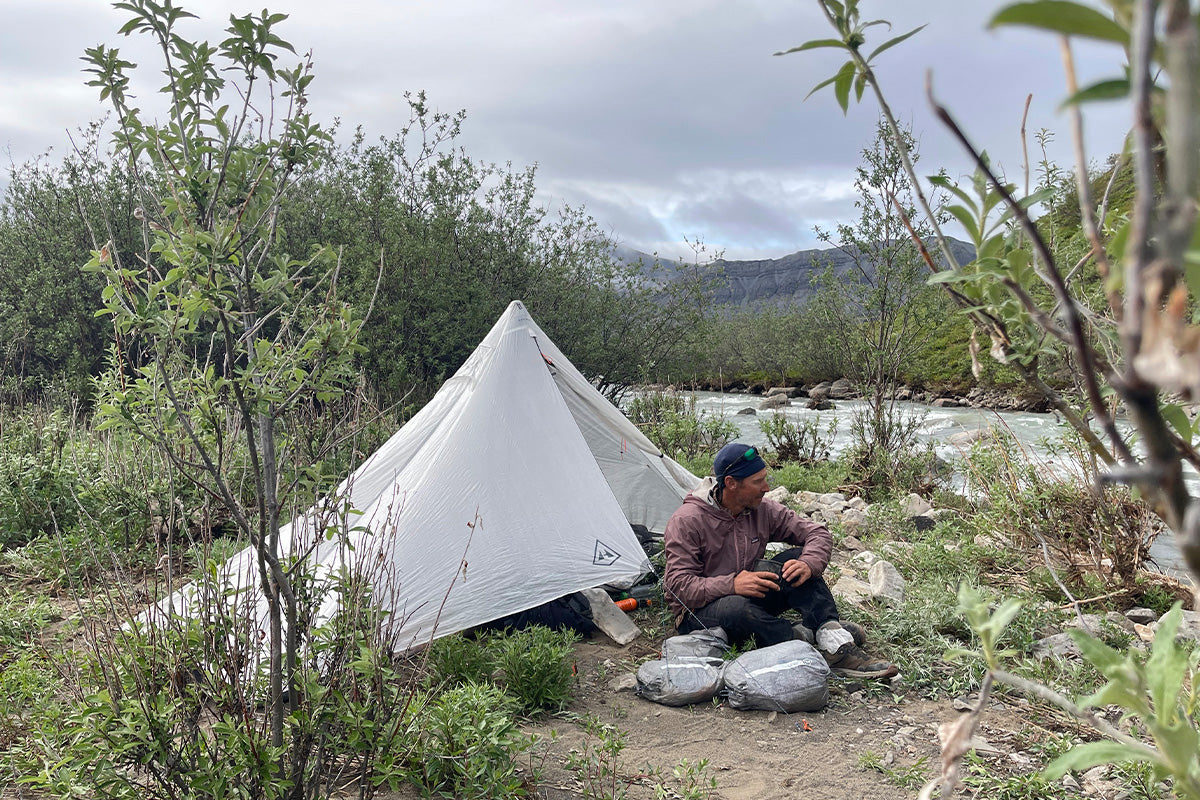
 UltaMid 1 Brooks Range AK
I see another flash of lightning, and a few seconds later the thunder shakes the mountain cirque where my group is camped. The wind whips around, pounding rain from multiple directions; large wet drops mixed with hail batter my tent, making it hard to hear. I reach over to open just the bottom of the bug mesh door and light my stove, while avoiding letting in some of the swarms of mosquitoes that have also taken refuge in my vestibule. I settle in for an early evening waiting out this storm.
 A well set up UltaMid1
The mountains in northern Alaska are beautiful and raw. The weather can be amazing, but when it turns nasty, knowing I can get inside a great tent, stay warm and dry, have a hot drink and meal is a true joy.
 Loving hiking all day in the rain:)
Over my years of guiding, I’ve had the opportunity to test many different shelters and see how many other tents have performed with the groups that I have led.
 Co-guide Katie Gerber in the Unbound 2 in a July snow
Picking a shelter for northern Alaska, the Pacific Northwest, Patagonia, or even high in the Rockies where you might be faced with weather that has a propensity for extreme mood swings and can dish out more than its share of insects, cold driving rain, hail, or even mid-summer snow, is not an easy order. Over my many summers of teaching in these conditions, as well as amazing improvements in gear and gear materials, I have started to figure out what has worked well for me and others.
 Not an atypical collection of visiting wildlife
HOW LIGHT IS TOO LIGHT?
When choosing a tent for any location, I try to make sure the weight of a shelter isn't the first consideration; in fact, I try to make it the last. I have seen too many people look at the reported weight of a tent and base their decision to buy it solely on which manufacturer's shelter is the lightest. All the current tent makers of high-end, lightweight tents are essentially using the same materials. So, to make a shelter that is a few ounces lighter, a tent manufacturer has to cut something out. Some companies do this by using the thinner Dyneema® for the walls and floor, which may not do as well in storms or last as long. Or they may shrink the size of a shelter to where it will work fine in mild weather, but it is not as functional in prolonged wet, stormy conditions.
Some companies ship their tents with only a few inches of super-thin guy-line on the corners and none on the walls, so unless you are setting up in a city park you will probably have to add several ounces of cord to make your shelter work well, likely losing that weight advantage you thought you had paid for. Also, let’s be realistic. I have seen people buy a lighter-weight, less functional shelter, then toss 4-6 extra protein bars in their pack without a thought for the weight.
One other interesting thing I have observed is how many folks like using zip lock bags to compartmentalize their gear. Nine 1-gallon zip lock bags weigh about 4 ounces, and yet we can easily add that weight to our packs without a thought but agonize about buying a shelter that is only 2 ounces lighter than a similar, but more functional tent. Weight is easily quantifiable on a company's web page but only tells a part of the story and not always the most important part. I also believe very few folks will ever be able to feel the difference between a 16-ounce tent and a 22-ounce tent when it is in the pack.
 A typical Alaska afternoon storm
DON’T GET CAUGHT IN THE RAIN!
My first criteria for a shelter is that it has to be able to handle weather well. In high mountains or rugged weather conditions, I will gladly carry a tent that is (Gasp!) half a pound more if I know that it will handle any conditions I might encounter. I can make up for that extra weight very easily by doing a better job of food planning, being able to read my navigation tool so I only carry the amount of water I need and not bringing any extra do-dads such as spare toiletries, pad inflators, or oversized backup batteries.
I have had tents fail in the middle of the night during storms, and it is not fun. Most of these remote, harsh locations I work in don’t offer a lot of natural shelter. There are no trees or even rock piles to put my tent behind. I need a tent that’s going to hold up well in the windiest storms.
A few tents have come out in the past few years with offset pole designs and fairly tall, flat side walls. I have had to get out of my own tent in the driving rain more times than I would like to count to help people put these shelters back up because, even when well staked, they don’t handle wind that well. There are some tents where the walls end a bit high and do not come over the bathtub floor far enough to keep wind-driven rain out.
I have seen many wet sleeping bags from tents with these problems. I like tents with solid tie-out points mid-way up all walls, curved or sloped geometry that sheds the wind well, and tent slides that come closer to the ground. With trekking pole tents, it is important not to skimp on tent stakes and extended guy-lines, since your set up is only as strong as your weakest stake. I like using eight, 9-inch MSR Groundhog stakes at a minimum, and some tents do even better with ten.
 Fog after a night of rain, Anatuvuk River, UltaMid 1
A TENT THAT MAKES YOU SMILE
The next most important thing to me is livability. I love to have a shelter that has plenty of room in these harsh conditions. Being in a cramped shelter when rain is pounding on you day after day, and your only refuge is in your shelter, is not fun, and at worst, your sleep system keeps getting damp and may never get a chance to dry out. I think it is very important to have enough room to take off my wet rain gear and wet hiking clothes and shove them in a corner of the vestibule. Then I get inside the tent and have the dry room to inflate my sleeping pad, snuggle up in my quilt, look at my maps, and organize my kit for the next day.
 Over 6-foot-tall co-guide Witt Wisebram lounging in the UltaMid1
 Great cooking room in the Unbound 2 vestibule
I also want enough space that I can cook safely in my vestibule and not melt my tent, as well as do what I call the “vesta-poop.”
THE VESTA WHAT?!!!
The vesta-poop is somewhat of a niche skill that’s location-specific. I only use it when traveling in remote off-trail areas without impacted campsites, and it is unlikely that anyone will be camping in the same spot as me for a very long time. It’s a great tool to use when you’re in a group setting, and there’s absolutely no privacy because you’re on the Arctic tundra, but you also don’t want to put on your rain gear and brave the bugs to relieve yourself.
I’m not saying this is a mandatory part of Arctic traveling, and some people might even find it a little off-putting, but it also can be an incredible way to improve your experience. I had one client joyously tell me that because of the vesta-poop, they were now able to bring coffee again to the backcountry and that made their experience so much more enjoyable. As a guide, that feels like a real win to me!
 Enjoying a morning cup of coffee in the roomy Unbound 2
With good backcountry hygiene skills, the vesta-poop creates no health hazard in your shelter and enables you to stay warmer, drier, and more bug-bite-free.
To vesta-poop well, a shelter needs a reasonable-sized vestibule. It doesn’t have to be monstrous; it is just best if it is not one of the extra small vestibules I’ve encountered on some shelters. The Hyperlite Unbound 2 and the CrossPeak shelters have two great vestibules, one on each side, which is a great setup for Arctic travel. The Hyperlite Mid 1, although a one-person shelter, has an incredible vestibule. It is quite tall and is also excellent for storing gear, cooking, and doing the vesta-poop when needed.
KNOW YOUR NEEDS
When picking a shelter for a place like the Arctic National Wildlife Refuge, Gates Of The Arctic, or Kobuk National Parks, or any other remote locations, there are some critical questions to ask.
It’s important to think about what kind of trip you are going on. Is this a trip where you’re going to be solo and pushing for long days with little tent time? Or a small party with an ambitious route goal? And are you looking to buy a shelter that might be on the smaller side for the wettest conditions, but fits your needs in most of your other backpacking time?
If a one-person shelter meets your needs for most of your backpacking, then the Hyperlite Mid 1 or CrossPeak 1 are my top recommendations for a one-person shelter that will also do well in the Arctic and other wet and windy locations. Both are comfortably spacious for one person, handle storms well, and have great vestibules.
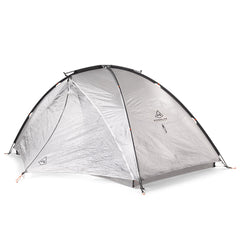
 If I’m picking a shelter for myself or clients on one of our group trips in the Arctic specifically, I go with a 2-person tent. My top choices for these trips are the Unbound 2 or the CrossPeak 2. The extra space is gold when you have been hiking all day in the rain and want a mental and physical break, cook a meal, take care of bathroom needs, and don't want to have to juggle keeping stuff dry as you take off rain gear. Both of these shelters handle storms better than most similar tents in their class.
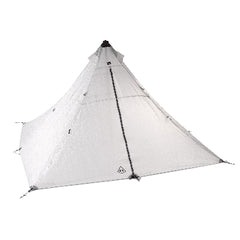
 If I were planning to share a tent on one of these expeditions, I would try to limit the number of people per shelter down to two. My top pick for sharing a tent would be the HMG UltaMid 4, which can be set up in just the fly configuration to get a quick break from the weather during a lunch break, but still have the full inner bug protection and a floor at night. It gives plenty of space for two soaking wet hikers to be inside and not get their sleep systems wet.
Picking a tent can be a hard and personal decision, and there is a lot of confusing and conflicting information out there, not to mention the pitfalls of cutting performance for a few less ounces. No single shelter is going to be perfect for everyone in every condition.
All shelters work great when the weather is nice. It is not until you get the wild mountain weather that you learn if your tent is up to the task. Tents are also expensive, so it is nice to get one that meets your needs and will last you a long time.
Know what your priorities are and buy a shelter that will meet the needs of your specific trip or one that is versatile enough for all your trips. The weight of your shelter should be the last thing you look at, not the first.

Jeff Wohl has been lightweight backpacking since he was five. He has been a guide and outdoor educator since the mid 90’s and thoroughly tested many evolutions of backpacking equipment. When not teaching for NOLS or Andrew Skurka Adventures, he lives in Wyoming with the love of his life, Nikki, and their four nutty rescue dogs.