



Quick Summary
Tina Currin breaks down how she keeps her pack light by ditching traditional all-in-one tents for a modular three-piece shelter system: a tarp-like exterior (for rain, wind, and cold), a ground cloth (the core piece, used alone on dry, low-bug nights), and a mesh insert (added only when bug pressure is high). Rather than swapping gear, she reconfigures the same three components to match conditions on any given trip, carrying only what's needed rather than a fixed setup, making a good case that this modularity is what makes her backpacking kit both lighter and simpler.
Words and Photos by Tina Currin @tinacurrin
A few weeks ago, I gave a talk at our local gear shop here in Boulder, Colorado about backpacking and the evolution of my kit. It started as a lark (Let's go hike the Appalachian Trail!) and quickly became something closer to a compulsion. I’ve done more than 12,000 miles of thru hiking since. My first setup, a bulky twenty-five-pound tower of a pack, shed weight in stages—first in pounds, and then ounces—until what was left looked like a schoolchild's backpack.
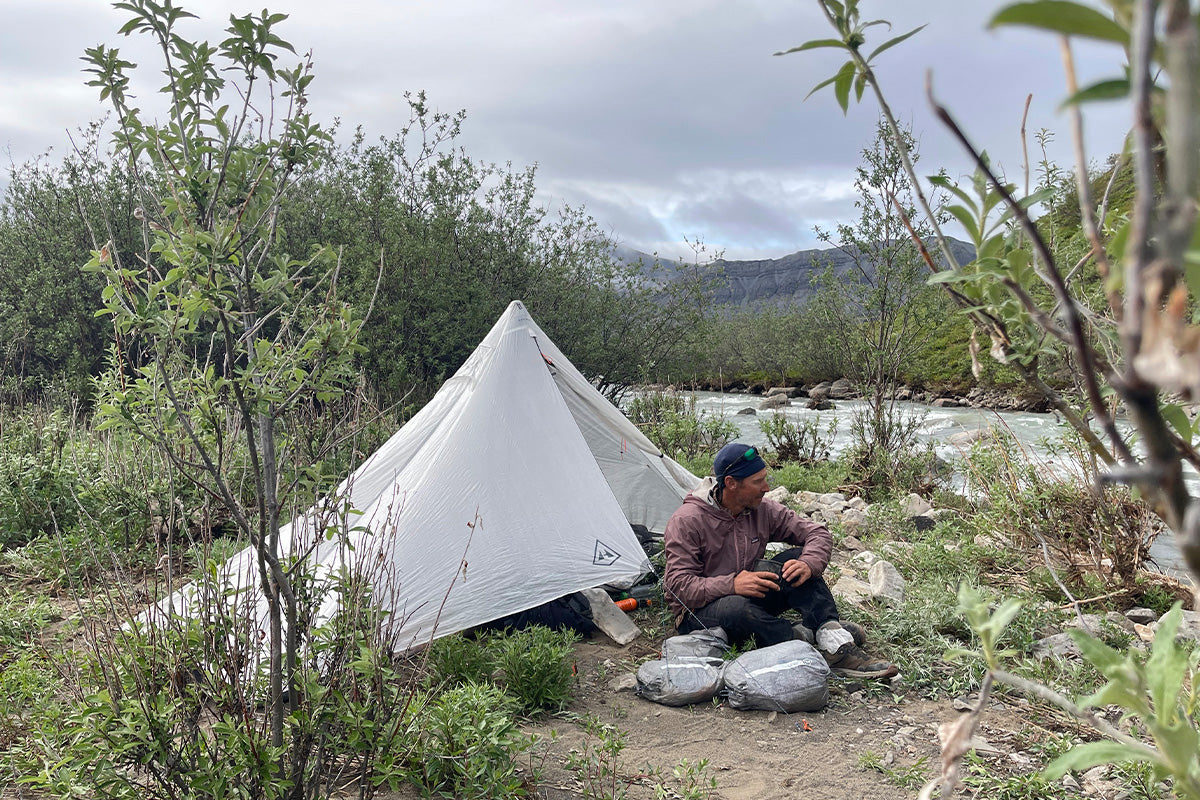
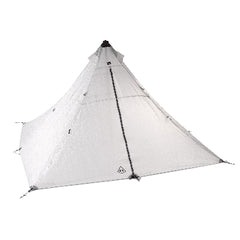
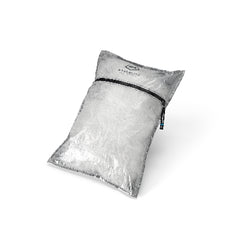
 When I got to shelters, I mentioned one of my favorite pieces of gear: Hyperlite's DCF Ground Cloth. "What's a ground cloth?", I could see people thinking. Then I pulled up a photo of my first ultralight tent, an UltaMid 2, with no floor. "Where's the bottom of your tent?", someone asked. I unfurled the Ground Cloth like a magician pulling a rabbit out of a hat. A few blinks, and then it clicked. They were two pieces, separately unremarkable, that together did more than either could alone.
 Part of how I keep my pack light is by using systems: gear that reconfigures depending on weather, terrain, and how long I'll be out. The gear itself barely changes. The configuration does. And your shelter is one of the easiest places to cut weight you don't need.
On most trips, I carry a modular setup. It's three pieces:
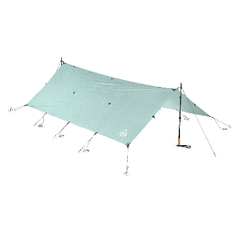
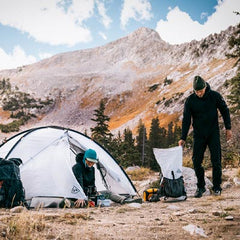
1. A tarp-like exterior shelter. The UltaMid, the Mid 1, or a Flat Tarp. Mainly for rain, but it also helps with mild bugs, wind, or cold. If a storm rolls in, I can pitch it fast, huddle underneath, and keep hiking once it passes.
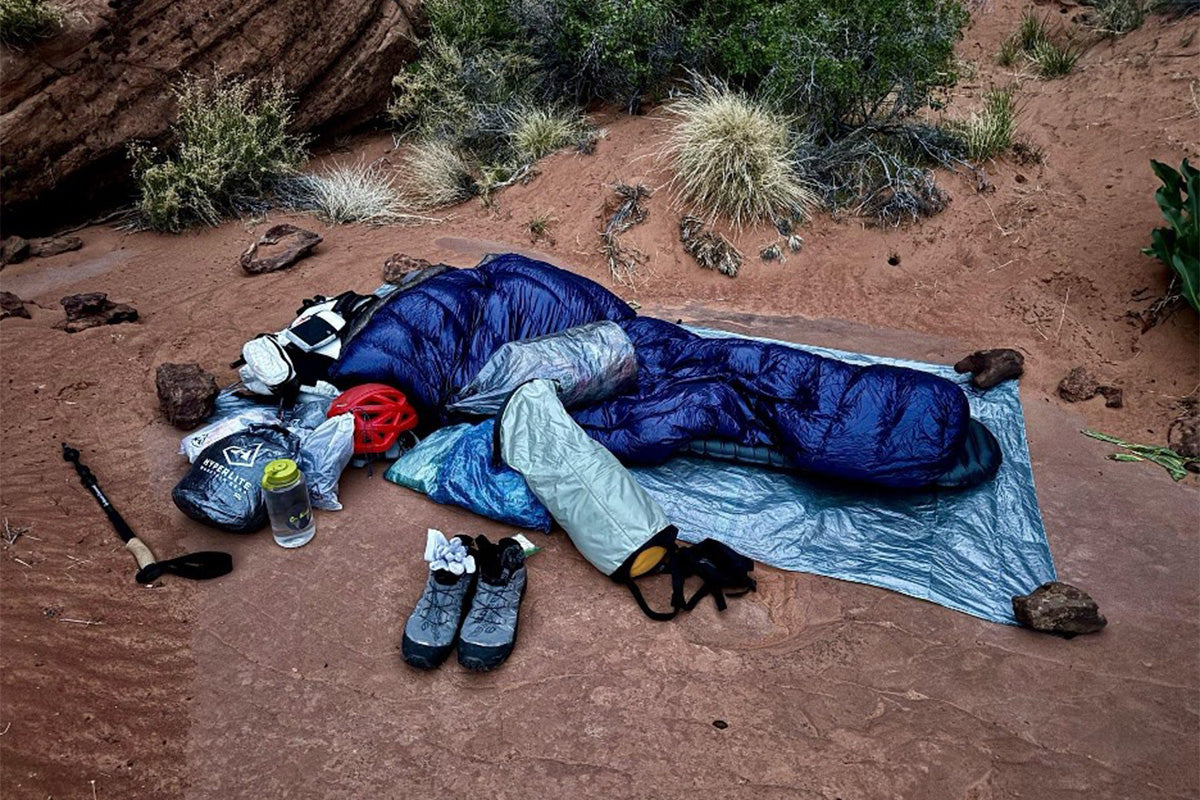
2. A Ground Cloth. It’s the core of my system. It's the floor when I pitch the tent, and all I need when I'm sleeping out. It’s my go-to in the desert, for much of the PCT, while guiding in Escalante, or for dry nights here in Colorado. I've also worn it as a toga on laundry day.
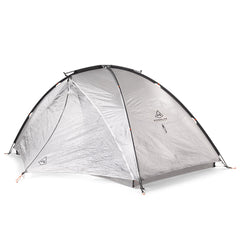
3. A Mesh Insert. For real bug pressure, like on the Florida Trail, during alpine mosquito season, or in Alaska. Most of my camping doesn't need it, so it stays home more often than not.
 With this setup, I can dial my shelter, and my carried weight, to exactly where I am. I've pitched just the mesh interior of my Ultamid during peak mosquito season in the Sierra. There was no rain in sight, so I got a clear view of the stars and all the airflow I wanted.
 On slickrock, a Ground Cloth and a Flat Tarp is all I need. Most nights, I'm sleeping under a Flat Tarp and on a Ground Cloth with no netting at all.
Eventually, you'll want all three pieces at once. Most of the time, you won't. A modular system means carrying exactly what the trip demands and nothing more, which is easier on any single piece of gear, and easier on you.