




Quick Summary
Outdoor adventurer and photographer Emily Bei Cheng shares how the CrossPeak 2 became an essential part of her winter bikepacking and camping trips across the American West. Known for taking minimalist risks, Emily explains how the lightweight, freestanding, fully waterproof shelter fits naturally into her fast-and-light style while offering dependable protection in unpredictable conditions. Through vivid memories of Arizona’s orange desert landscapes, snowy nights in the Sierra Nevada, and the fleeting green hills near San Francisco, she connects the tent’s translucent Dyneema fabric to a deeper feeling of immersion in the landscapes around her. More than a gear review, the piece becomes a meditation on adventure, friendship, seasonal beauty, and the importance of appreciating and protecting wild places.
Words and Photos by Emily Bei Cheng @alpinemily
 I confess I have (had) a reputation. I’ll just say it: I’m the person who leaves the tent rainfly at home. In my defense, I check the forecast. If there’s a 10% chance of rain, though, I’ll roll the dice. Call it a calculated risk. Some of us are optimistic campers. Let me be clear, though: hypothermia is no joke. I know from experience the difference between what is reckless and what is just a slightly uncomfortable, regrettable choice. When the weather is warm, or the trip is short, the stakes are lower. I will pack the tent without the rainfly. Even better, I might cowboy camp. And I usually get away with it dry.
I’ve been rained on, of course. Once in Montana on a solo bikepacking trip, I scooted under a tree like a wet little raccoon. Another time I pulled my sleeping bag hood over my face and simply decided it wasn’t raining. The decision to leave the rainfly at home is mainly pragmatic. Any bikepacker knows how limited packing space is.
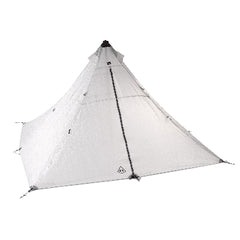
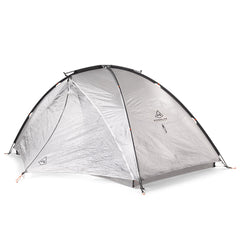
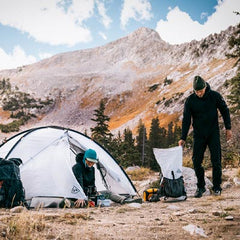
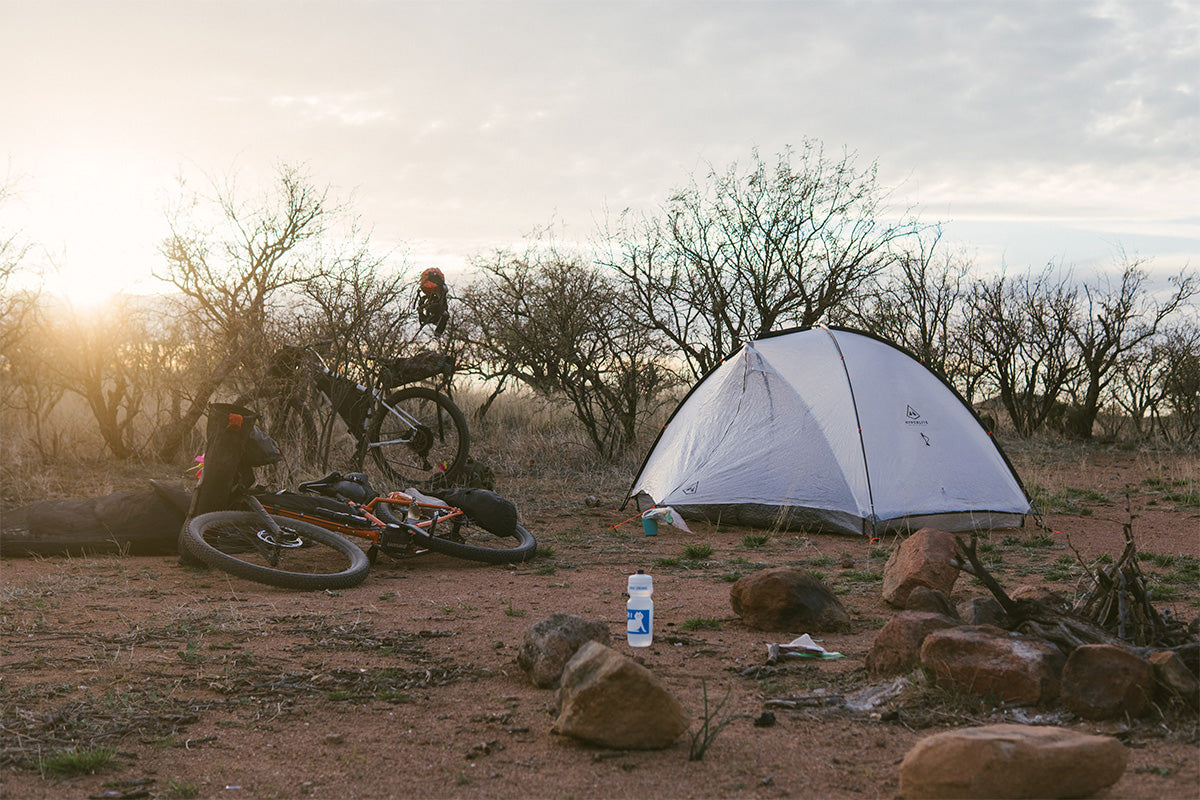
Years with a Hyperlite backpack made their tent lineup the obvious next thing to explore. This was my first season with the CrossPeak 2, and it checks every box. It’s a single-wall tent with a small packed footprint, making it a natural fit for a minimalist bikepacking setup. It’s freestanding, which matters because I go everywhere. The terrain I’m pitching my tent on might be dirt, rock, snow, or sand. Last but not least, it’s waterproof.
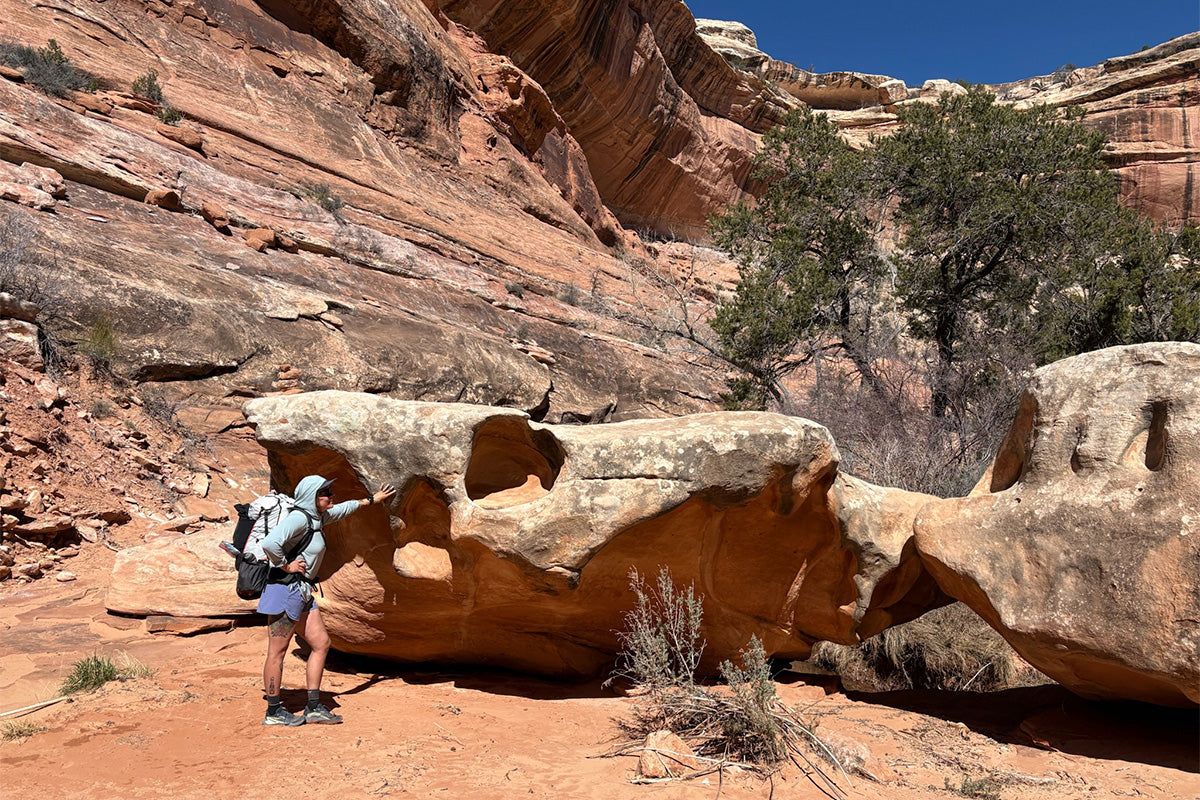
This February I pitched the CrossPeak 2 in a palette of colors. It saw the orange of desert rock, the white of snow, and the green of rolling hills. The variety was a reminder of how incredible America’s land can be, and how much it deserves our conservation efforts. And while it’s not an explicit feature of the tent, its Dyneema Composite fabric has a translucent quality, letting you sense the outside world passing through. With a normal tent and a rainfly on, you zip yourself into a dark cocoon, and you could be anywhere. From inside the CrossPeak 2, I could catch hints of orange, white, and green, depending on where I was. I felt more connected to the earth.
 ORANGE IS THE COLOR OF THE SONORAN DESERT
My first winter trip was a four-day bikepacking loop through the Sky Islands in Arizona. We rode our bikes, but we also stopped to dance and play jegichagi. Pak pulled over mid-ride to play his ocarina at a vista point. Beija found a frozen vacuum-sealed steak at a small store and carried it all the way to camp. In one of the shelters we stayed at, I found an Agatha Christie mystery book and devoured the novel in a single sitting. Books by the campfire, red dust kicked up by our tires, the sound of the ocarina drifting to the far edge of the desert horizon. This is winter in the Sonora.


 WHITE IS THE COLOR OF WINTER IN THE SIERRA NEVADA
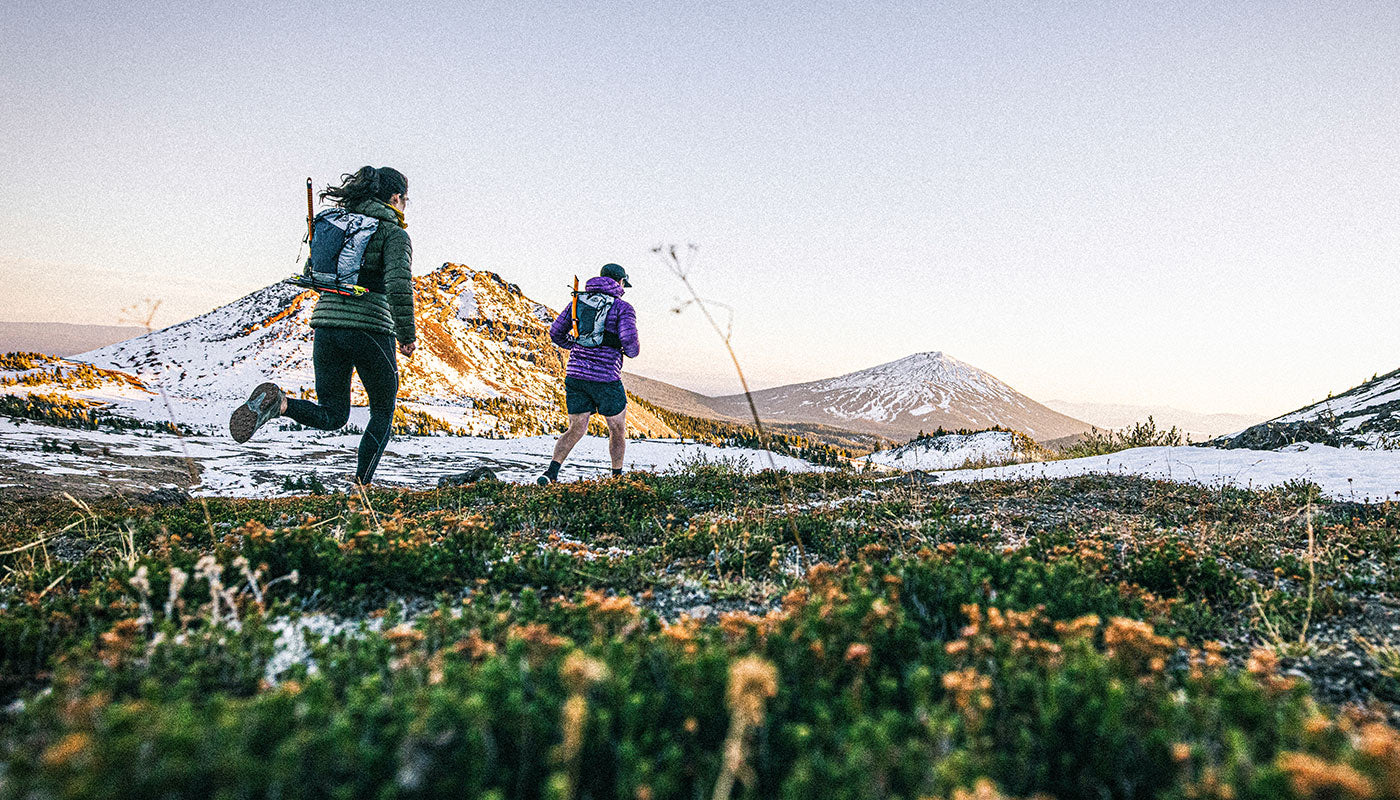
Mckenzi, Alison, and I have done many mountaineering trips together, including the Ptarmigan Traverse and Forbidden Peak. We keep making the big trips happen, but we know that local adventures fill our cups, too. This February, we set out for a winter camping weekend in Desolation Wilderness, camping at Lake Aloha and summiting Pyramid Peak. Winter days are short. By six o’clock we were boiling water for warmth under a dark sky, the cold pressing in from every direction, our headlamps lighting up puffs of breath. Stars emerged one by one until the whole Milky Way revealed itself to us. When the sun rose over the mountains the next morning, I woke up to a lovely pink glow through the walls of the CrossPeak 2 before I even unzipped my sleeping bag. Frozen boots, hot tea, and the slow work of warming up. This is winter in the Sierra.


 GREEN IS THE EPHEMERAL COLOR OF THE BAY AREA HILLS
As a Californian, I associate green with winter. The hills go green for three months every winter before the sun bleaches everything a bone-dry yellow for the rest of the year. Just thirty miles from the front door, I can bikepack from San Francisco into magical forests of Douglas Fir, dappled light dancing against the loam, ferns grabbing at my ankles. Green is magic. I still remember the first time a friend showed me Bolinas Ridge in all its glory a decade ago. We leaped off our bikes overjoyed and ran through the grass, hands outstretched, spinning and hollering as we had jumped into a scene from The Sound of Music. Green is short-lived. That’s what makes it so special. We are better at giving something our full attention when we understand it’s temporary and the moment passes in the blink of an eye.


The cyclical nature of the seasons is generous in this way: if we forgot to cherish the green hills this winter, time will come around and give us another chance next year. This is winter at my doorstep. Home sweet home.