






Quick Summary
In “Downhill to Bear’s Ears,” Amanda Bryan reflects on her transition from an adrenaline-fueled mountain biking lifestyle to finding renewed meaning through backpacking. Seeking a slower, more immersive connection with nature after experiencing bike burnout, she embarks on a three-day trek through Bears Ears National Monument in southeastern Utah with a close friend. Along the journey, the pair descend into the stunning canyons of Cedar Mesa, explore ancient Indigenous dwellings and rock art sites like Perfect Kiva and the Green Mask, and learn about the cultural and spiritual significance of the land protected through Indigenous stewardship. Beyond the breathtaking desert landscapes and archaeological wonders, the trip becomes a deeply personal experience centered on friendship, stillness, and reflection beneath the monument’s famously dark skies. Bryan ultimately celebrates Bears Ears as both a sacred cultural landscape and a place that inspires awe, connection, and a desire to protect public lands.
Words and Photos from Amanda Bryan @amandakbryan
 I’ve been “doing bikes” for about 12 years, and by that, I mean bikes grabbed me by the scruff of the neck and dragged me into an against-the-grain alt scene I never planned on joining. What started as a casual bike shop job quickly turned into a hazy career as a traveling bike saleswoman, which flowed into sports marketing and landed me at events like Rampage and Crankworx. If you don’t know what those events are, can we be friends? If a godlike figure came to me in a fever dream and required me to choose one and only bike to ride for the rest of my life, I would not hesitate to choose a long-travel 29-inch mountain bike, and I would beg for a park pass. I have done my fair share of suffer-festing to be sure, but I will almost never pass up an opportunity for uphill assistance.
On the other side of that coin, I will swoon over a steel-frame, droopy-bar bike with a basket pretty much every day of the week. Put some fat tires and a frame bag on that thing. Yeesh. I have been that girl on a bike tour in the bikepacker uniform, Blundstones or Bedrocks, a little titanium cup dangling from my seat bag, cut-off jean shorts touting their “performance denim,” and swearing my saddle sores were not from said denim.
While I would love for you, the reader, to think of me as a park rat getting rowdy and sending it, and do not get me wrong, I do, that is only half the picture. If I claimed to have abandoned my gravity-seeking prowess and jumped into backpacking, that would also be a lie. I may straddle a world of steel-frame gear geeks and freeride bros, but my heart has always been a bikepacker.
Bikepacking has always been a meaningful way to travel. It is a way to slow down, take in your surroundings, and connect with the elements. But what does one do when they hit bicycle burnout but still want that slow immersion away from crowds? Backpacking.
 Which brings me here. I went from hardly ever to all in for 2026. All my trips are on foot, and I keep researching more, ranging from desert monuments to the Sierras, the Pacific Northwest, and high in the Colorado Alps. Now you get to deal with me oversharing my trips this season. Let us dive in, shall we?

Shop Related Gear
 My first rendezvous with long-distance walking begins in Bears Ears National Monument, which spans 1.36 million acres in Southeastern Utah. Bears Ears is unlike any other protected place in the United States. It is the first national monument created at the request of a coalition of Native Tribes. In July 2015, five sovereign Tribal Nations, the Hopi Tribe, Navajo Nation, Ute Mountain Ute Tribe, Ute Indian Tribe of the Uintah and Ouray Reservation, and the Pueblo of Zuni, formed the Bears Ears Inter-Tribal Coalition to protect this culturally and spiritually significant landscape. The coalition is badass because it fundamentally changed how public lands can be protected in the United States. When the monument was created in 2016, the coalition secured a formal advisory role in land management alongside federal agencies, something that had never happened before at this scale. This reframed conservation as Indigenous stewardship instead of treating the land as empty wilderness. The coalition emphasized that Bears Ears is a living cultural landscape, full of sacred sites, cliff dwellings, rock art, and thousands of years of history. Bears Ears is a powerful example of Indigenous nations leading the protection and stewardship of their ancestral lands within the U.S. public lands system.


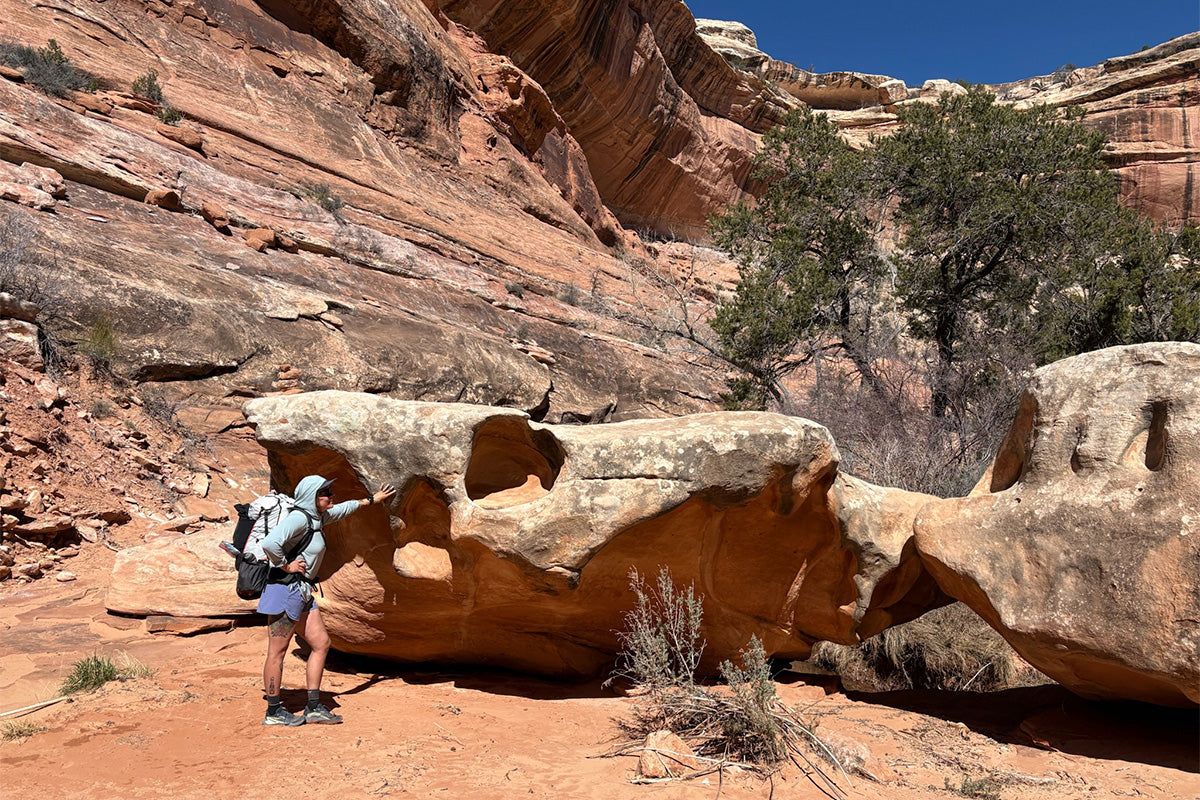
 My friend and I started our trip on the Cedar Mesa Plateau at the trailhead for Bullet Canyon, a tributary canyon to the Grand Gulch. Grand Gulch is a serpentine canyon that travels over 50 miles and eventually drains into the eastern half of Cedar Mesa and the San Juan River. Over the course of seven miles, we descended 1,075 feet to the canyon floor. I will admit I was sweating at first as the trail was basically a glorified cow path through scrub brush. I stressed that maybe I had chosen the wrong trail, and my friend came out from North Carolina to walk a cow path. What had I done? Gawd, our brains can be loud.

We rounded a corner and were greeted by a high, beautiful wall of Cedar Mesa Sandstone. The drainage deepened as we stepped down a long, slickrock chute, taking in the stunning sun-bleached ochre, dusty sage, and canyon-specific red. Descending and leaving behind the pinion-juniper forest, I also left behind the worldly anxieties that had no place on this trip. How ultralight of me to lighten my mind, eh?
 A major motivator for this route is the opportunity to experience the dwellings of the area's original stewards. The first site, about 4.6 miles in, was Perfect Kiva. It is hidden from the main canyon, so you have to pay attention. We spotted cairns and a worn path, dropped our packs, and scrambled over sandstone to the site. True awe hit as we approached. Rock art indicates the Basketmaker people first occupied the site, with structures constructed during Puebloan 2 and 3 periods. The Kiva, a subterranean room used for ceremonies and gatherings, has a reinforced roof, thanks to the BLM, and a non-original ladder so visitors can experience its construction. It is mind-blowing to enter, given that most dwellings discourage touching artifacts or rock art.
 Around the next fin, you’ll quickly see the Jailhouse dwelling high on the cliffs. This site's name comes from the vertical stone bars built into the masonry openings, which resemble jail bars. The “jail bars” are actually a smart design for airflow, light, and durability, not a prison. What really grabs your attention, though, is the massive circular carvings high up on the wall. A size that makes you assume they are meant to be easily seen throughout the canyon. We didn’t know at the time, but these sunlike/shieldlike symbols would be the biggest and boldest petroglyphs we would see on the whole trip.
 Once Bullet Canyon met Grand Gulch, we headed north toward Sheiks Canyon. Towering canyon walls surrounded us as we followed a well-trodden path through clusters of Fremont Cottonwood and Mormon Tea. We occasionally broke off a piece of Mormon Tea for light chewing just to feel a touch cowboy. At the mouth of Sheiks, we dropped packs and searched for a spring flowing up the canyon. Around a corner, dwellings perched on a south-facing cliff made me screech in excitement. Not even a full day in, and our voices, singing, shouting, laughing, disturbed the canyon ambiance. Hikers we passed remarked on hearing us long before seeing us.
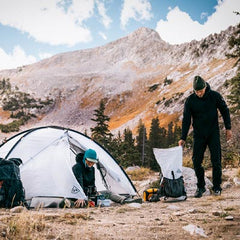
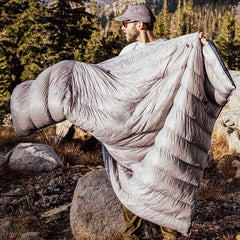
 With the sun setting, we decided to find camp and save the site for our first morning activity. Once water was secured, we stumbled into a high-up, wonderfully sandy spot overlooking the pictographs, and I immediately knew I was going to sip my coffee and stare at them the next morning. Equipped with the knowledge that Bears Ears is a designated Dark Sky Park, my friend and I pulled out our sleeping pads, tucked ourselves in, and watched the stars fill the sky above the canyon walls. The two of us shared some of the most deeply tender parts of ourselves as lush shooting stars streaked the sky. Being “alone” in a place of stillness creates a wide expanse of space to crack open and just be human with others. This was my true highlight from this trip. The cold chill of the night nipped at us enough, and we begrudgingly crawled into our tent while a Great Horned Owl Hoo-hooed us to sleep.
 Sheiks Canyon greeted us with a thick, buttery morning light. We quickly slurped our coffee and breakfast because we had a canyon to explore. Packing was swift, and we went to have a look at the Green Mask dwelling. The site shows long-term use, with evidence spanning the Archaic period through Ancestral Puebloan occupation. What makes the Green Mask really stand out is that it’s the only one of its kind found in the area. This unique pictograph is a face painted with green pigment, likely coming from copper-based materials. The mask is part of a huge panel of rock art you can see spanning high up on the walls.
 With Canyon wrens serenading us with their downward cascading song, I noticed the canyon floor starting to come alive. Along the wash, purple flowers were in bloom, and small red buds were beginning to appear at the ends of the branches. It really was a special time to be in the gulch.
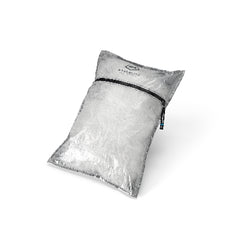
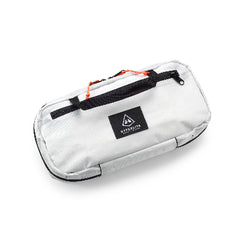
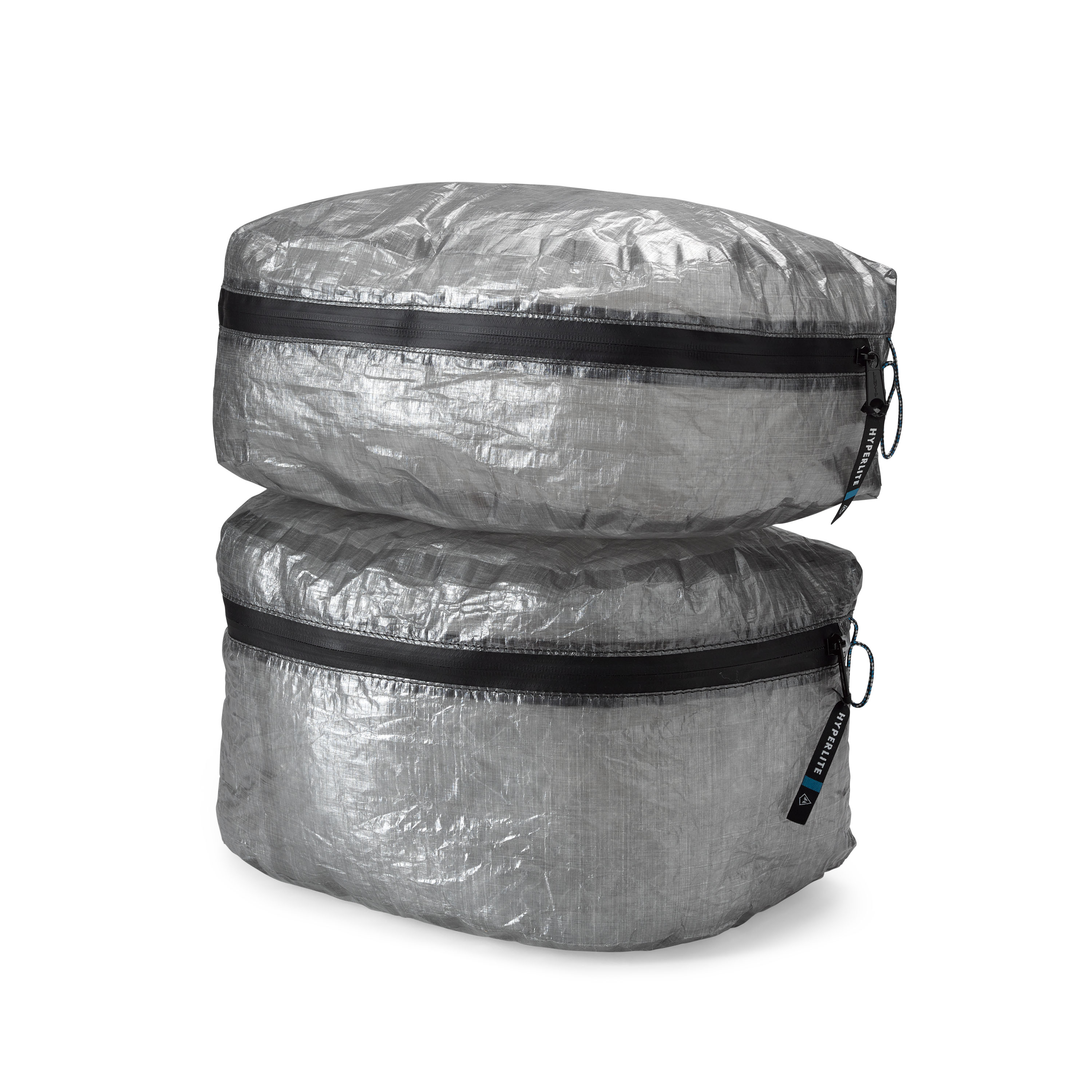
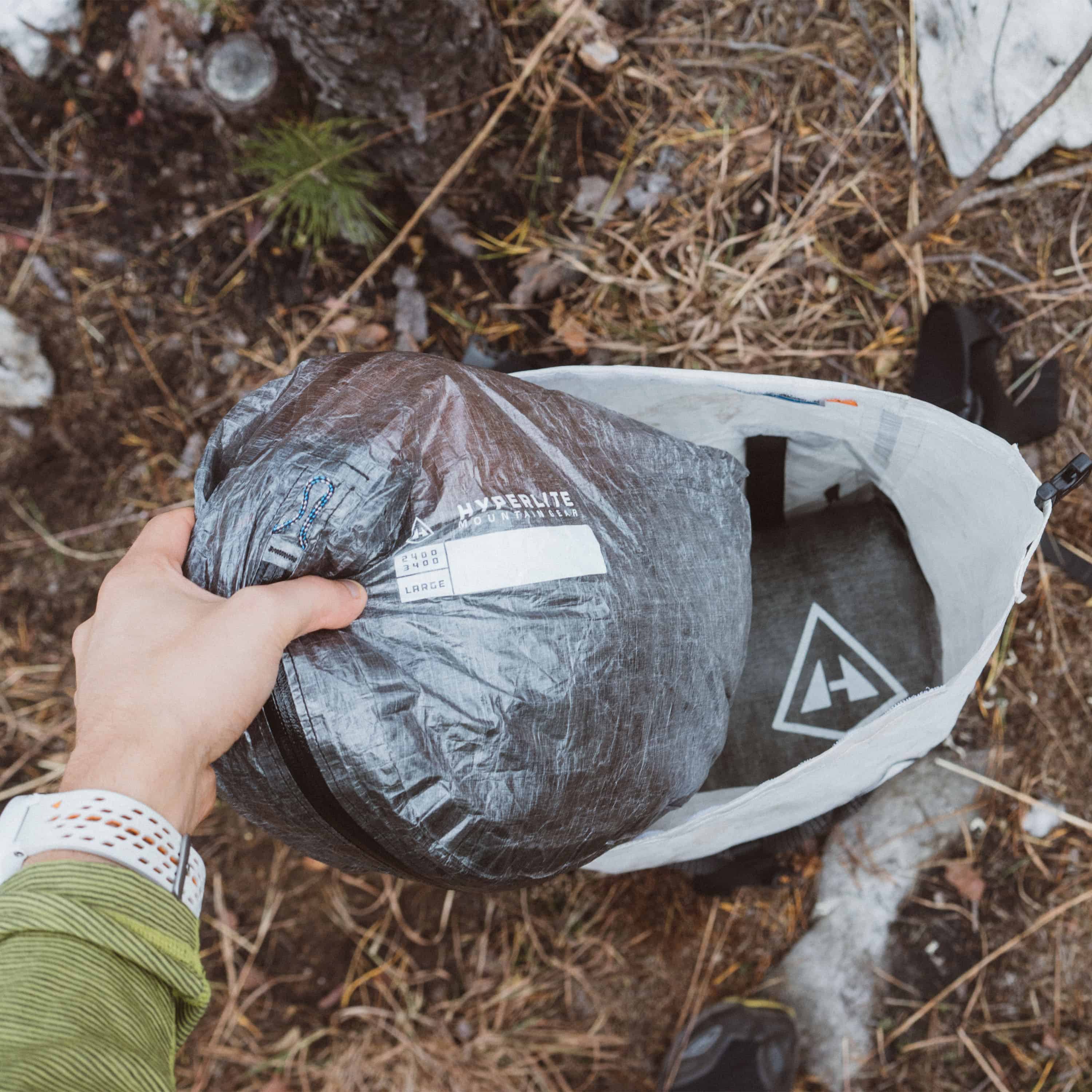
The junction of Toadie Canyon and the Grand Gulch was our final night on this pleasant weekend trip. Once we found our site tucked into a juniper grove, I surprised my friend with a small carton of wine and a Burt's Bees skincare mask. The desert wreaks havoc on your skin, and a wine + skincare night is just simple and wonderful girlhood activities. Combine that with a night filled sky of the most vibrant Milky Way, and you’ve got yourself a girls night of your dreams!  On the last morning, we packed slowly. Using a few of Hyperlite’s Pods, I looked like a backpacking veteran. Exiting via Kane Gulch was a treat, with gorgeous springs and green-tinted pools. One pool was deep enough to jump into. The last 30 minutes mixed sadness that it was over with relief. Seeing the ranger station roof, I rejoiced at the thought of cold drinks waiting for us. Cold water, then beer, quenched our thirst as we kicked off shoes and sun layers and participated in the post-adventure ritual of sprawling stuff-n-things across the parking lot.
This two-night, three-day loop is as pleasant as it is awe-inspiring. I hope this report inspires action to protect Bears Ears, respects its cultural significance, and, at minimum, encourages you to visit.