






Quick Summary
NOLS Instructor and Andrew Skurka Guide, Jeff Wohl, knows his stuff when it comes to keeping gear functional in the backcountry. Knowing how to fix a zipper is invaluable and can help keep you warm, dry, organized, and more.
Words, Photos, and Video by Jeff Wohl
 Zippers are an amazing addition to outdoor gear. They add convenience and functionality to packs, jackets, tents, and more, but zippers should not be viewed as a lifetime item. One should expect that over the lifetime of a piece of equipment, the zipper will likely wear out before the useful life of the tent or jacket. However, there is great news! Zippers are easy to repair in the field or at home.
The most common reason zippers stop working is that the slide wears down to the point where it can no longer compress the interlocking teeth tightly together. This happens faster with smaller zippers or when zippers are dirty or overly tight.
You can prolong the life of your zippers by occasionally adding zipper lube or Chapstick to the teeth, keeping sand out of them, and loosening the tent flies before opening or closing the door. If your tent has a buckle at the bottom of the door, clip that buckle before opening or closing the door to take the strain off the zipper.
It is a simple process to fix this worn-out slide problem: remove the worn-out slide, slip on a new one, and install a stop. Over the many years I’ve worked in the outdoors, I have done this many times and kept my tents and jackets working so they've kept me warm and dry.
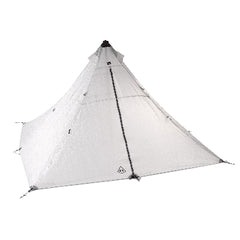
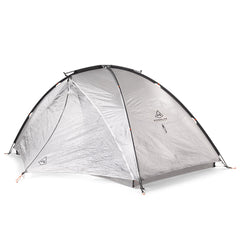
 I carry a variety of zipper slides in my field repair kit. The most common slide sizes on the outdoor gear I use are the #3 double-pull (like found on the HMG UltaMid 1, Unbound 2, and CrossPeak 1 and CrossPeak 2 tents) and the #5 double-pull (found on the UltaMid 2, UltaMid 4, and many jackets, bags, and packs). I carry an assortment of sizes with single- and double-pull zippers, since zippers have an inside and an outside, and not all manufacturers install them the same way. However, if I have some zipper replacement slides with double pulls, they will fit most things. Also, you will want double-pull zippers on your tent doors so you can use them both inside and outside your tent.
Many tents also have a built-in spare slider. Most tents have a top zipper and a bottom zipper on the doors, so you can vent the top of the door. But most of us put 90% of the wear on the bottom zipper. This means when your zipper starts to fail, you can just remove the worn-out slide and replace it with the less-used top slide. Your tent will have only one zipper slide at the point, but your door should close tightly and be storm-worthy.
THE PROCESS
1: Cut the zipper teeth so the slide can be removed. On a tent, this typically means cutting both sides of the teeth near the top of the door. On a jacket, you can cut the teeth near the top of the side the slider is on.
 2: Remove the slide. Look at the slide and teeth closely to see how it fits, so you will know how to install the new slide.
 3: Install a new slide by threading it over the teeth, pointing in the direction you want the zipper to close in. On doors with a top and bottom zipper, you would thread one slide facing down and then one facing up; the second, upper slide is a bit trickier to thread. Before installing, check the alignment to ensure the zipper slide is inserted on the correct side of the zipper teeth. The teeth will be flatter on one side and have a distinct bulge on the other. You will notice the zipper slide has a shape that will fit only one way.
4: Sew or install a crimp stop. Once your zipper is on and functioning, use a crip-style stop or sew around the teeth just below the cut area so the new slide can’t come off.
 Sewing a stop.
 Flattened crimp stop.
Now your puffy jacket or tent is nearly as good as new, and you have no need to end your trip or be parted from your gear to have it repaired!
Jeff Wohl grew up in Wyoming and has been backpacking since he was five. He has taught for NOLS since the late 90s, leading trips with teenagers to astronauts. He also guides for Andrew Skurka Adventures. He has just returned from a Utah-guided backcountry canyoneering expedition, exploring remote, little-known canyons. He heads to Northern Alaska soon for a month of exploring the Arctic. He loves getting out on personal trips with Nikki, his partner, and their many rescue dogs (who lead to more zipper repairs).


