



Quick Summary
Zak Mills recounts a three-day Sierra high-country trip where he pushed his pack weight down to 16 pounds using the HMG Elevate 22, testing an ultralight kit that included a 40-degree quilt, a two-person mid shelter, and no stove — relying instead on ready-to-eat food. He shares practical field lessons (washing socks and shirts on the trail, the trade-offs of a stoveless food strategy, and rethinking shelter size for buggy-but-dry forecasts), while noting that going ultralight let him travel off-trail 80% of the time, including scrambling and bushwhacking. Can he go even lighter? He's game to find out!
Words and Photos by Zak Mills @_zakmills
We’ve all heard the saying “Less is More,” and while it isn’t always true, I have found it to be a bit of a North Star when packing for trips into the mountains. My early backpacking days were actually spent portering heavy backpacks for clients heading into the mountains. I was laden with 50+ pounds for three to five days, and the idea of going in with 15 pounds would’ve sounded like a fantasy. Last summer, I decided to live that fantasy and challenged myself with a three-day trip into the mountains, with the Elevate 22 as my pack-size limiter.

I had to forgo many things that I’d usually bring along and ended up with a gear list of:
- HMG Elevate 22
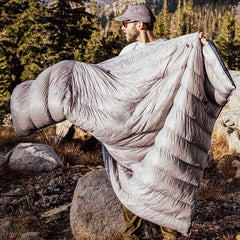
- HMG 40-Degree quilt
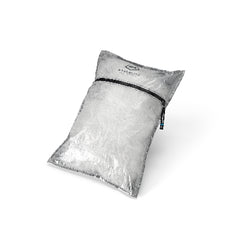
- Inflatable Pillow
- UL sleeping pad (Therm-a-Rest NeoAir XLite)
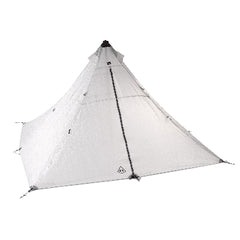
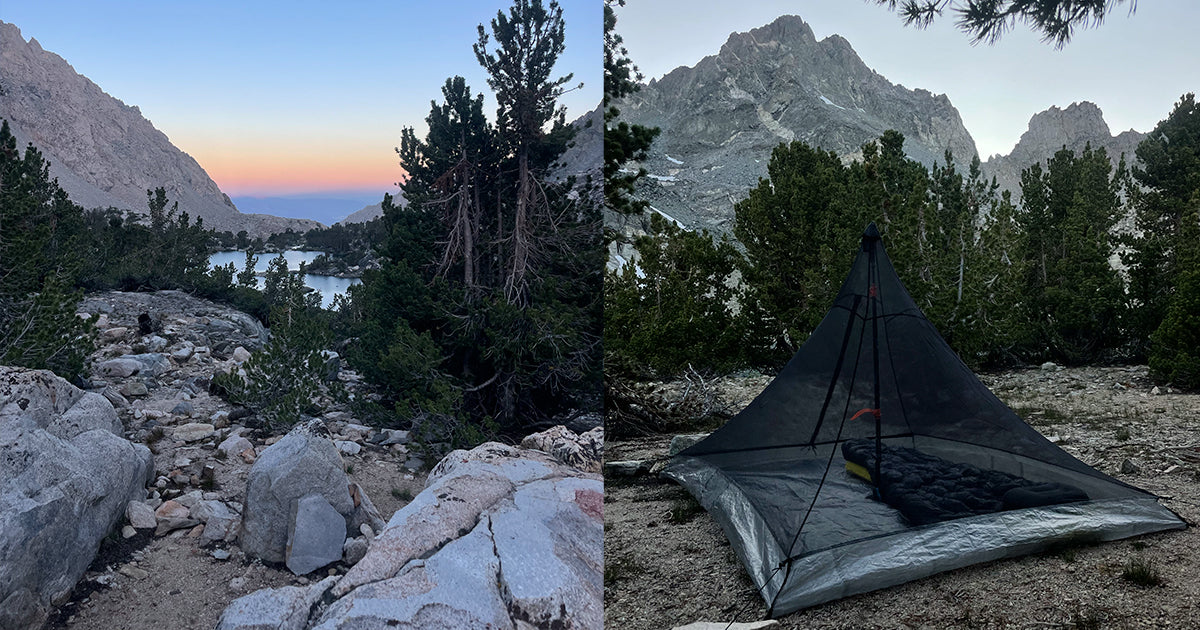
- HMG UltaMid 2 w/ Full Insert
- UL headlamp
- Lightweight down puffy jacket (Arc'teryx Cerium)
- Zip-off pants (that I wore)
- 4L MSR Drom bag with hose for water
- Sunhoody (Arc'teryx Cormac)
- Collapsible trekking poles (BD Distance Carbon Z poles)
- Two ski straps to use the trekking poles as a tent pole
- Hat
- Sunglasses
- 2 pairs of socks (one on my feet, one extra)
- 2 burritos
- 1 salami stick
- 1 block of cheese
- 1 quart Ziploc of trail mix
I left with 1L of water in the drom bag and planned to fill the bag as I went. All said and done, the pack weighed 16 pounds when I left the trailhead - nice. It felt so good to leave the car with such a light burden!
Let’s talk about a few details of my kit. This trip was in July in the Sierra high country. I’d be sleeping about 11k feet both nights, and the forecast was for lows in the 50s with no rain in the forecast.

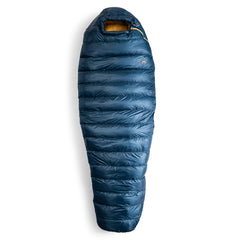
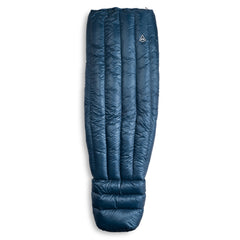
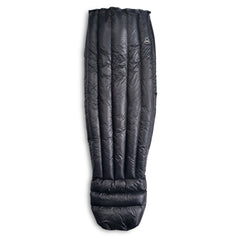
Sleeping: The 40-Degree quilt was perfect for this temp forecast and is so small and light! I always bring a pillow; call me a diva if you will.

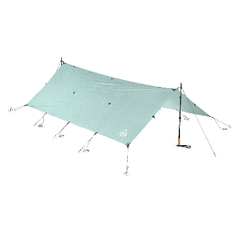
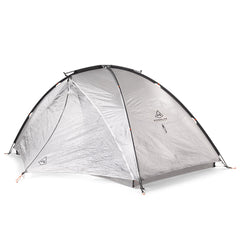
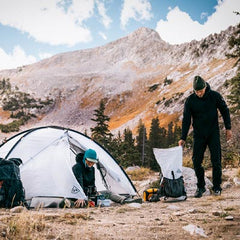
This time of year can be really buggy, so a tent was definitely necessary. In a perfect world, you wouldn’t need one, but the two-person 'Mid bug net worked well for this and was definitely spacious but it was also more tent than I really needed, and I was taking a bit of a risk not having any shelter, as unforecasted thunderstorms do happen. In the end, it worked out, but I think I could’ve improved my kit for this forecast by having something smaller, like an HMG Mid 1 or even an Unbound 2.
The pad I brought isn’t the smallest or lightest on the market, but I have popped so many UL sleeping pads that I figured a slightly heavier, bigger pad was a compromise I was willing to make since I wasn’t bringing a foam pad to put under it and protect it.
CLOTHES
I’ve had success bringing 2 pairs of socks no matter how long the trip is in the summertime. When I get to camp, the first thing I do is wash my socks and feet (just water, no soap) and put on the dry pair. The wet pair usually dries overnight or is definitely dry by the next evening. This rotation has worked for up to 10 days, and the socks feel pretty fresh each time you put them on as long as you don’t let the socks dry and get crusty before rinsing them out. On hot July days like these, I will wash my shirt in a creek as well at opportune moments. It takes a bit longer for it to dry, but hiking with a wet shirt on in the summer isn’t so bad anyway. Important note: if you choose to do this, be strategic about where you wash up. Lakes are less optimal than a running stream, and the more volume the better!
The zip-off pants are so nice for summer backpacking! The ones I use have a zipper around the lower pant cuff so you can go on/off without taking your shoes off - nice.
FOOD
I chose to try a trip without a stove and just bring ready-to-eat food. Since it was just three days, I figured I could get by. I’m not sure I would go this route again. I brought two burritos from a local taco truck, and by the second night the burrito was a little soggy and tasted a little funny from two days in hot temperatures. I’m sure I could’ve made some better food choices, but it was worth trying, and it was nice to not have the stove/pot taking up space in my pack. This also meant no coffee in the morning, which would be a deal breaker for a lot of people. I certainly enjoy my coffee, but in the summertime I can skip it.
One of the biggest advantages to making all these weight concessions was how easy it was to scramble around off-trail with my bag. Instead of utilizing trails to get places, I was off trail for 80% of this journey. This included some 4th-class ridge scrambling, lots of talus piles, and a little bit of bushwhacking. The comfort sacrifices felt worth it to be able to travel through the mountains so unencumbered and go so deep. Maybe I’ll try it again this summer and dial in my kit a little bit more! Who knows, maybe I’ll get sub-15 pounds and really live that fantasy.