

Quick Summary
Jada Lippincott walks through her full thru hiking kit, built around ultralight gear. Along the way she shares hard-won trail wisdom — sizing your pack after your other gear, keeping a dialed base weight for frameless packs, and small comfort hacks like dedicated camp socks. Her overall philosophy: keep things light and simple, and don't overthink gear choices before you've actually tested them on trail.
Words and Photos by Jada Lippincott @whereisjadaa
 The hardest part about thru-hiking or long-distance hiking isn't doing the miles day after day; it’s figuring out what kind of gear you need to do it day after day. I’ll be the first one to tell you how overwhelming it can be with all the options that we have available to us.
Even figuring out where to shop for these items is hard: a brick-and-mortar store or an online cottage company. I’m not calling myself a professional hiker by any means, but I have spent a few years and a few thousand miles perfecting what I need, and what I don’t when I’m out there on the trail. I have found that the lighter my pack is, the happier I am and the easier it is to keep doing what I love: thru hiking. The hardest part is getting out there, and then everything else is a piece of cake.
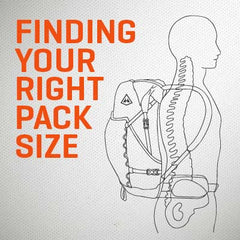
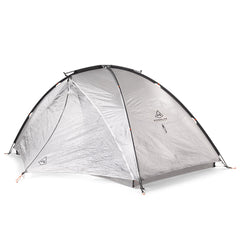
The “Big Three” is your backpack, your sleeping system, and your tent. I say sleep system because you usually use more than just one item to go to sleep. When you are considering a backpack, you usually want this item to be the last that you pick, because you’ll want to have all other contents together before you try to shove it in a pack that may be too small. So, have all your items together before you decide what liter capacity you want. Here’s the thing: if you choose a backpack with a little bigger capacity than what you need, I promise you will find things to fill it. So, don’t give yourself any wiggle room with your pack. You’ll thank me later.
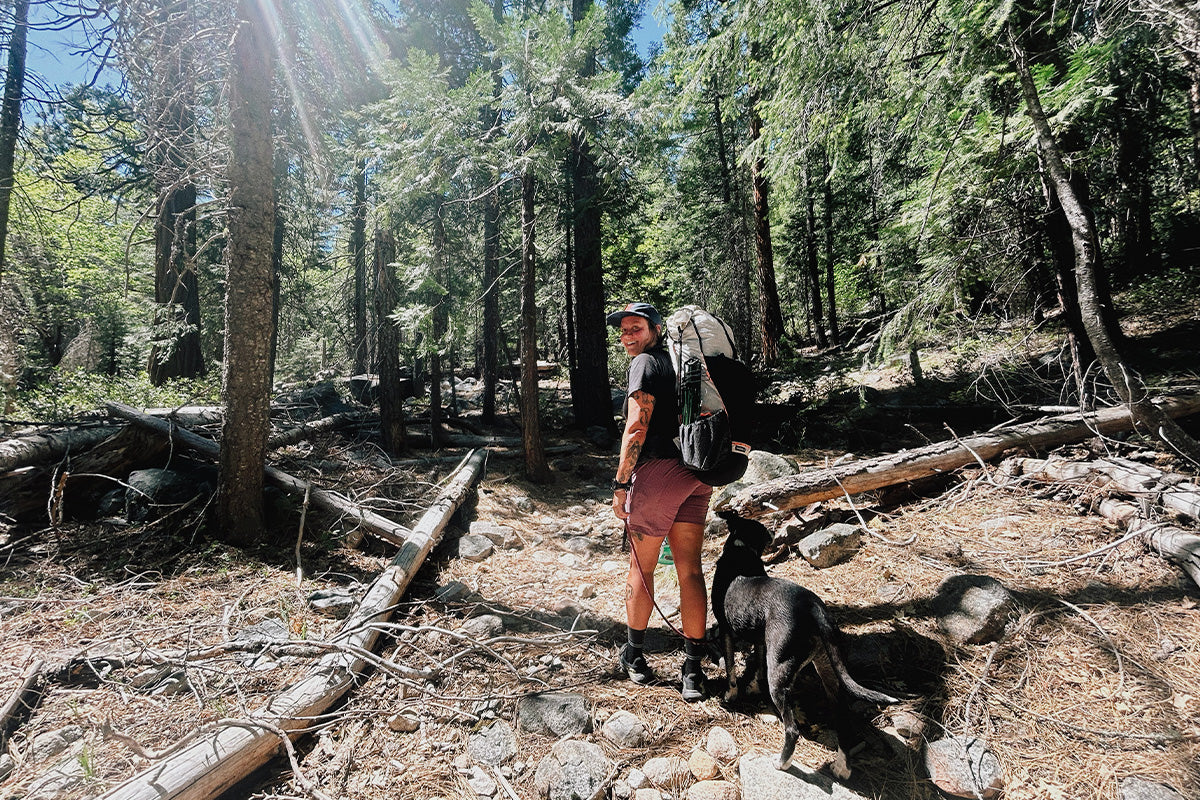
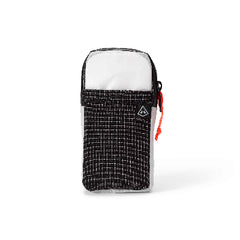
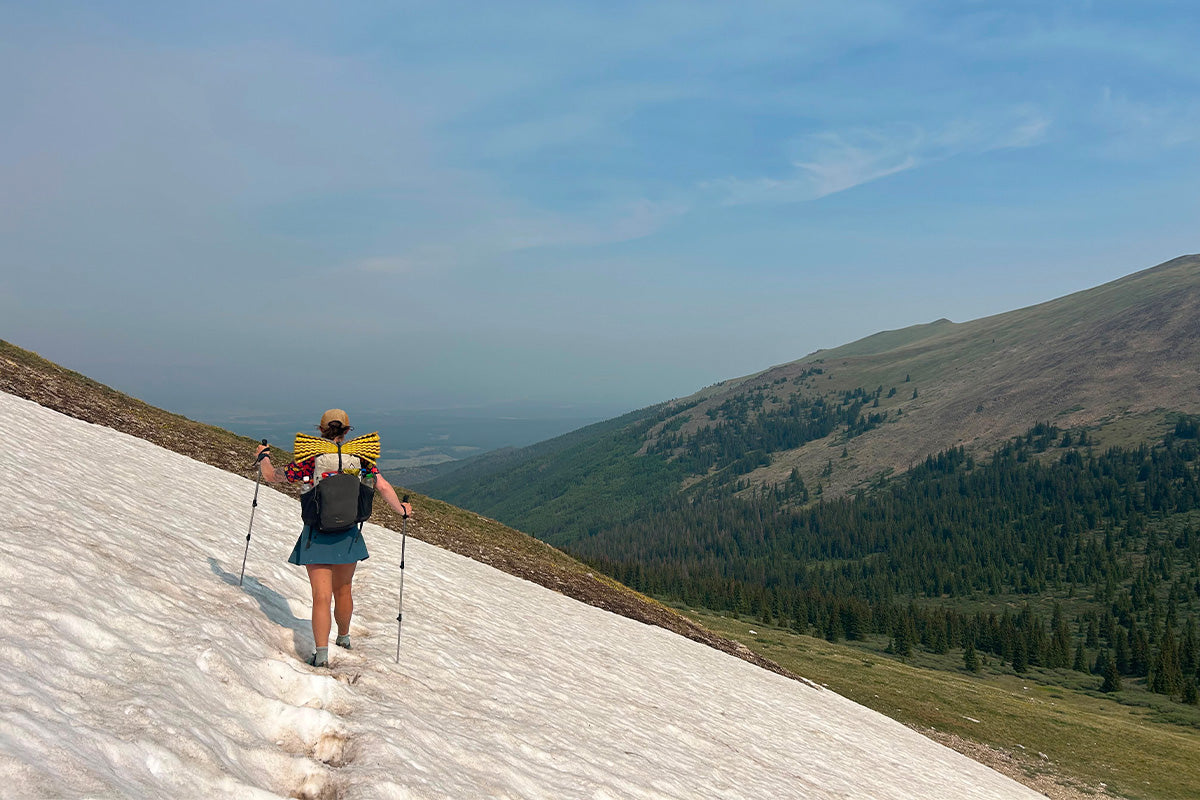
 My go-to pack has been the 35L Contour 35 from Hyperlite Mountain Gear. This is a simple, no-frills frameless pack. With a frameless pack, you have to have a pretty dialed kit, meaning a low base weight. You also have to pay a little bit more attention to how you pack when it’s a frameless pack, so you don’t get any pokeys in your back. I’ve used this pack on a simple trail, like the Colorado Trail, and on a technical trail, like the Hayduke Trail. The body of the pack has a big roll-top feature that provides ample room when you have a big food carry, like eight days. The shoulder straps have stretchy pockets that provide space for a phone, headphones, headlamp, ChapStick, sunscreen, and any other little items you need easy access to throughout the day. The daisy chains on the shoulder strap allow me to hang my Peak Design camera clip off of it. The sternum straps are comfortable, even for the big-chested girlies. The side pockets are made of a durable material, so if you’re squeezing through sandstone or granite, it will hold up. The bottom pocket is what I keep my snackies in for the day, so I don't have to get my food bag out at every break. It’s got a little trash hole in the bottom pocket as well. It’s got a massive stretchy pocket in the back where I keep my tent, my rain jacket and rain pants, fleece, and my water filter! You don’t need to put all your wet rain gear and tent inside your pack this way. Even though the pack is made of waterproof Dyneema fabrics, I still use a 50L seam-sealed rolltop pack liner to keep all contents in throughout the day, to make extra sure things don’t get wet.

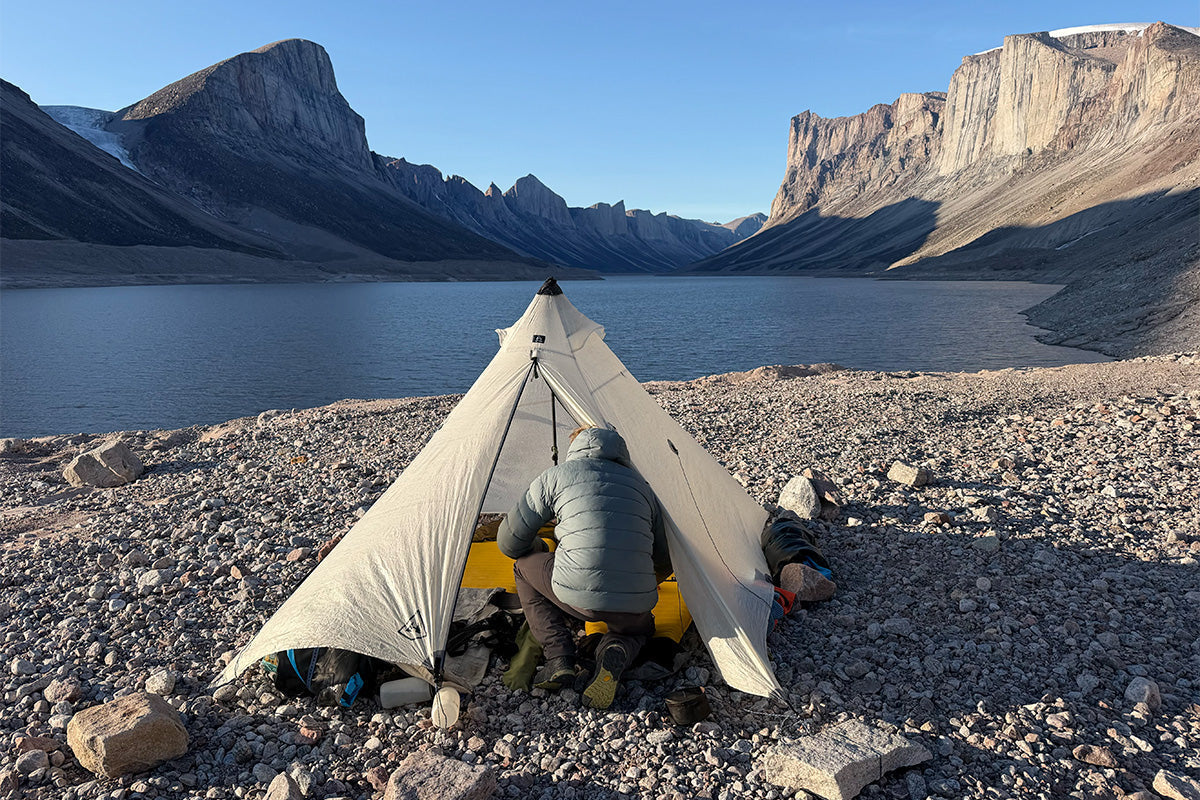
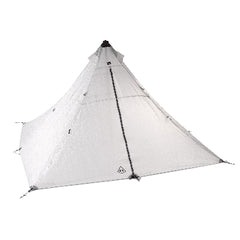
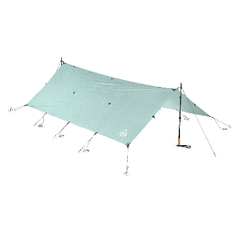
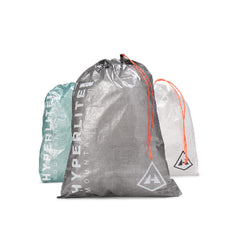
 For my tent, I actually use a tarp. The Hyperlite Mountain Gear UltaMid 1 Tarp has been my go-to shelter for the Continental Divide Trail, the Appalachian Trail, the Oregon Coast Trail, the Hayduke Trail, the Colorado Trail, the Sierra High Route and the Great Divide Trail. It’s made for all conditions. The Mid 1 is fully enclosed, excluding a net, but it has no floor. I guess you could say that mosquitoes don’t bother me, as I’ve never had a reason to attach the bug netting insert. From windy ridges above 12,000ft to beach-front sites, I’ll take this tarp anywhere. I use a Tyvek ground sheet as the floor, which goes under my sleeping pad. I had noticed that the zipper started to separate a bit from constant use, but it was nothing a pair of pliers couldn’t fix. I don’t use any guylines or anything, so all I need to set it up is six stakes and my trekking pole. I use a little stuff sack for my stakes, and those live on the outside of my pack. There have been a few nights where I’ve even fit two people in it, even though it’s one-person. I honestly cannot recommend this shelter enough.
 Regarding my sleep system, I use a closed-cell accordion-style foam pad. I like its durability, as I’m not always the most careful where I set up camp. I’ve thru hiked with my dog in the past, and a foam pad is a lot less to worry about than an inflatable pad and gives me more peace of mind. I use the Nemo Switchback, but there are all kinds of different ones out there. One random tip I have about these kinds of pads is that because they live on top and outside your pack, if you’re ever flying and you have your pack as a personal item, they don’t always fit under the seat in front of you. I’ve also noticed that if you are sitting in the window seat, flight attendants can’t tell. Take that for what it’s worth.
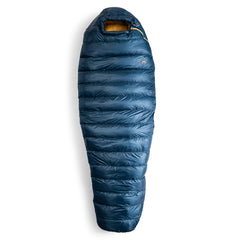
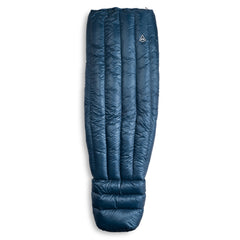
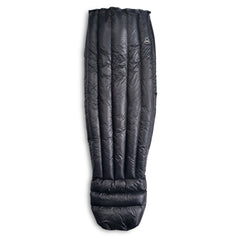
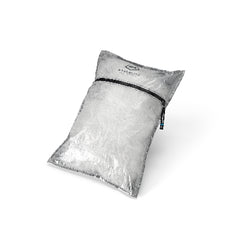
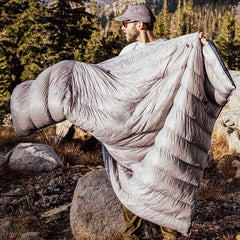
 For sleeping sacks, I chose the quilt system, as opposed to a sleeping bag, right off the bat. With quilts, it has an open back, as your sleeping pad acts as the back of your quilt. Quilts come with straps that attach to the pad to keep it from moving, so you’re able to wiggle throughout the night and not get all spun up. I have been using Enlightened Equipment quilts for the last few years and currently use a 10-degree. I am a pillow girl through and through. I sleep like poo without one. I’ve tried to use my food bag in the past, but there are obviously lumps and bumps that make it tough. When I’m camping in grizzly country, using your food as a pillow isn’t an option, so my friend Hank told me to put my rain gear inside my mosquito head-net. It works, but it’s not very fluffy, especially when you’re sleeping in all your layers. Thus, I bring an inflatable pillow. I guess you could call this a luxury item. I use the Sea to Summit Aeros UL pillow. It’s a simple thing. However, I’ve gotten my hands on the Hyperlight Mountain Gear Stuff Sack Pillow, and it has a super cool design. It’s a small enough stuff sack where you don’t need much to fill it, but you flip it inside out before you fill it, and it has a fleece lining on the outside for a nice and cozy pillow! What a cool design. Multi-use products–we love to see it.

The next most important thing is cooking! I classify myself as a snacker, meaning I don’t carry a stove/pot and I’m not a cold-soaker. I eat snackies, like bars, crackers, cheese, cereal, Poptarts, etc. Things that come in wrappers or boxes and things that don’t need water to rehydrate. I will put a warning here and say that this is not something that the normal person should do. Your caloric intake is a huge thing to pay attention to out there, and this is not always the best route for getting enough calories. As for which food bag I use, I’ve been rocking the Hilltop Packs rolltop food bags for a few years. I like that I can print my own photo on the bag, so I have my dog, Indi, on mine. For a utensil, I like the long-handled titanium spork. I like the spork because it provides me with pointy bits if I ever need to open a package and whatnot. The handle of the spork also acts as a great knife when cutting cheese. For a water filter, I use a Sawyer Squeeze. I do not recommend the micro, but the full-size one is great. I’ve had it for years, and it will continue to go for many more years, but you must backflush it. For carrying water, I use a 1L Smartwater bottle and a 1L Hydrapak. I like the Hydrapaks, or any silicone collapsible water bottle, because you can store it easily when it’s not in use. Water capacity depends heavily on where you’re going and what kind of climate you’re in.
 One tip I have about the Sawyer Squeeze is that if it freezes, it’s donezo. If you’re getting into colder temps, I’d recommend bringing an extra Ziploc bag to put your filter in, and you can shove it into the foot box of your quilt at night.
There are so many different options for clothes and layers, and I, myself, even get overwhelmed when I’m trying to decide what to take. I’ve come to realize this: it’s always easier to ship things away that you don’t need, but it’s not always as easy to get things sent that you do need while on trail. That being said, I would always start with things that you may be thinking you’ll need, and then you can always send them back home at the next town or whatever. I like to be and feel free, and that’s why I enjoy wearing dresses and skirts while hiking. I’ve fallen in love with HikerKind’s attire. The dresses are short-sleeved, though, so I sew on sleeves that I take off of TownShirt sunhoodies. Sleeves are essential because no matter where you’re at, you’re going to get toasted being in the sun all day.
When I wear a skirt, I wear a TownShirt sunhoody. I wear some type of bucket hat, as that’s my favorite type of hat. I have an Alpha-Direct set (top and bottoms) and a beanie from Leve Outdoor. I wear a Mountain Hardware Ghost Whisper Ultralight Down Hoody for my puffy. For hiking socks, I like DarnTough. They hold up the best, even though they always get to the point where I have to sew them up. I carry a pair of Na Giean merino wool sleep socks that I never wear out of my tent. There is nothing like trudging through mud and water for hours upon hours and then getting to camp and being able to put on warm, “clean” socks. It’s a dang good feeling. I wear Altra Lone Peaks for shoes, and I put a pair of Superfeet insoles in there so I can take my shoes a few more miles than I could without them. Sometimes I’m crazy, and I wear my Bedrock Sandals on trail, too. For rain gear, I use the rain jacket I’ve had for years, a Patagonia Torrentshell. I just recently washed and dried it, and let me tell you, it’s like a brand new jacket.
Lastly, we have our knick-knacks, accessories, whatever you want to call it. I carry a bandana that I’ve cut in half for spills, muddy legs, to wipe my face; you name it. I use Ombraz sunglasses as they just hang around my neck when I’m not using them. I carry a poopkit that lives in a SHIT KIT Hilltop Packs bag. It has a trowel, hand sani, a Ziploc full of toilet paper, and an extra Ziploc for dirty toilet paper. Please, for the love of all things, pack out your toilet paper, and females, for the love of everything and then some, please pack out all feminine products. Our Earth loves us so much, and she deserves some love from us too.
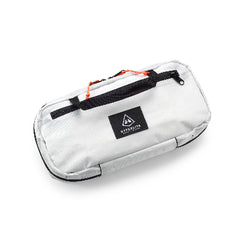
I keep my Nitecore headlamp in a separate zipper in the front of my pack to make it easy to access. I also keep my JBL Bluetooth headphones in a front pocket. In my electronics bag, I keep a 20,000mah Nitecore Carbon power bank, a wall plug, a phone charger, a watch charger, and a cord to charge my power bank. Some of my cords I’m able to use to charge multiple things, so I don’t need multiple cords. I carry a Canon camera that lives on my shoulder strap, and a wall charger for my camera battery lives in my electronics bag. In a little zippered stuff sack, I keep a little roll of Leukotape, nail clippers, tweezers, an extra O-ring for my Sawyer, and an extra cap for a water bottle. I use a Chicken Tramper wallet for whatever cards and cash I may need as well. I use the cheapest pair of trekking poles I can find, usually at REI, because my poles are an extension of my body and so I don’t see a point in spending good money on things that are going to get destroyed!
 That’s my kit, and I’m sticking to it! Depending on where I’m going, I may add things like rain mitts and rain pants, or a head net for mosquitoes and a Ursack, which is a food bag used in grizzly country. You can do all the research you want on gear, but you truly won’t know how you like it or how it works for you until you actually get out there and use it.
So, what are you waiting for? I promise the hardest part is getting prepped to get out there, and once you are, all you have to do is walk. It’s a piece of cake.