




Words and Photos by Brett Davis @brettdavis
"I love it when a plan comes together." – Colonel John “Hannibal” Smith, The A-Team
I love it when we accomplish what we set out to do. This happened recently as my life and adventure partner, Diana, and I completed a month-long paddle and exploration of Lake Powell in the southwestern U.S. Due to the area’s remoteness and lack of food services for resupplies, we had to pack all the food we would need for the trip’s entirety. All the time we spent on the planning allowed us to paddle 280 miles and explore 33 canyons with no major disruptions. We had no logistical issues, our equipment withstood the hardships of the weather, and our meal plan sustained us nutritionally for the duration of the trip. Hannibal would have been proud.
Food planning for backcountry pursuits can be a challenging and tedious process, especially for committing and extended adventures. My meal planning process has been honed through a life outside, leading others on weekend to multi-week trips. Through the years, I have developed a step-by-step process that produces good results. The process begins with the origination of the trip itself.
WHAT IS THE TRIP?
No meal plan can begin without determining the trip’s foundational details.
• What are the trip’s objectives including mode of travel and pace? Is this a raft supported float and bloat trip down the Grand Canyon or is it a fast and light bike and pack raft trip along Alaska’s Lost Coast?
• How many days are you in the field?
• How many people are on the trip? Is everyone taking care of their own meals or are you doing it as a group?
A fast and light mission may require what I call an “adventure race” meal plan where energy bars and snacks are consumed in place of hot meals. The pack weight of the meal plan is lighter which equates to a speedier pace. It may also mean compromising the total intake of calories, with hunger pains encountered along the way.
Our Lake Powell trip was more of the leisure sort where we would split our days between paddling and hiking/backpacking. We had the capacity to carry as much food as we could fit in our pack rafts. Given our pace and mode of travel, we had time to make hot breakfasts and take breaks for lunches. In doing so, we had more options for our meals.
DETERMINE YOUR DAILY CALORIC OUTPUT
You should know the number of calories you need to consume to sustain energy throughout a day. Are you a big eater with a strong appetite or do you eat many small meals throughout the day? Whether you have an analytical mind and count your calories or use a “what feels good” approach, it is crucial to determine your consumption level to give yourself the best chance to accomplish the trip objectives. Whenever I go on extended trips requiring a huge energy output, I expect to go into a calorie deficit and lose weight by the end. On these types of trips, it can be nearly impossible to carry enough food to stay fully nourished without compromising the weight carried and pace of the trip. During these scenarios, knowing my caloric output each day and then designing a menu to closely meet those caloric needs is important.
Tip – Carrying a small bottle of olive oil, sticks of butter or adding nuts to a meal are all great ways to add calories without tipping the weight scales too heavily.
 Steve “Doom” Fassbinder adds a layer of butter to a ProBar for a high calorie snack while on Alaska’s Lost Coast.
MEALS
Now, it is time to put pencil to paper or open an excel document/food planning app and make the actual meal plan. First, decide on the complexity of each meal. Do you want to keep it simple and just boil water to pour into a package or will multiple pots and pans be used such as on a raft trip? For Lake Powell, Diana and I split the difference, deciding to save money and forgo pre-packaged meals by creating our own tasty one pot meals.
Tip – If eating hot meals, determine what type of stove and corresponding fuel you will use – alcohol, white gas, isobutane, etc. Based upon total cooking time, the efficiency of the stove you are using and the climate you are cooking in, you can utilize various online calculators to figure out the quantity of fuel needed for the trip. I like to use Mercatorgear.com when I am using canister stoves. Also, I typically use 1.5 oz of white gas per day per person outside of cooking in winter conditions.

A delicious one pot meal of Fritos, Beans & Rice.
With the complexity of our meals decided for our Lake Powell trip, I divided each day into the following:
• Breakfast including hot drinks
• Lunch
• Dinner including an appetizer and desert
• Snacks for the day
From there, I determined each day’s meals and ingredient quantity. To keep things simple, I duplicated this menu for the consequent four weeks of the trip. For example, every Monday we had cheesy bacon grits for breakfast and Fritos, Beans & Rice for dinner. Additionally, we changed up our deserts and snacks each week to keep it interesting. I also built the menu with variety in mind trying not to repeat meals (see below in the postscript for the meals we ate on our trip).
Tip – For inspiration and ideas to create your own dehydrated meals, visit famed endurance athlete and guide Andrew Skurka’s website along with others such as the Backpacking Chef.
 My day-by-day menu organized in an Excel spread sheet.
THE SHOP
Once our day-by-day menu was completed, I made a master shopping list which is the most tedious part of the process. My list for this trip was broken down into categories based upon similar foods and their placement in our local grocery store (i.e. Bread Products, Condiments, Desserts/Snacks, etc.). After checking the items and quantities at least twice, we headed to the store with our clipboard of lists and began the mega shop. Having put thought in ahead of time, our shopping went smoothly, and we were out of there with little wasted time.
THE PACK
Back at home, the organization for the food pack began. We assembled our dinners with their respective ingredients. Made our trail mix. Sorted instant foods (grits, potatoes, ramen, etc.) into day-by-day meals labeling them by meal and day as we went. We removed any packaging that was nonessential or bulky.
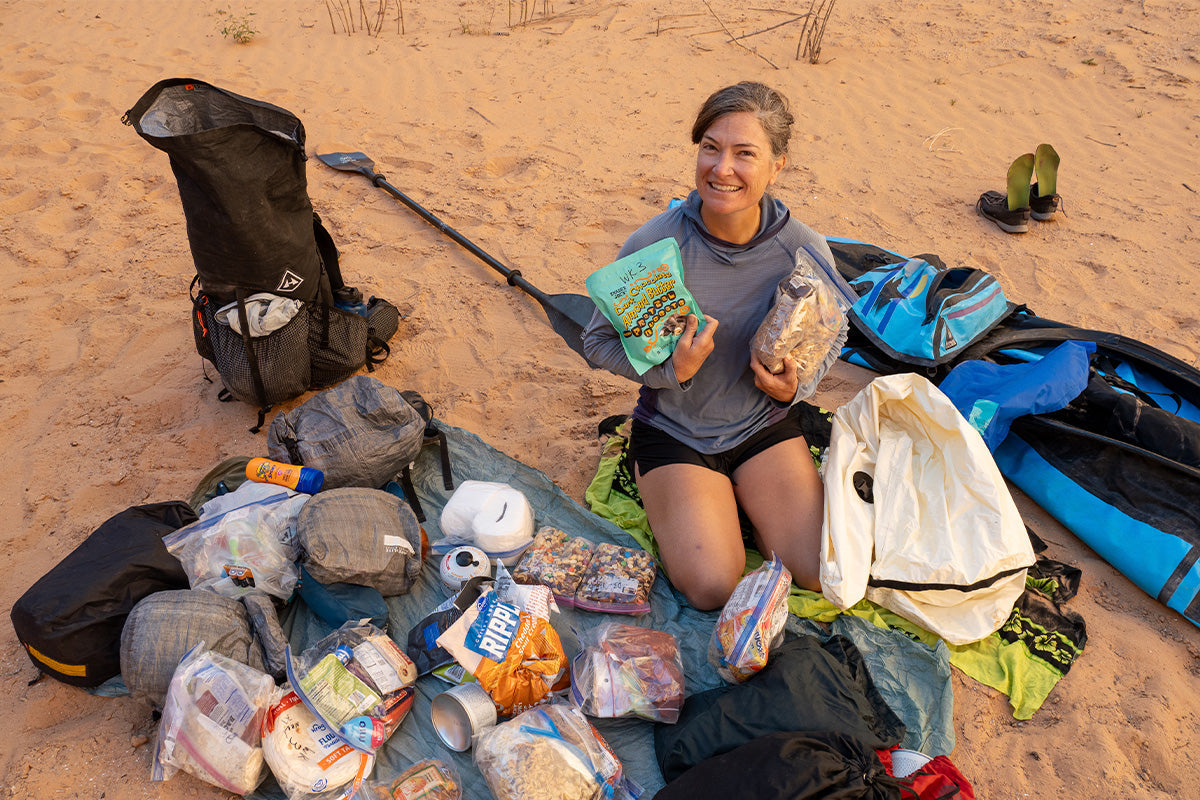
 Measuring out and creating individual bags of gorp. We each got a new bag every week to eat as fast or slow as we wanted. Diana with her sweet tooth was always a quick consumer.

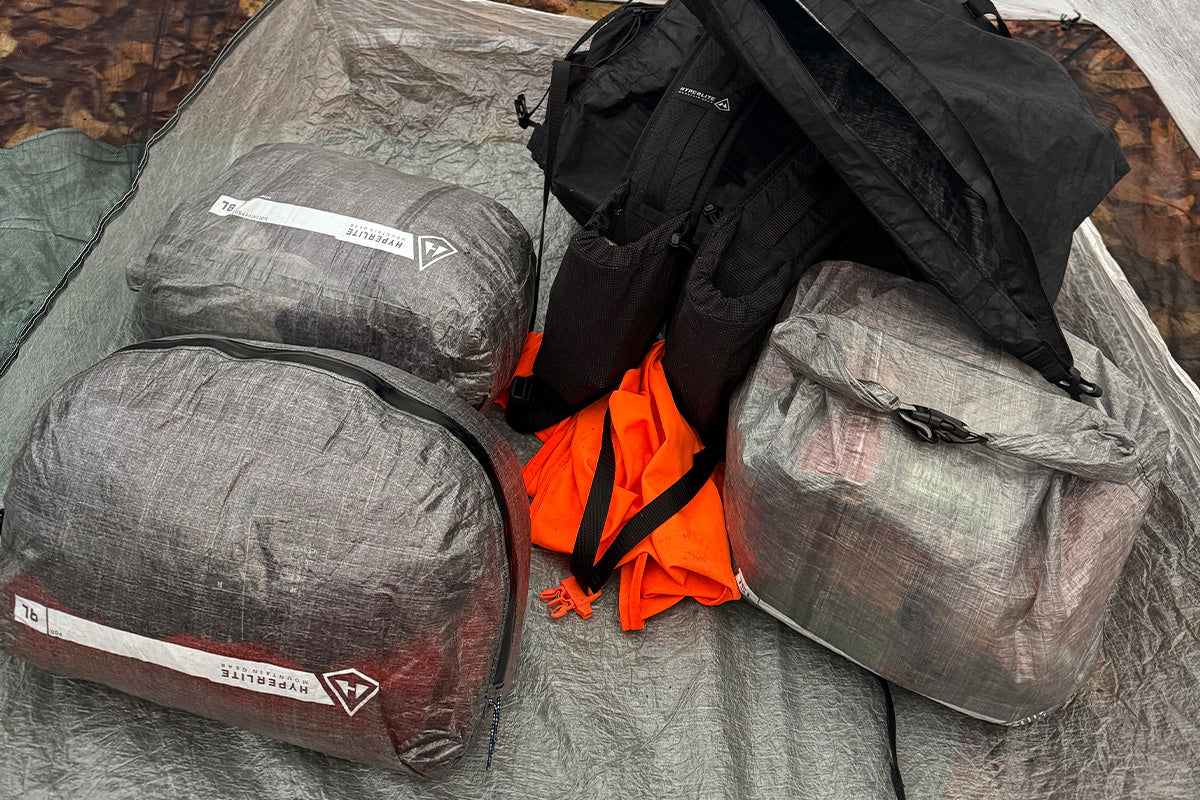
Lots of food to be packed away into dry bags.
Tip – Zip locks are a key component of the food pack and can be used as more versatile storage for those items that come in bulky containers. On trips where I am utilizing backpacker style meals where hot water is added to the package to rehydrate, I will keep one meal in its original package and then transfer the rest of the meals into zip locks. After eating the first meal in its original container, I will rinse it and save it for use for the remaining meals. This method lightens the load and takes up less packing space.
Once all meals were accounted for, we systematically packed each week into stuff sacks labeled for each meal category – breakfasts, lunches, dinners, and snacks. Each week of stuff sacks were then put into a dry bag and then labeled with the corresponding week. These dry bags remained untouched until they were scheduled to be opened during the trip. Diana’s favorite days of the trip were the resupply days as she enjoyed sorting a new week’s worth of food and restocking her trail snacks.
 A new dessert for the upcoming week. Wahoo!
FINAL THOUGHTS
There are many ways to food plan for backcountry adventures. Ultimately, through experience you will develop a system that works for you. No matter the adventure, the food planning component will demand time and attention to detail. Have fun with it and try something new. In doing so, you will look forward to your meals and quite possibly gain some notoriety with your adventure partners. It is fun to enjoy a nice meal in a fine dining restaurant, but it is even better to enjoy a good meal in the presence of Mother Nature and all her beauty.
Happy Adventuring!
 Enjoying a meal of beef curry in the finest of settings.
Postscript: Below is a list of the meals that we utilized on our Lake Powell trip. We ate well and easily maintained nutrition during the 30 days we were on the lake!
• Breakfasts (including green tea): instant mashed potatoes or instant grits with cheese and bacon bits; banana chocolate chip oatmeal; savory oatmeal with chives, parmesan cheese, almonds, and olive oil
• Lunches: bagel sandwiches/tortilla wraps with cheese, meat protein (i.e. turkey pepperoni, tuna, chicken or barbecue pork packets, etc.), avocados (only during week one), and chips (potato chips, Goldfish or Cheez Its); peanut butter and honey wraps; Triscuits with cheese, hummus, and a meat protein
• Appetizers: mixed nuts, Chex Mex, Lipton Soup and ramen packets
• Dinners: Fritos, Beans & Rice, Polenta & Peppers, Backcountry Chili with ground beef, Coconut Cashew Curry with vegetables, Pesto Noodles with sun dried tomatoes & chicken, Mac & Cheese with green chili chicken, and Beef Curry Bowl
• Desserts: Dark chocolate bars, Trader Joe’s Peanut Butter Lover Mix; cinnamon sugar almonds, Trader Joe’s Dark Chocolate Mix, and peanut butter M & M’s
• Snacks: Diana and I each had an individual large bag of trail mix (varying types) per week and an allotted two bars per day – additionally, we each supplemented our snacks as each saw fit (i.e. for each week I added a large packet of beef jerky and Diana added her usual candy, dried fruits, olive packets, etc.)
• Extras: hot sauce (a new flavor for each week), spice kit (salt, taco seasoning, red pepper flakes), olive oil, single use condiment packages of mayo and mustard