



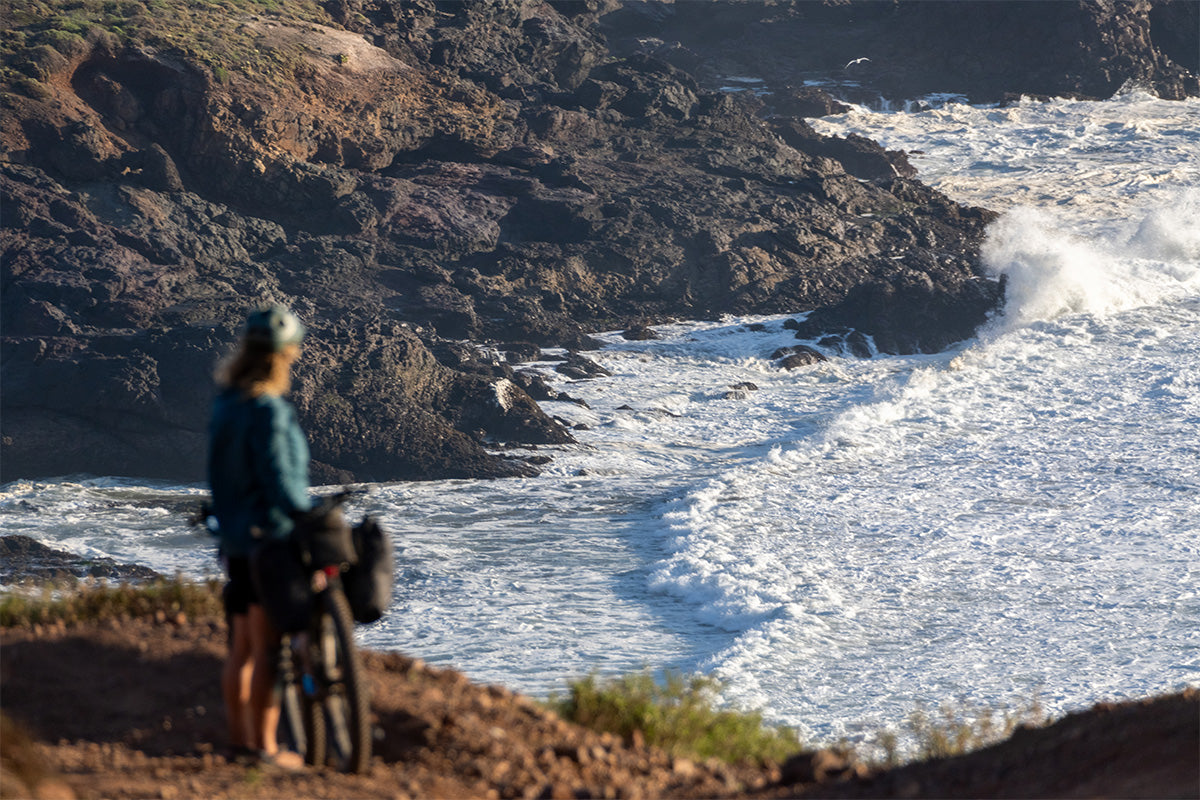
Words and Photos by Rylie and Tristan, @rollingtides.rt
 The following are honest lessons from bikepacking Baja.
Upon preparing for what is deemed a notoriously difficult bikepacking route, we put our two noob noggins together and got to researching. While there is a lot of information on Baja out there, it often felt opinion-heavy. The official Baja Divide Route (2024), with the scale of ground covered and seasonality differences, can also be a choose-your-own-adventure, as so much of the information on the route GPX is either outdated, vague, or not there at all. Along the way, we met route purists who stuck out even the sandiest of sections, and we also met pavement cruisers whose set-ups were not quite fit for the rugged roads. We forged a balance of on–route self–induced suffering and southbound pavement dashes. At last, we present to you our whole-hearted overview of bikepacking Baja, compiled with our personal experience as well as tips from bikepacker buddies along the way. Enjoy!
 BORDER
Crossing the Tecate border into Mexico was not as one might expect. I, for one, imagined seeing the big bad wall, military presence, and the intensity of a cultural crossroads. We were greeted by none of these things. In fact, it was so relaxed that we walked through the security checkpoint with nothing but a nod and started pedaling down the street before realizing we were in Mexico, and nobody had asked to see our passports. Hah! Realizing that we needed a visa halted our surprised laughter. We backtracked through customs into the US to pay for an expensive stamp and continued onwards. A good start.
 ROUTE
ROUTE
Many people (us included) feel drawn to routes like the Baja Divide, an established bikepacking route from the US border to the Southern tip of the Baja Peninsula. Almost 3000km of rough, remote, and rutted roads winding through desert hills with generously spaced resupply. It’s rated on the higher end of the difficulty scale. Often, people prepare and travel with the specific intention of riding this infamous route. They will dial in the perfect setup for the terrain, train for the riding, and pack light - all very wise things to be doing. As for us, we kinda just dove in headfirst. After all, it’s what we do best.
Like other endurance sports such as backpacking or running, suffering is self-inflicted. Often, it leads to feeling elated, with endorphins pumping through your body, and the post-satisfaction of overcoming discomfort. Gritting your teeth and achieving a goal, no matter what it takes, is a beautiful thing, and something we've come to love in our work and hobbies. This journey, however, has become more of a lifestyle than a trip, and we started to see that the self-induced suffering might not be so sustainable. We were working our butts off, and in our exhaustion, the days simply grew less enjoyable. Wasn't that the point of this all? To enjoy? To escape the rat race and lead an inspiring, fulfilling lifestyle? It seemed that we had joined yet another rat race, a dirt road one.
 When questioning if it was just our lack of experience in bikepacking, we would run into seasoned cyclists coming out of tough sections battered and feel less alone in our struggles. We couldn't enjoy the views as much because we were too busy trying to hold ourselves together. This led to questioning the line between satisfying achievements and foolish pride. We can both be stubborn at times, but the Baja Divide challenged us to query what we wanted out of this adventure and to experiment with softening, sometimes leading us onto smoother roads in which we’d find the adventure just as satisfying, if not more so.
The fear of riding bikes on highways is a widely spoken sentiment, for many good reasons. Speeding metal boxes flying by at crazy speeds, sometimes with alcohol influenced drivers (we once ran out of water and asked a passing truck if they had any to spare, both men lifted their beers into the air with a wry smile, saying it was the only thing they had to drink). The many crosses on the sides of the roads are a testament to that.
Despite this, our time spent testing the highways was surprisingly calm. Highways were rarely busy and often had a shoulder to ride on. Even in the absence of a shoulder, local drivers took their time in passing us, usually giving us a full lane of space. Most vehicles that came by would give an encouraging honk, smile, and wave as they crawled past. The only negative interaction we had on the highway, was when an American guy drove by in his big truck and yelled “Get off the f***ing highway!” The nerve to yell this in a country and culture that is not your own, when there are no other roads in sight, was baffling. We laughed, hard. And a minute later, a Mexican car drove by honking, waving, and cheering us on.
 All things considered, we were pleasantly surprised by the highways, felt safe and respected by drivers, and it gave our bodies a much-needed change from the bumpy Baja Divide roads. If you’re planning on biking Baja, we highly recommend seeking a balance of road and sand, in whatever dose feels right to you.
SEASONALITY
This gamble can be a make it or break it for bikepackers. May through October is typically a no-go for this route due to the absurd heat and rainy season, so most bike traffic starts to flow from November onwards. Bikers pray to be visiting during a drought. Rain makes the sandy route practically unridable. It's better to wait out the rain than to hike a bike through ankle-deep slop. We were eternally grateful to have ridden all of Baja in temperate, rainless weather (starting at the end of November until the end of December). It's important to note that there is a popular off-roading race called the Baja 1000, which you wouldn't want to be competing with for dirt road space. It typically runs at the beginning of November each year, but dates vary, so check the dates for the year you're planning to be in Baja.
 GEAR
GEAR
The magic and sometimes fatal word, gear. Important stuff when you're romping around a remote desert in a foreign country. You best be dialed!
Here's what worked for us:
Tires: Ry rode her Surly Karate Monkey with 2.8-inch Maxxis Rekons on the front and back. T ran his Surly Ogre with a 3-inch Surly Dirt Wizard in front and a 2.4 Rekon on the back (due to maxed out clearance). Our personal experience was that in sandy sections, Ry was often able to push through a little bit further than Tristan, as his back tire would wash out.
 The age-old Baja debate: Can you do the Baja Divide on less than 3-inch tires? YES! Absolutely. You might be pushing your bike a little more in the sand, but that's just life on the Baja Divide, regardless of tire width.
Suspension: If we were to ride it again, we would do it with suspension forks. Rigid bikes likely ride fine if they are packed super light, with fat tires to act as suspension. We felt a little too heavily laden for that to be the case, so we were jostled around more than we would have liked. Our Redshift suspension seatposts were incredible; we highly recommend them.
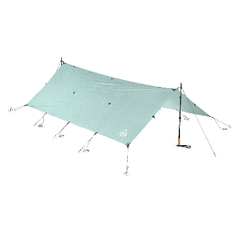
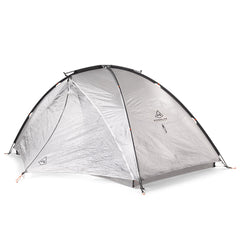
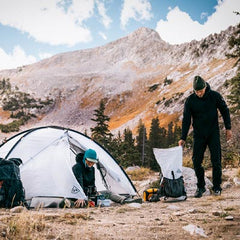
 Tent: Some people like rocking tarptents on the route to shave grams, but we were super stoked to have our Crosspeak 2. It felt like the tent was designed specifically for the route, at home in the cacti and coastal camping alike. Although it would be possible to cowboy camp the route, we wouldn’t recommend it, as some nights were incredibly humid.
 Stove: We planned on rocking our alcohol stove, but a little bit of research would have told us denatured alcohol in Baja is really hard to find. Many people like rocking little stick stoves, which seem sweet. In the end, we were super happy not having a stove and eating cold meals, easy to do when burritos are a daily driver. When we had the time, we’d build campfires and appreciate how good warmed tortillas are.
Other gear: Pack light. We didn’t, but if you can, you should! It’ll be more fun. There are also well-stocked, bigger towns spaced out along the way if ever you need anything mid-route.
 CULTURE
One of our favorite aspects of our time in Baja was the interactions with people. We found locals to be relaxed, welcoming, and helpful. If you’re planning on traveling to Baja, we highly recommend picking up some Spanish; it will help to spark connections and understand local culture. Baja is a wonderful place to learn. Folks were patient with us while in the beginning stages of speaking Spanish, and with only minimal vocabulary, we were somehow still able to have conversations and make new friends.
Baja is up there with some of the places we’ve felt safest travelling to. Other than the 50km stretch by the border, there is little sign of crime or cartel activity. Often, our biggest safety concern was stray dogs chasing us down, and a few squirts of water from our bike bottles usually did the trick of fending them off our ankles.
Supplies are fairly priced in Baja if you know the right places to look. Local tiendas and tacorias are the best bang for your buck. Shopping in remote towns can sometimes be cheaper than in big cities because of government-subsidised shops (and supporting local businesses whenever possible is super duper cool).
CONCLUSION
After letting the Baja adventure digest in our tired bellies, we deem it one heck of a beautiful challenge. If you’re a go-getter bikepacker, this could be an exciting route to work up to. The route will test your gear, patience, and priorities, but you don’t need to suffer endlessly to have a satisfying trip. Plan for seasonality, strike a balance, pack thoughtfully, and bring an open mind. If you’re not a die-hard cyclist (hello, many of our returning blog readers), Baja is still an incredible travel destination; you’ll be spoiled with uncrowded beaches, incredible food, and kind locals.