



Quick Summary
Like many backpackers, Jackson Abhau's shifting focus about his gear's weight, functionality, and capability happened in stages. As his goals became bigger, he realized that the more traditional setup he was carrying was going to need some work if he was going to accomplish them. That's when HMG got on his radar.
Words and Photos by Jackson Abhau @switchbackjack
My name is Jackson Abhau, and I’m a PhD student at the moment.
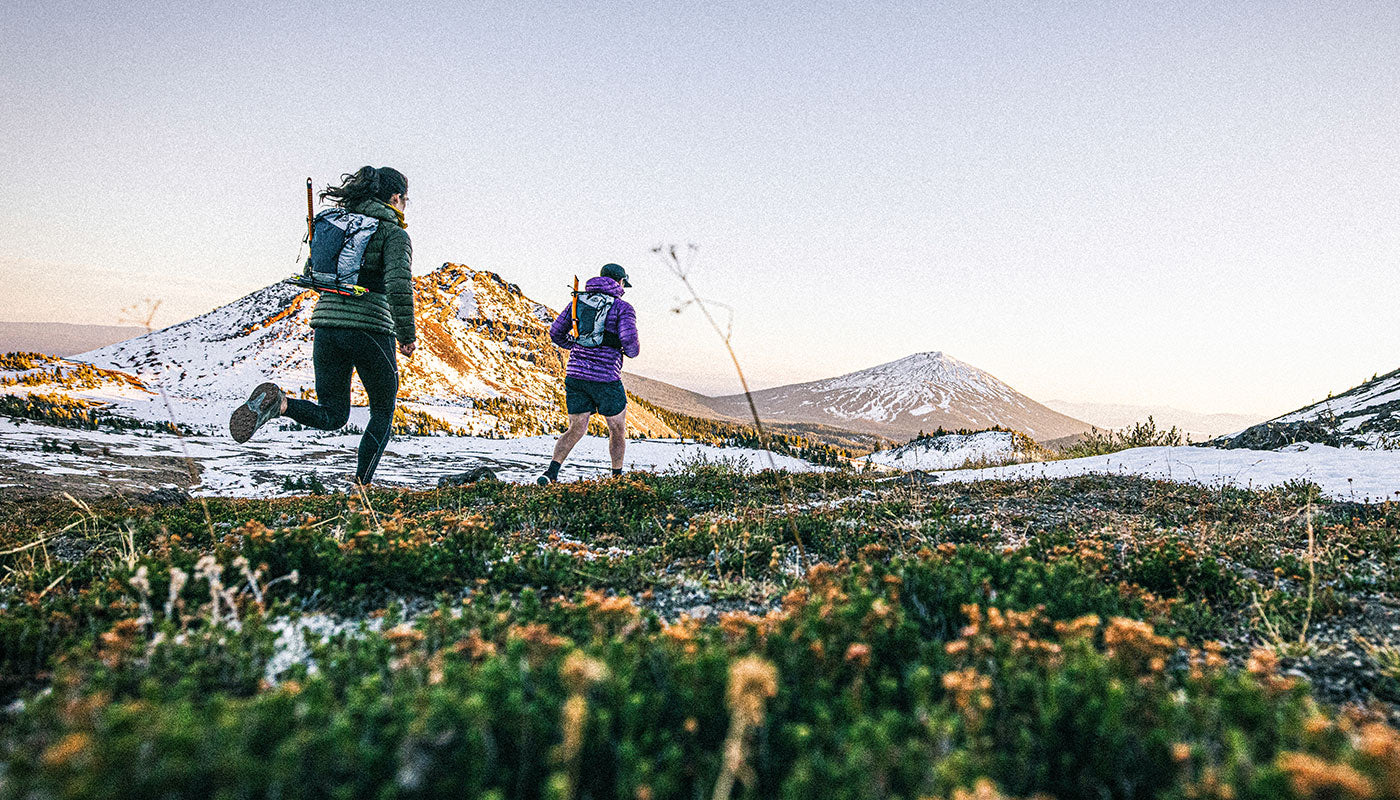
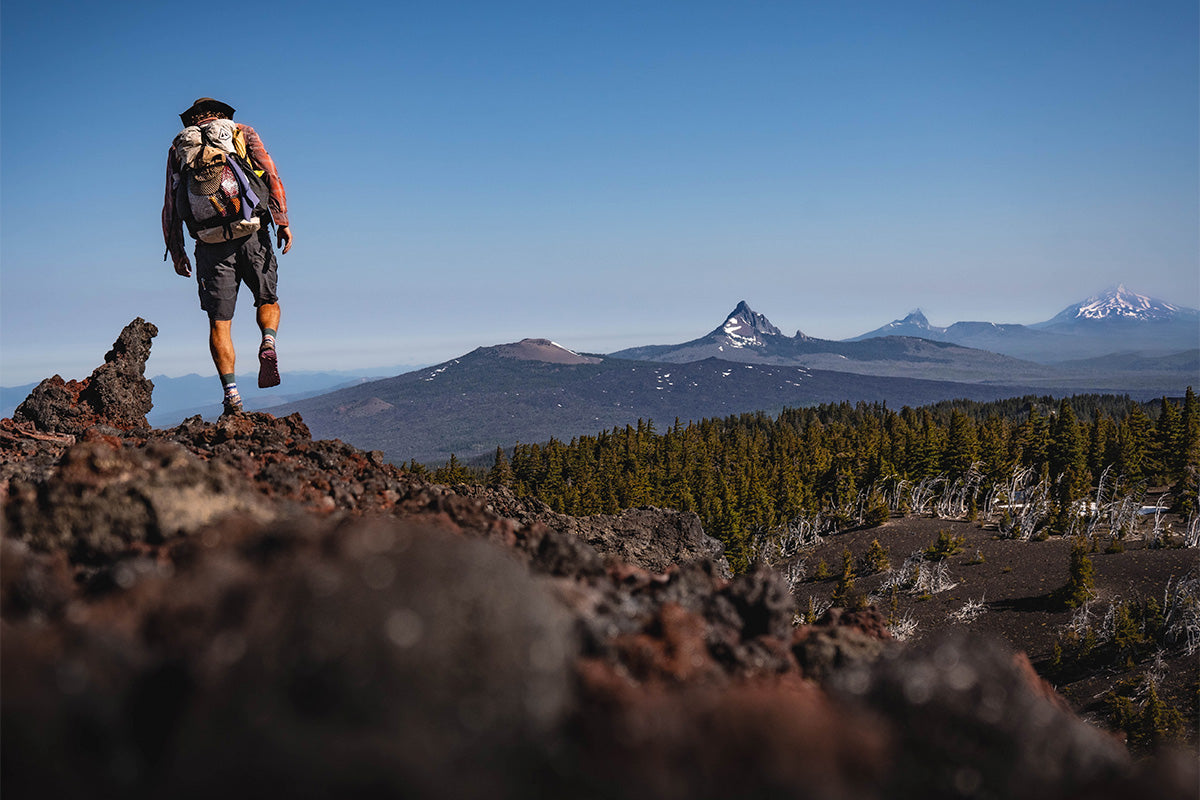
 Traversing a lava field near Bend, Oregon. Mt. Washington, Three Fingered Jack, and Mt. Jefferson in the backcountry.
When I moved out west for school, I began to spend more time outdoors and quickly fell in love with backpacking. What started with impromptu overnight stays in the wilderness gradually became longer, more intricate trips. When I hiked the John Muir Trail in 2022, I realized that I wanted to tackle a longer thru hike. But I also knew that I’d need to seriously upgrade my gear before such an undertaking. I gradually began to replace my gear, ship-of-Theseus style, trying to increase the quality and decrease my base weight.

July thunderstorm near Stehekin, Washington.
I held off on upgrading the pack for a while—after all, a good pack isn’t cheap and I needed to be sure before making a commitment like that. But when I found a window to hike the Pacific Crest Trail in 2025, I knew it was time and I ordered the Hyperlite Junction 55. I’d heard rave reviews from friends, but I was still curious to see the pack when it arrived.

A quiet moment at Burney Falls, California.
When the box showed up on my doorstep, I didn’t waste any time ripping it open. The back is deceptively simple, very few bells and whistles. It’s essentially a dry sack with straps and pockets. I learned quickly that the lack of an internal frame necessitates careful packing—in particular, placing something smooth and flat against the part that rests against one’s back—but when well-packed, the Junction feels incredibly comfortable and natural.
 Descending Forester Pass, the highest point on the PCT. We glissaded down the steep, snowy slopes.
I never went quite ultralight, towing a few luxury items that kept my base weight around 11 pounds, but acquiring the Junction pack was the biggest step towards making my setup PCT-ready. The pack held up through all the weather the trail could throw at me—rain, sleet, snow, hail, and a relentless, beating sun. The generous front pockets were sufficient for carrying a full day’s worth of snacks. The Dyneema kept my quilt dry when we forded waist-deep rivers in Yosemite. The top straps kept a bear canister firmly in place for 400 snow-clogged miles through the Sierra Nevada. I spent a good chunk of the trail hiking with Hyperlite ambassador Liz Kidder. By the time we reached Kennedy Meadows, we’d convinced the third member of our tramily to upgrade his pack to a Junction, too.

A frigid moment on the climb to Mather Pass, California. We were up and hiking before sunrise for most of the Sierra Nevada.
It’s true that the white pack tends to pick up some dust along the way, but I think that’s part of the charm. When I arrived at the northern terminus with a pack that was more beige than white, I’d brought a memento of all the miles behind me with my pack’s color. All in all, the Junction 55 was probably my favorite item of gear on the PCT. It was comfortable, simple, and reliable. It fit my gear, kept it clean and dry, and was user-friendly in all the best ways.