



Quick Summary
- Chloe Hammond shares how her adoption of two Hyperlite Mountain Gear packs - the Headwall 55 and the Windrider 70 - played a role in some of her biggest adventures to date, resulting in a positive impact, albeit quietly from the background.
Words and Photos by Chloe Hammond @chlo_hammond
Backcountry trips run on small systems. Who carries what. What needs to stay dry, and what you need to keep within arm’s reach. Where the bricks get packed. What pieces of your system become the mortar that fills in those cracks.
The longer I spend outside, the more I realize that good trips are usually built on those small details. The quiet practices that make the day move smoothly. The gear you trust. The routines you stop thinking about. The things that work well enough that they disappear into the background.
That matters even more when every trip asks something different of you.
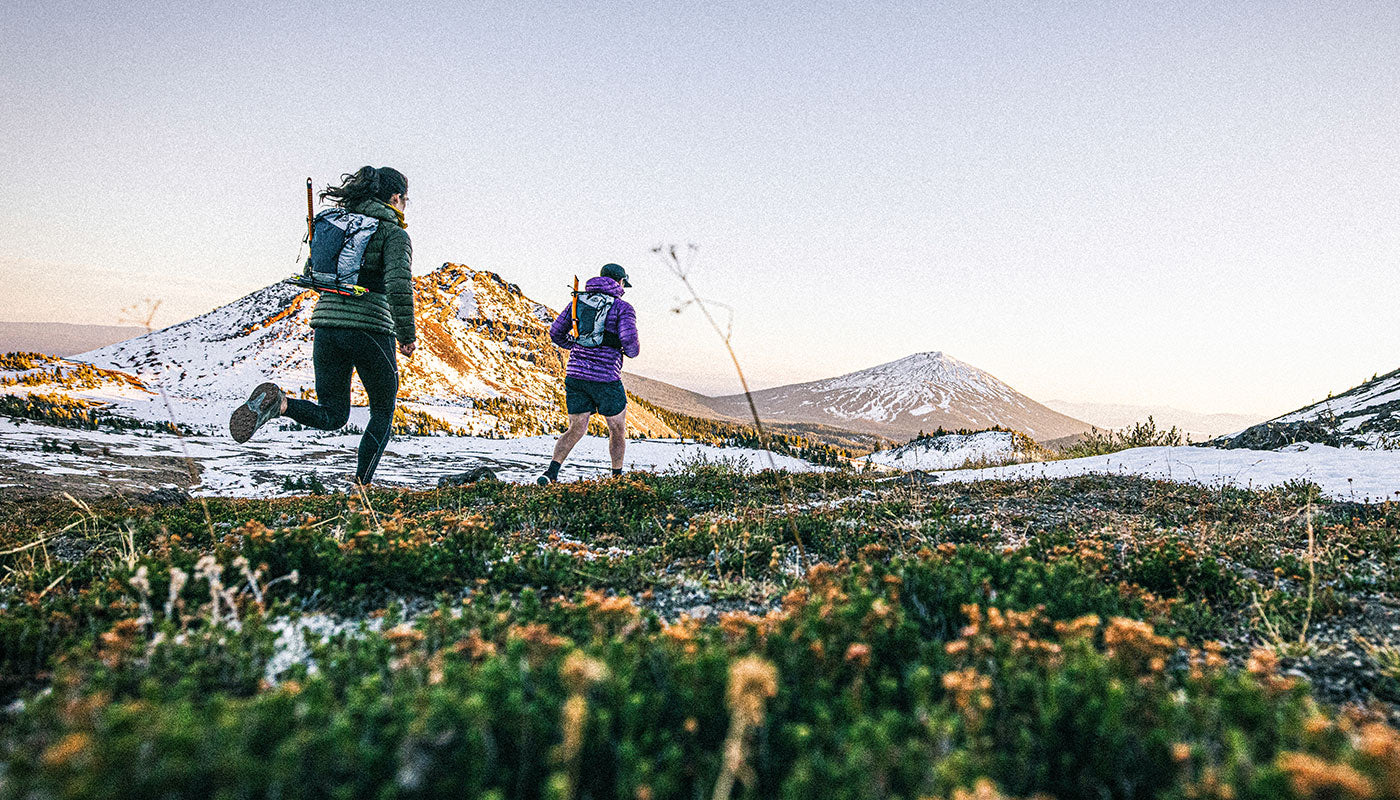
Last spring, I used my first Hyperlite Mountain Gear pack on the Woo Woo Ski Chu Traverse with my good friend Piper. We both carried the Headwall 55 ski pack, and it was the first HMG product I had owned. It was a pretty bold first test. That trip was hands down the most intense and challenging backcountry experience we’ve ever had. There were long days, heavy loads, and terrain where every step needed to be intentional, real slide-for-life kind of terrain where mistakes felt expensive.

 Piper and I made most decisions together, constantly checking conditions, route choices, timing, and each other’s energy. On day two, as I was throwing up in the skin track while boot-packing toward the saddle, the last thing I wanted to worry about was my gear. In moments like that, your mental space is limited. You want your focus on the terrain and your strength, not on shoulder straps that won’t sit right or gear shifting around when it shouldn’t. The Headwall 55 gave me one less thing to manage. It carried heavy loads well, handled the abuse, and let me focus on moving safely. When the mountains are already asking a lot of us, that made a huge difference in how we traveled.


 A few months later, I took my Windrider 70 pack onto the Colorado Trail with my dog, Amber. That trip had none of the urgency of the ski traverse, but it came with its own kind of responsibility. There was no partner to split decisions with and no group to manage. It was just me, Amber, and a long trail stretching south toward Durango.
The focus there was longevity. Eating enough, staying ahead of weather, taking care of myself and Amber, and carrying an unreasonable amount of dog food. Self-care became the whole job. On a thru-hike, small discomforts get louder every day. A pack that rubs wrong on day three feels like a crisis by day nine.
That’s where I appreciated the Windrider most. It handled weight well, especially with all of Amber’s food packed in, and it never felt like something I had to fight with. It became part of the routine instead of another place to lose energy. That kind of simplicity is easy to overlook until you’re living out of the same system for weeks at a time.


 Most recently, I carried that same pack into Patagonia, into Torres del Paine National Park in Chile, while leading a group of alumni, donors, and friends through the O Circuit. Patagonia shifted the focus again. This trip wasn’t about personal objectives; it was about our group and creating a good experience for everyone. We were there to help people feel capable, comfortable, and connected in a place that can be wildly beautiful and wildly uncomfortable at the same time.
Patagonian wind has a special talent for humbling people. It can stop conversation mid-sentence, and the cold rain seems to find every weakness in your layering system. Staying dry, staying warm, and helping the group stay positive became part of the daily work. As a leader, your attention belongs to everyone else first. You’re watching pace, checking energy, solving small problems before they grow, and trying to keep morale high when everyone is cold and wet.


 That’s where reliable gear becomes less about comfort and more about capacity. I needed my pack to hold up, and without negotiation, it did. Through constant unpacking, repacking, time rolling around on buses, rain, and wind, it stayed dependable. I never had to spend energy worrying about it, which meant I could spend that energy where it mattered more, with the people around me.
That’s what I’ve come to appreciate most about Hyperlite Mountain Gear. It doesn’t feel like gear I have to be precious with. It’s light where I want it to be, durable where I need it to be, and simple enough that it disappears into the background.
And honestly, I think that’s the whole point.
The best gear is the gear you stop noticing, not because it is unimportant, but because it quietly gives your attention back. Whether I’m moving through high-exposure terrain, hiking hundreds of miles through the Colorado backcountry with my dog or trying to keep a group smiling through Patagonian wind and rain, that’s what makes the difference.
Good gear doesn’t make the trip. It just helps you be fully there for it.


